


 MATCH Act: How New U.S. Chip Legislation Could Freeze China's Semiconductor Ambitions
  Pershing Square Bids €30.40 Per Share to Acquire Universal Music Group in $9.4B Deal
  Kia Cuts EV Sales Target for 2030 Amid Slowing Demand and U.S. Policy Shifts
  Ford Issues Major Recall on Over 422,000 Vehicles Due to Windshield Wiper Defect
  NIO ES9 SUV Launch Sends HK Shares Down 7% Despite Bold Pricing Strategy
  San Francisco Suspect Arrested After Molotov Cocktail Attack on OpenAI CEO Sam Altman's Home
  SanDisk Joins Nasdaq-100, Replacing Atlassian on April 20
  FedEx Pilots and Union Reach Tentative Agreement on 40% Pay Increase
  Tokyo Electric Power Attracts Major Investors Amid Billion-Dollar Restructuring Push
  China's AI Stocks Surge as Zhipu and MiniMax Hit Record Highs
  Disney Plans to Cut 1,000 Jobs Amid Ongoing Restructuring Efforts
  BHP's Incoming CEO Visits China Amid Pricing Dispute with CMRG
  Anthropic's Mythos AI Model Sparks Emergency Cybersecurity Meeting With Top U.S. Bank CEOs
  OpenAI Addresses Security Vulnerability in macOS App Certification Process
  Bank of America Identifies Top Asia-Pacific Semiconductor Stocks Poised for AI-Driven Growth
  Bendigo and Adelaide Bank Posts Strong Q3 Earnings, Announces AI-Driven Job Cuts


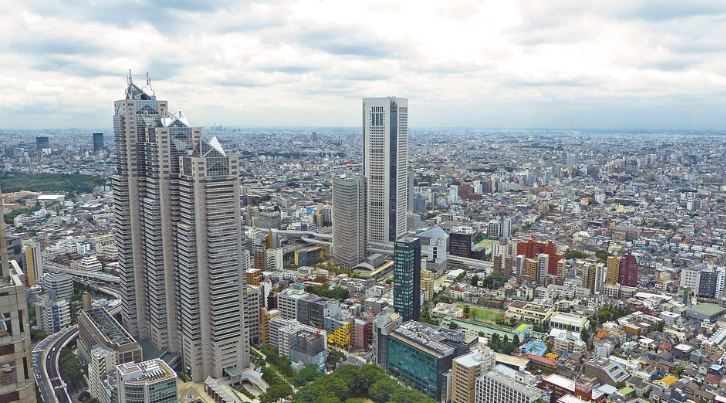
It is widely believed – and reinforced through actual statistics – that Japan is one of the most technologically advanced countries. While Britain is just getting to grips with self-driving cars, Japan is able to replace office workers with robots. The AI Expo is even held in Tokyo, allowing vendors and distributors to showcase the latest in their developments in global Artificial Intelligence. A vast majority of the technology firms based in Japan - e.g. Toshiba, Fujitsu, Sharp – are tasked with pioneering the way in which technology is used to enhance our everyday lives. So, how can we learn from Japan’s technological advances?
When discussing technology in 2017, the internet has to start the conversation. Japan, for example, offers a rental Wi-Fi box that allows its user to pick up the internet anywhere in Japan from a box the size of a mobile phone, with their Pocket Wi-Fi. The ease of which users can access the internet is the first sign of high-technology. The mobile vs desktop usage in Japan stands at 25.78% vs 69.7% in August 2017, which is a clear increase from mobile’s 23.77% share in August 2016. The popularity of mobile internet has also prompted businesses to offer more flexible or portable products. For instance, in the iGaming niche, the Bitcasino Japanese language site now offers mobile versions of its slots. The company, which was the first licensed bitcoin casino, also carries Japan-themed titles like Sakura Fortune.
The Tokyo CEATEC Conference in October 2016 showcased Toyota’s Kirobo Mini, a small dog-shaped robot that consumers can converse with. The car giant’s robot aims to help the loneliness issue in Japan while also showcasing the technology as the robot offers companionship and also works on untangling issues with robotics. The Kirobo Mini appears to be the gateway in companionable automatons and, should the trend prove popular, humanoid versions may very soon be a reality. Watch out, Will Smith!
Fujitsu’s Ontenna also seemed to wow at the CEATEC Conference, promising a solution to the ageing population’s failing hearing. The device, which attaches to the side of your head, claims to allow deaf people to hear again. By translating sounds into vibrations and cadences inside the head, the Ontenna is essentially a very technologically advanced hearing aid. The device serves a purpose to showcase Japan’s commitment not just to technology, but also to its population. By designing something that adds quality of life to the elderly population, Japan demonstrates that it is aiming to use technological improvements to benefit people’s lives.
Toto’s smart toilet, often used in comedies to highlight the far-reaching advancements of Japan’s technology, is actually a very useful invention. By measuring urine levels, protein, weight etc. the toilet could end up diagnosing when something is medically wrong with its users. While many may scoff at the need for such a thing, the invention’s subtext further shows that Japan is aiming to enhance the life of the individual with its advances in technology. Almost every invention is to make things easier or better for the everyday citizen.
When we want to look for technological advances, we need to look no further than the Land of the Rising Sun. Not only are they the leading innovators for technological enhancements but they also offer a glimpse into the future of how the entire consumer experience can be streamlined with inventions to make our lives easier.







