


 AAVE, PUMP, WLD and SKY Rally as Crypto Market Slips
  TD Cowen Starts SpaceX at Buy, Sees AI Compute Driving Growth
  Polymarket Traders Bet on Trump AI Rename to ‘Super Intelligence’
  Kraken Parent Payward Adds 24/7 Settlement With Singapore Gulf Bank
  OKXICE Files for 24/7 Tokenized US Stock Trading
  WordPress Malware Uses Ethereum to Evade Removal
  OpenAI, Anthropic Back Mandatory AI Breach Reporting in Australia
  Anthropic Targets $2 Trillion Valuation in Planned IPO
  Berenberg Rates Domino’s Pizza ‘Buy’ on Chick ’N’ Dip Growth
  Zcash NU7 Testnet Cuts Block Time to 25 Seconds
  Google Pays Publishers for AI Search Content in New Pilot
  DogeOS Launches Testnet to Bring DeFi Apps to Dogecoin
  Nvidia-Backed Reflection AI Launches Beam Open-Weight Model
  Zcash Mining Profits Surge as Liquidity Risks Grow
  Nippon Paint Shares Rise on $1.35 Billion AkzoNobel Deal
  SEC Investor Reform Validates Barry Silbert’s Tokenization Vision
  Tencent Signs $7 Billion Oracle AI Chip Lease Deal


 Add as a preferred source on Google
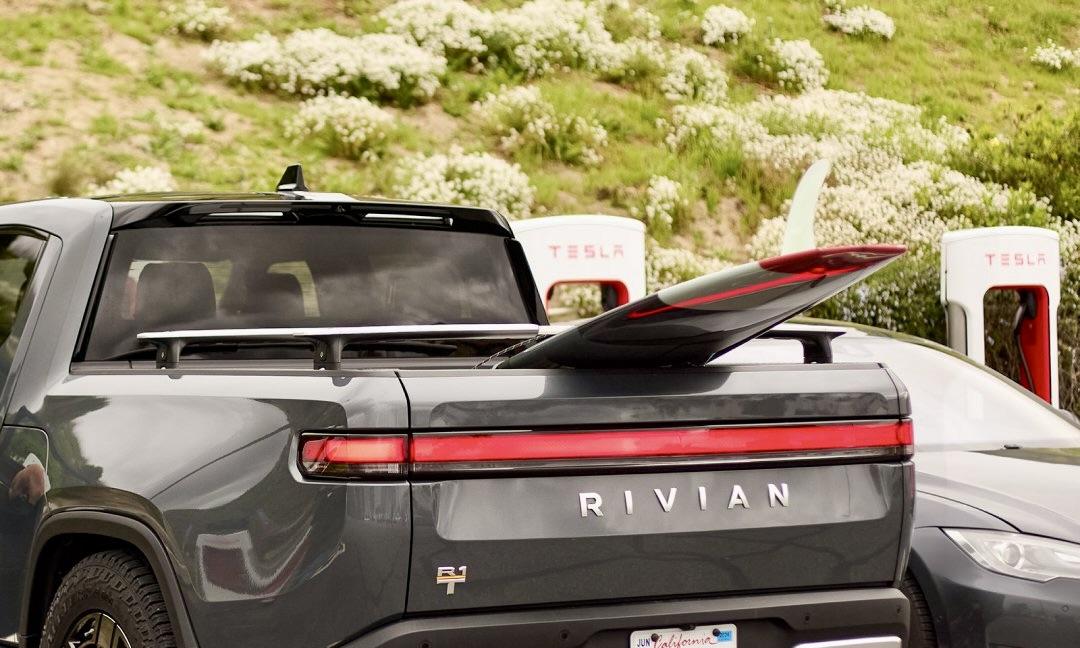
Rivian, the electric vehicle (EV) manufacturer, has integrated its vehicles into Tesla's Supercharger network, adding to the accessibility of charging stations for EV owners. This move follows Ford's recent inclusion in Tesla's charging infrastructure.
Rivian's software update 2024.07.02 paved the way for its vehicles to utilize Tesla's expansive network of over 15,000 Supercharger stalls across the United States and Canada. The company also announced plans to distribute free NACS DC adapters to its customers. Rivian's decision aligns with its broader strategy to open its Rivian Adventure Network (RAN) to all automakers, mirroring Tesla's approach to charging infrastructure.
Rivian Joins Tesla's Supercharger Network: What It Means for Electric Vehicle Owners
Tesla's Superchargers are now accepting Rivian vehicles, following the addition of Ford to the charging network just a few weeks earlier, Teslarati reported.
Last week, Rivian released software update 2024.07.02, stating that Superchargers would soon be available to Rivian vehicles. Rivian's vehicles can now access Tesla's more than 15,000 Supercharger stalls in the United States and Canada, according to an official announcement on X and a press release issued Monday. Furthermore, the automaker intends to begin shipping free NACS DC adapters this spring, prioritizing long-term owners.
Rivian also reiterated plans to open up its Rivian Adventure Network (RAN) to all automakers later this year, following Tesla's lead. Rivian has over 424 operational RAN sites spread across 70 locations in 22 states.
Expanding Accessibility: Non-Tesla Automakers Ford and Rivian Gain Supercharger Access, With More to Follow
The announcement comes just weeks after Ford became the first non-Tesla automaker to gain access to the charging network. Following Ford and Rivian, Supercharger access is expected to become available for electric vehicles (EVs) from General Motors (GM), Volvo, and Polestar in the coming weeks.
Ford was also the first other automaker to adopt Tesla's NACS charging standard, as announced by CEO Jim Farley and Elon Musk during an X Spaces call last May. Shortly after, Ford was joined by GM and Rivian, with every major automaker eventually agreeing to build future vehicles with Tesla's charging port and gain access to Superchargers via adapters.
The Tesla Supercharger network is dominating the rollout of DC fast-charging stations in the United States, according to a recent report from the National Renewable Energy Laboratory.
Although many Tesla owners have expressed concerns about Superchargers becoming overcrowded with the influx of non-Tesla EVs, the automaker implemented "congestion fees" in November, which are expected to keep cars moving in and out. Tesla also announced last month that it would open one new Supercharger stall every hour, potentially increasing the number from over 15,000 now to around 23,000 by February of next year.
Photo: Rivian/Twitter







