


 Goldman Sachs Raises USD/JPY Forecast, Sees Yen Weakness Persist Through 2027
  State of emergency in Crimea as Ukraine focuses pressure on ‘jewel in Putin’s crown’
  Bank of America Upgrades T-Mobile to Buy, Says LEO Satellite Fears Are Overdone
  Smartphones are helping filmmakers tell the stories the movie industry overlooks
  USA at 250: the Black American struggle for life, liberty and the pursuit of happiness
  Citi Raises TSMC Price Target as AI Chip Demand Strengthens Growth Outlook
  Goldman AM Sees Strong Buyout Opportunities in Japan, South Korea and Australia
  Goldman Sachs Flags 3 Key Risks Ahead of Europe’s Earnings Season
  Vietnam’s population hit the 100 million milestone. Where’s it headed?
  JPMorgan Cuts Gold Price Forecast, Sees Bullion Reaching $4,500 by End of 2026


Reserve Bank of Australia (RBA) has kept hold steady today at 2.25%, however capital expenditure and lower government spending indicates that rates need to be kept low for long time.
- Lower commodity prices has hit the economy hard. Iron ore, coal prices maintain downside bias. After years of increased private spending in mining and construction the boom has turned into a bust over slowing economic growth in China.
- With China consuming close to 50% of global supply in these commodities, prices might not turn for good in very long time. Chinese officials are still working hard for a soft landing in the economy rather than an abrupt one.
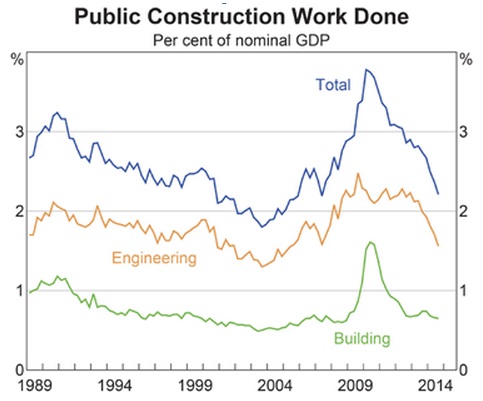
Moreover latest data points that public sector investments and constructions are continuing slow down since 2009.
- Public construction work has fallen close to lowest levels in a decade. Public sector building construction has fallen below 1% of GDP.
- Australian government is projecting to reduce deficit to below 1% of GDP from current around 3%. This means more austerity of balanced budget.
With contractionary fiscal policies and slower private sector spending, house hold sector growth alone will not be sufficient to keep the GDP buoyant.
RBA has fewer options than to keep rates low for long. As a net result Aussie will remain under pressure from rising dollar and higher yielding currencies such as NZD.
Aussie is trading at 0.768 against dollar and 1.018 against Kiwi. To note Aussie has fallen to record low against Kiwi.







