


 Marvell Stock Rises After Record Q1 FY2027 Earnings Fueled by AI Demand
  Kentucky School District Secures $27 Million in Social Media Addiction Lawsuit Settlements
  Salesforce Q1 FY2027 Earnings Beat Expectations Despite Soft Q2 Revenue Outlook
  SpaceX IPO Could Become Largest in History with $1.8 Trillion Valuation Target
  SK Hynix Joins $1 Trillion Club as AI Chip Demand Fuels Stock Surge
  Autodesk Beats Q1 Estimates, Acquires MaintainX for $3.6 Billion
  Dell Raises 2027 Revenue Forecast as AI Server Demand Drives Record Quarterly Results
  SpaceX Delays Starship V3 Launch Ahead of Potential Record IPO
  Xiaomi Shares Drop After Weak Q1 Earnings Amid Rising Smartphone Costs
  MongoDB Q1 FY2027 Earnings Beat Expectations, Raises Full-Year Outlook
  Macquarie Names Five Taiwan AI Stocks Set to Benefit From Data Center Growth in 2026
  Meta AI Push Could Add $26 Billion in Revenue by 2027, Wolfe Research Says
  Mega IPOs Like SpaceX and OpenAI Could Reshape S&P 500 and Nasdaq 100 Portfolios in 2026
  Huawei Chip Breakthrough Sparks Rally in Chinese Semiconductor Stocks
  SpaceX IPO Hype Raises Questions as Many Major Stock Debuts Underperform Market
  PDG Explores $1 Billion Sale of China Data Center Assets


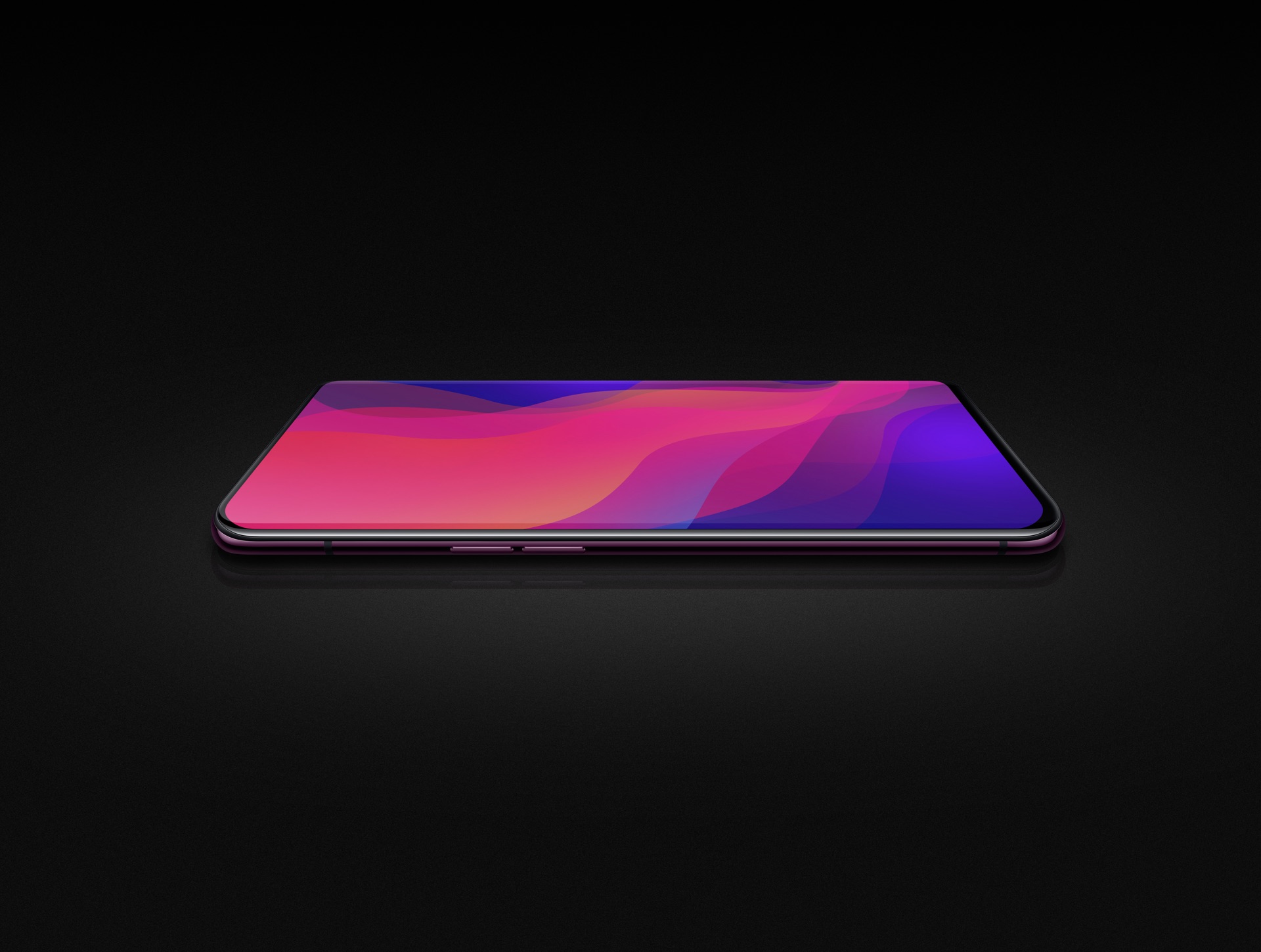
Oppo recently unveiled its upcoming flagship device, the Find X, and it was almost like a statement that non-Apple smartphone makers do not have to copy the latest iPhone design to wow the market.
Last year, Apple unveiled its first-ever iPhone with an edge-to-edge screen. To achieve that, Apple collected the front-side cameras and sensors and put them on a notch. OEMs were quick to adopt the design, understandably, to get a fraction of the hype around the newest smartphone design trend sparked by Apple.
However, Oppo showcased a different approach. Earlier this week, the Oppo Find X was finally revealed to the public. And while it does have an array of premium-level specifications, the highlight of the entire announcement was Oppo Find X’s “all-screen” front without blatantly copying an iPhone design.
The Oppo Find X boasts a 93.8 percent screen-to-bezel ratio. To make this possible, the smartphone is built with a flexible OLED panel, allowing making a curved-edge screen possible. It is then paired with an edge-to-edge 6.42-inch display.
Now, one might ask where the selfie camera goes. Well, it is literally tucked inside and is attached to a motorized component that pops up when needed, and Oppo did appropriately name these parts as the “stealth 3D cameras.”
The device’s pop-up section houses the Oppo Find X’s sensors, namely the flood illuminator, an infrared camera, a ranging sensor, a front camera, and the dot projector for 3D face detection.
Oppo Find X’s top feature is definitely its pack of cameras, making it the first-ever Android smartphone to offer a face detection system based on 3D technology — a decent competitor of the iPhone X’s Face ID. Its face detection feature uses a sophisticated technology with “15,000 facial dot recognition” and promises “20 times safer” biometric authentication compared to the staple fingerprint readers.
As for its other core specs, the Oppo Find X is powered by a Snapdragon 845, a 3,730-mAh battery, 8GB of RAM, and 256GB internal memory.
The Oppo Find X is slated to be released globally but will likely debut initially in select regions in August. With an array of premium features and specs, the device is expected to cost €999 or over $1,150.







