


 What is Zionism? The different meanings of a contested term
  fnny Beta Launches With a Simple Idea: Find an Event, Show Up, Get Rewarded
  FxWirePro- Crypto Weekly Alpha: ETF Rebounds, L2 Rallies & Key Resistance Levels
  Big AI wants to slow down AI research. Is it a safety pause or a strategic retreat?


 Add as a preferred source on Google
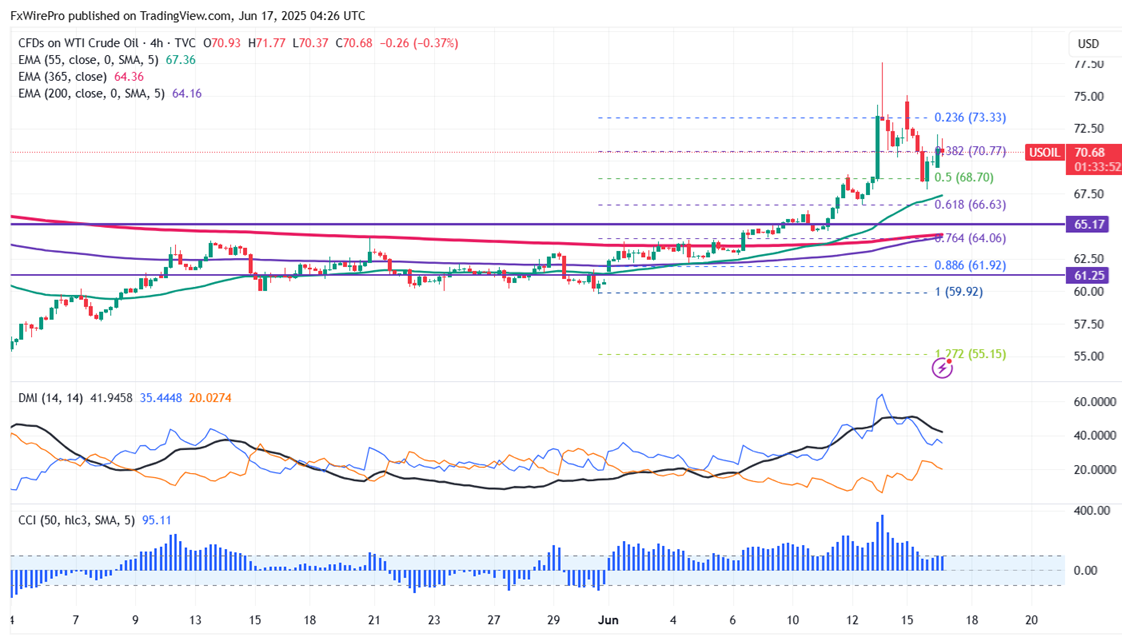
Crude oil prices pared some of its gains as tension between Israel and Iran eased. It hit an intraday high of $71.77 and currently trading around $7
The Nuclear Non-Proliferation Treaty could lead Iran to withdraw from its nuclear program, leading to increased uncertainty about its future. Despite Israel's claims of air striking Iran in response to its nuclear progress, this development comes at the same time as recent Israeli strikes. Iran has been deemed non-compliant with its NPT obligations by the International Atomic Energy Agency due to concerns about undeclared nuclear materials. The US and Iran's ongoing discussions about uranium enrichment and sanctions reduction are fraught with significant hurdles, as they both refuse to accept each other'. The 2015. The IAEA has declared that Iran has exceeded its enrichment boundaries, resulting in the creation of enough enriched uranium for multiple nuclear bombs. Iran's nuclear program is considered to be extremely fragile, and despite the IAEA's announcement of normal radiation levels at the Natanz facility after recent Israeli strikes, regional tensions persist. A comprehensive deal has not been reached yet.
Price Resistance and Support Levels
The near-term resistance is around $71.80; any breach above this level could push prices higher to $72.50/$73/ $74.30/$75/$76.07/$78. On the downside, immediate support is at $70 violation below targets $68.60/$66.65/$65.
It is good to sell on rallies around $71.50-55 with a stop-loss of around $73 and a target price of $68.60/$66.







