


 Meta Delays 'Avocado' AI Model Release After Falling Short of Rivals
  Zhipu AI Launches GLM-5-Turbo Model to Power Next-Gen AI Agent Workflows
  Stryker Cyberattack Disrupts Operations Amid Iran-Linked Hacking Claims
  Hua Hong Group's 7nm Breakthrough Signals China's Growing Chip Independence
  Anduril's $20B Army Contract Signals Major Tailwind for Palantir
  xAI Faces Federal Lawsuit Over Grok AI-Generated Child Sexual Abuse Material
  Telus Corp. Confirms Cybersecurity Breach Amid Extortion Threat
  Perpetual Limited Sells Wealth Management Arm to Bain Capital for A$500 Million
  U.S. Pulls Back Proposed AI Chip Export Rule Amid Policy Uncertainty
  AI in Drug Development: How Pharma Is Cutting Costs and Accelerating Innovation
  UK Regulators Demand Social Media Platforms Strengthen Children's Age Verification
  JPMorgan Chase Bolsters China Investment Banking with Goldman Sachs Veteran Yi Zhang
  Spirit Airlines Plans to Shrink Fleet to a Third of Pre-Bankruptcy Size
  X Agrees to Overhaul Blue Checkmark System in EU After €120 Million DSA Fine
  Foxconn Shares Slip After Q4 Profit Miss Despite Record Revenue and Strong AI Outlook


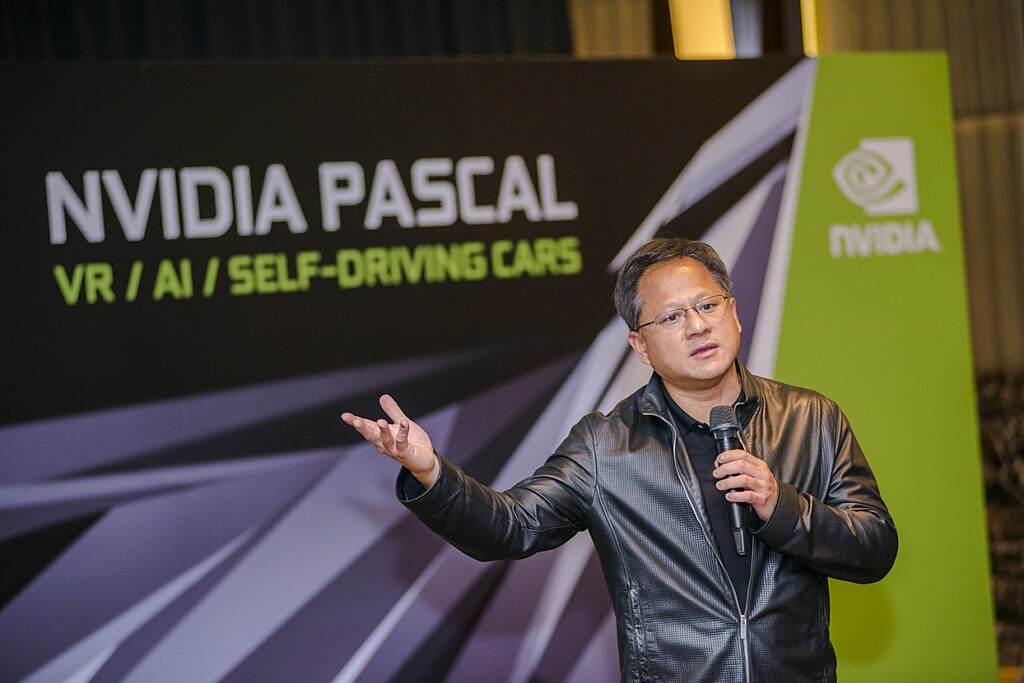
Nvidia CEO Jensen Huang stunned attendees at the company's annual GTC developers conference in California by projecting up to $1 trillion in purchase orders for its flagship AI chip technologies — doubling his own $500 billion forecast from just a year ago. Huang specifically cited strong demand for Blackwell and Rubin GPU architectures extending through 2027, signaling sustained confidence in Nvidia's market position despite growing competitive pressure.
Nvidia shares climbed as much as 1.8% following the announcement, reflecting investor enthusiasm around the upgraded outlook. The projection underscores Nvidia's dominance in supplying the high-performance processors that power large-scale AI data centers relied upon by major technology firms worldwide.
However, Huang's remarks came against a backdrop of intensifying competition. Rivals including AMD and Intel are aggressively expanding their AI chip portfolios, while tech giants like Google, Meta, and OpenAI are developing custom processors tailored for their own AI workloads. The growing shift from AI model training — where Nvidia has long excelled — toward AI inference, which enables autonomous agents to perform real-world tasks, poses a strategic challenge the company is working to address head-on.
A key highlight of the conference was Nvidia's unveiling of a new inference-focused chip incorporating technology from Groq, a startup it acquired for $17 billion in December. Analysts at Mizuho noted that Groq's architecture delivers significantly lower latency at a fraction of the cost compared to traditional GPUs, making it a compelling solution for next-generation AI applications. Nvidia also revealed investments totaling roughly $2 billion in optical connectivity companies Lumentum and Coherent, aiming to accelerate chip-to-chip communication using light-based technology.
With a commanding lead in AI infrastructure and a rapidly expanding product portfolio, Nvidia continues positioning itself as the backbone of the global artificial intelligence revolution.













