


 US Officials Split Over Response to Israeli West Bank Settlements
  Ghana Says Western Support Growing for Slave Trade Reparations
  Trump, Xi Focus on Trade and AI at White House Summit
  Russian Envoy Dmitriev Heads to US for Ukraine Talks
  Taiwan Thanks US for Support Ahead of Trump-Xi Summit
  NATO Boosts Intelligence Sharing Amid Russia Hybrid Threats
  Mexico-US Trade Talks Delayed to October as Tariff Negotiations Continue
  Trump Asks Supreme Court to Restore Third-Country Deportations
  US, China Extend Trade Truce to Jan. 10 Ahead of Trump-Xi Summit
  Pezeshkian Says US Must Choose When Iran War Ends
  Judge Orders Trump to Restore White House Access for CNN, MS NOW and Politico
  EU Defence Build-Up Too Slow for 2030 Russia Readiness Goal
  Europe Warns Russia Is Escalating Hybrid Attacks Across NATO
  Yemen Violence Displaces 130,000 as Civilian Toll Rises
  US Senate Rejects Iran War Powers Resolution in 50-49 Vote
  Sudan Rejects US Legitimacy Remarks, Defends Sovereignty
  Kremlin Says No Decision Yet on Putin-Trump December Summit


 Add as a preferred source on Google
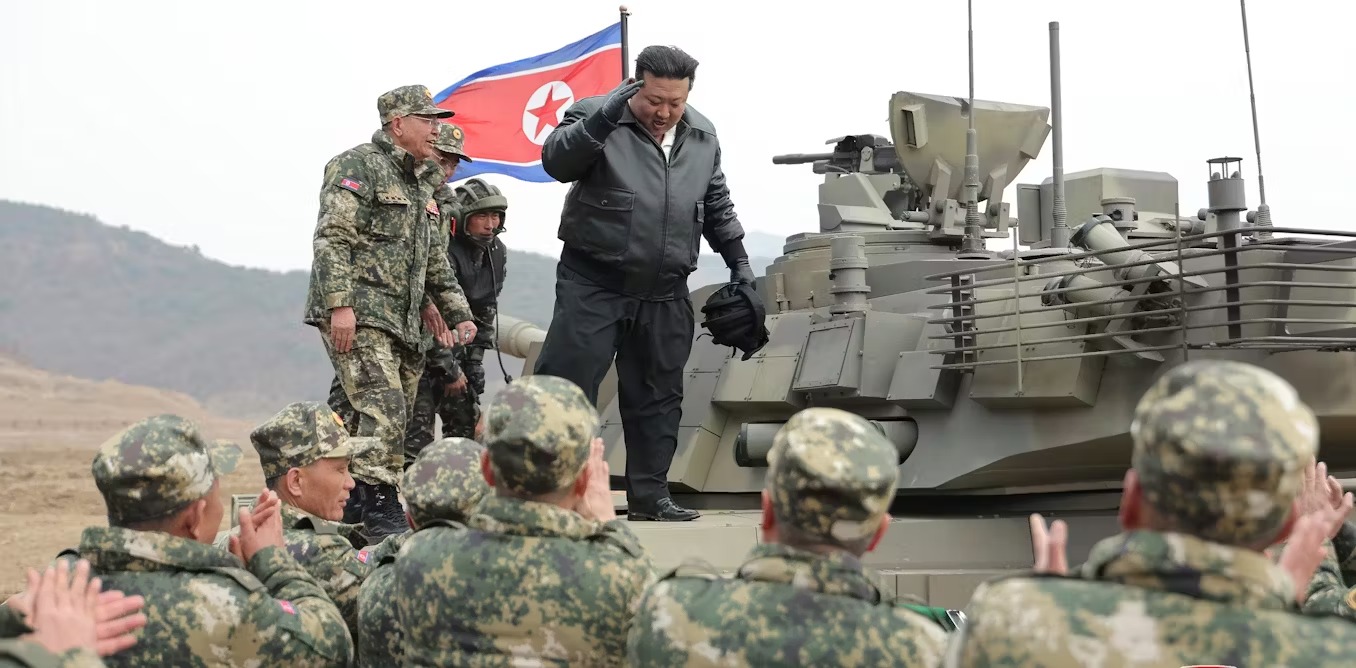
South Korea's Yonhap news agency reported on Saturday that North Korea launched an unidentified ballistic missile in an easterly direction. Military officials in Seoul are still analyzing the missile's type and flight trajectory, but the launch represents yet another step in Pyongyang's accelerating weapons modernization program.
This latest test comes just days after North Korea fired a series of short-range ballistic missiles toward its eastern coastal waters on April 8. Leader Kim Jong Un has repeatedly justified these provocations as necessary defensive measures against what his regime labels as continued American aggression toward the Korean Peninsula.
Security analysts draw a direct line between Pyongyang's escalating behavior and the current state of global geopolitics. With the United States diverting significant military attention and resources toward the Middle East — particularly in response to the ongoing U.S.-Israeli conflict with Iran — North Korea appears to be strategically exploiting reduced international oversight. The mounting crisis surrounding the Strait of Hormuz, a critical global energy chokepoint, has further divided Washington's focus, creating what Pyongyang seemingly views as an opportune window to advance its strategic objectives.
This pattern of calculated provocation highlights a broader and increasingly concerning trend: adversarial nations are growing bolder as multi-front geopolitical instability stretches the attention and resources of major world powers. North Korea's willingness to accelerate missile testing during periods of global distraction signals a deliberate long-term strategy rather than isolated incidents.
For international markets already struggling with supply chain disruptions and volatile energy prices, North Korea's continued provocations add another layer of uncertainty. Investors and policymakers alike must now factor in the growing risk that regional flashpoints could intensify simultaneously, compounding economic pressures on an already fragile global outlook. Staying informed on these developments is increasingly essential for navigating today's geopolitical risk environment.







