


 Microsoft's $10 Billion Japan Investment: AI Infrastructure and Data Sovereignty Push
  NASA's Artemis II Crew Arrives in Florida for Historic Moon Mission
  Nanya Technology Shares Surge 10% After $2.5 Billion Private Placement from Sandisk and Cisco
  Australia's Social Media Ban for Under-16s Sparks Global Movement
  China's Push to Steal Taiwan's Chip Technology and Talent Raises Security Alarms
  California's AI Executive Order Pushes Responsible Tech Use in State Contracts
  MATCH Act Targets ASML and Chinese Chipmakers in New U.S. Export Crackdown
  Samsung Electronics Posts Eightfold Profit Surge Driven by AI Chip Demand
  TSMC Japan's Second Fab to Produce 3nm Chips by 2028
  OpenAI Executive Shake-Up Ahead of Anticipated 2026 IPO
  NASA Artemis II: First Crewed Moon Mission Since Apollo Takes Four Astronauts on 10-Day Lunar Journey
  Apple Turns 50: From Garage Startup to AI Crossroads
  Rubio Directs U.S. Diplomats to Use X and Military Psyops to Counter Foreign Propaganda
  Reflection AI Eyes $25 Billion Valuation in Massive $2.5 Billion Funding Round
  Meta and Google just lost a landmark social media addiction case. A tech law expert explains the fallout
  SpaceX Eyes Historic IPO at $1.75 Trillion Valuation
  Annie Altman Amends Sexual Abuse Lawsuit Against OpenAI CEO Sam Altman


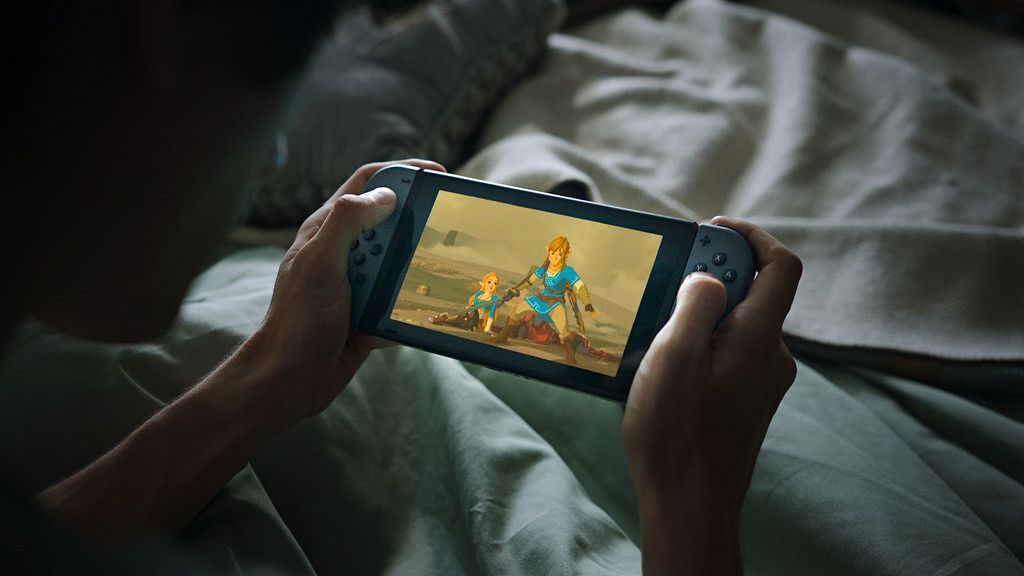

Nintendo have always done things their own way. The company has always been an innovator and each new games console it releases, from the Gameboy to the Wii, is usually labelled novel or gimmicky. Things are no different with its latest offering, the Nintendo Switch, which is the first hybrid console that can be used as a home gaming centre or a portable handheld device. But if you look through the company’s bloodline of previous systems, you can find common themes and design goals that Nintendo has been refining for years and that still emerge in the Switch.
The new device consists of a tablet computer that can be used on its own or connected to a larger monitor and accompanied by a handheld controller more like a traditional games console. The two sides of the “Joy-Con” controller can be detached and reattached to the tablet for completely portable use, or used as separate controllers for two-player games, such as 1 2 Switch.
One of the things the Switch demonstrates is how far Nintendo has brought motion control since its first attempts at introducing the technology. Motion control is built into many aspects of some of the Switch’s key launch games, such as Legend of Zelda: Breath of the Wild, and needs to be precise and easy to use. Luckily, the system is very intuitive, especially in portable mode. The way the game uses motion control also counters one of its previous issues in that it doesn’t require players to expend too much energy while relaxing with their video games.
Nintendo first attempted to directly map what we do with our hands on screen nearly 30 years ago with the 1989 release of Mattel’s Power Glove for the Nintendo Entertainment System (NES). It detected the rotation and position of your hand and whether or not your hand was clenched. In theory, people tend to like direct mappings of controls to their function as it makes our interactions with a device more intuitive and easier to learn.
In reality, the Power Glove was a failure. The glove was tracked using an ultrasonic sensor rather than the infrared sensors used for motion capture today. And using sound rather than light to track movement meant the signal was too slow and created latency issues that made the glove seem sluggish and unresponsive.
But, despite its problems, the Power Glove was a clear indication that Nintendo supported a vision for this design space. Years later, once the technology had caught up, the company was finally able to implement its vision with the Wii.
This became Nintendo’s best-selling home console in part because its motion control system was so successful it helped introduce people to gaming who had previously found other consoles inaccessible. The Nintendo Switch builds on the motion control of the Wii by adding an infrared motion camera to the right-hand JoyCon, capable of recognising distance and shapes made by the hand nearby and making motion capture more portable.
Another instantly noticeable element of the Switch is the fidelity of the haptic feedback its controller provides. While it doesn’t quite have the finesse of the “Taptic Engine” found inside the latest Apple iPhones, the amount of information that is encoded into the haptic feedback of the Joy-Con controllers is impressive.
This is particularly noticeable when playing 1 2 Switch, which encourages players to face each other and not the screen, relying on the haptic feedback for guidance. In one game, I was required to balance up to four balls rolling around in a virtual box, and was easily able to detect their position using the haptics inside the Joy-Con controller.
Again, this technology has progressed significantly from the early days of haptic feedback. And again, it harks back to a pioneering attempt by Nintendo to introduce the technology with the Rumble Pak add-on for the Nintendo N64 console. In this case, the game would activate a small single motor with an offset weight attached to the end to produce the rumble effect.
Even what is perhaps the most unusual element of the Switch – the detachable controllers – has a precedent. Nintendo previously produced a mobile console with controllers that are separate from the main body with several of its “Game and Watch” series of devices in the 1980s, most notably Donkey Kong 3.
I think the Nintendo Switch has a lot of potential. There is something very powerful about just being able to lift it out of the dock and play the same game, anywhere. Nintendo have always focused on fun, playful, user-centric interactions, rather than being tempted to impress with graphical capabilities. When people are at the centre of design, even small issues can make or break a system. Maybe this time, though, with Nintendo’s pedigree, they have a winning mix.
 Brendan Cassidy receives funding from the Engineering and Physical Sciences Research Council (EPSRC).







