


 Rubio Directs U.S. Diplomats to Use X and Military Psyops to Counter Foreign Propaganda
  Australia's Social Media Ban for Under-16s Sparks Global Movement
  Cybersecurity Stocks Tumble After Anthropic's Claude Mythos AI Leak Sparks Market Fears
  OpenAI Executive Shake-Up Ahead of Anticipated 2026 IPO
  NASA's Artemis II Mission: First Crewed Lunar Journey Since Apollo
  Microsoft Eyes $7B Texas Energy Deal to Power AI Data Centers
  Elon Musk Ties SpaceX IPO Access to Mandatory Grok AI Subscriptions
  Chinese Universities with PLA Ties Found Purchasing Restricted U.S. AI Chips Through Super Micro Servers
  Britain Courts Anthropic Amid US Defense Department Dispute
  MATCH Act Targets ASML and Chinese Chipmakers in New U.S. Export Crackdown
  Nanya Technology Shares Surge 10% After $2.5 Billion Private Placement from Sandisk and Cisco
  Reflection AI Eyes $25 Billion Valuation in Massive $2.5 Billion Funding Round
  Google's TurboQuant Algorithm Sends Memory Chip Stocks Tumbling
  China's Push to Steal Taiwan's Chip Technology and Talent Raises Security Alarms
  Apple Turns 50: From Garage Startup to AI Crossroads
  SK Hynix Eyes Up to $14 Billion U.S. IPO to Fund AI Chip Expansion


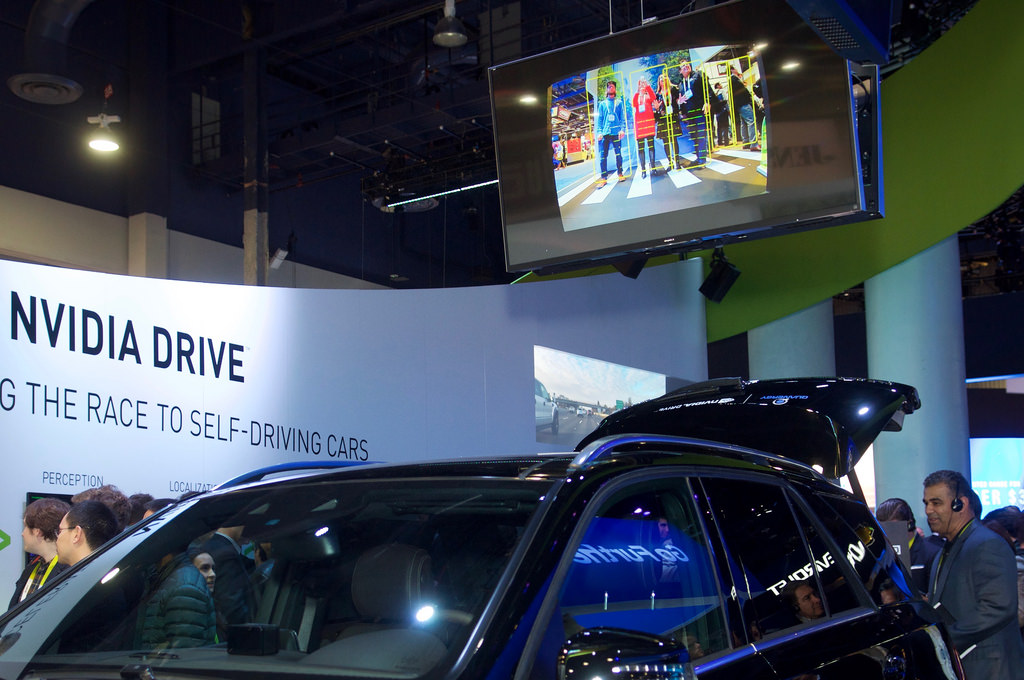
With the auto world shifting towards more and more autonomy in fields like driving, manufacturing, and even providing services, NVidia shows its commitment to have some presence in the growing market. During this year’s Consumer Electronics Show, the graphics chip maker showed off its driverless technology that was on board two vehicles.
The vehicles in question are the Lincoln MKZ and the Audi Q7, both of which were outfitted by third-party companies with the full suite of self-driving technology by NVidia, TechCrunch reports. The Lincoln is the company’s premier test vehicle, which even earned it the moniker BB8. NVidia has been using it to build a neural network, which is essential for self-driving cars to function properly.
As for the Q7, it’s equipped with the DRIVE PX 2 by NVidia, which allows it to have locally restricted neural network building. It basically observes what the driver does in order to learn what it needs to do once it takes the wheel. When TechCrunch and other media figures took the Q7 out for a spin on a race track in Las Vegas, the autonomous functionality of the vehicle was built in a period of just four days. This was according to Danny Shapiro, the Senior Director of Automotive at NVidia.
Audi itself was impressed by the progress that the chipmaker has managed to make, especially considering just how young its driverless technology ambition is. When the Q7 took to the race track, complete with simulated road conditions, its performance was reportedly perfect.
NVidia also showed off the onboard artificial intelligence that also managed to impress. Known as Co-Pilot, the AI basically acts as a wingman for the driver, Forbes reports. It warns the driver of imminent danger if there is a need to signal, and even making some corrections pertaining to driver error.







