


 SpaceX Nasdaq 100 Weight to More Than Double in Rebalance
  US Northeast Airports Resume Operations After Telecom Outage Disrupts Thousands of Flights
  Microsoft Stock Upgraded as Stifel Sees Stronger Azure Growth
  Trump Plans Federal AI Force and AI Czar
  SoftBank Launches $11 Billion Bond Sale to Fund OpenAI Investment
  NASA, Boeing Discuss Expanding Starliner Missions
  OpenAI Urges US-Led Global Standards for Frontier AI
  Nvidia CEO Jensen Huang Expected at Trump-Xi State Dinner
  Apple Pay Set for India Launch With Axis Bank
  France Urges Faster AI Push Despite Safety Risks
  Hyundai CEO Warns Chinese Automakers Could Disrupt US Market
  Westinghouse Targets $50 Billion Valuation in U.S. IPO
  SK Hynix, Intel Discuss U.S. Memory Chip Production Deal
  Big AI wants to slow down AI research. Is it a safety pause or a strategic retreat?
  Databricks to Invest $350 Million in Singapore AI Expansion
  Rosenblatt Starts Nokia at Buy on AI Networking Growth
  Who should own the knowledge that underpins AI technology?


 Add as a preferred source on Google
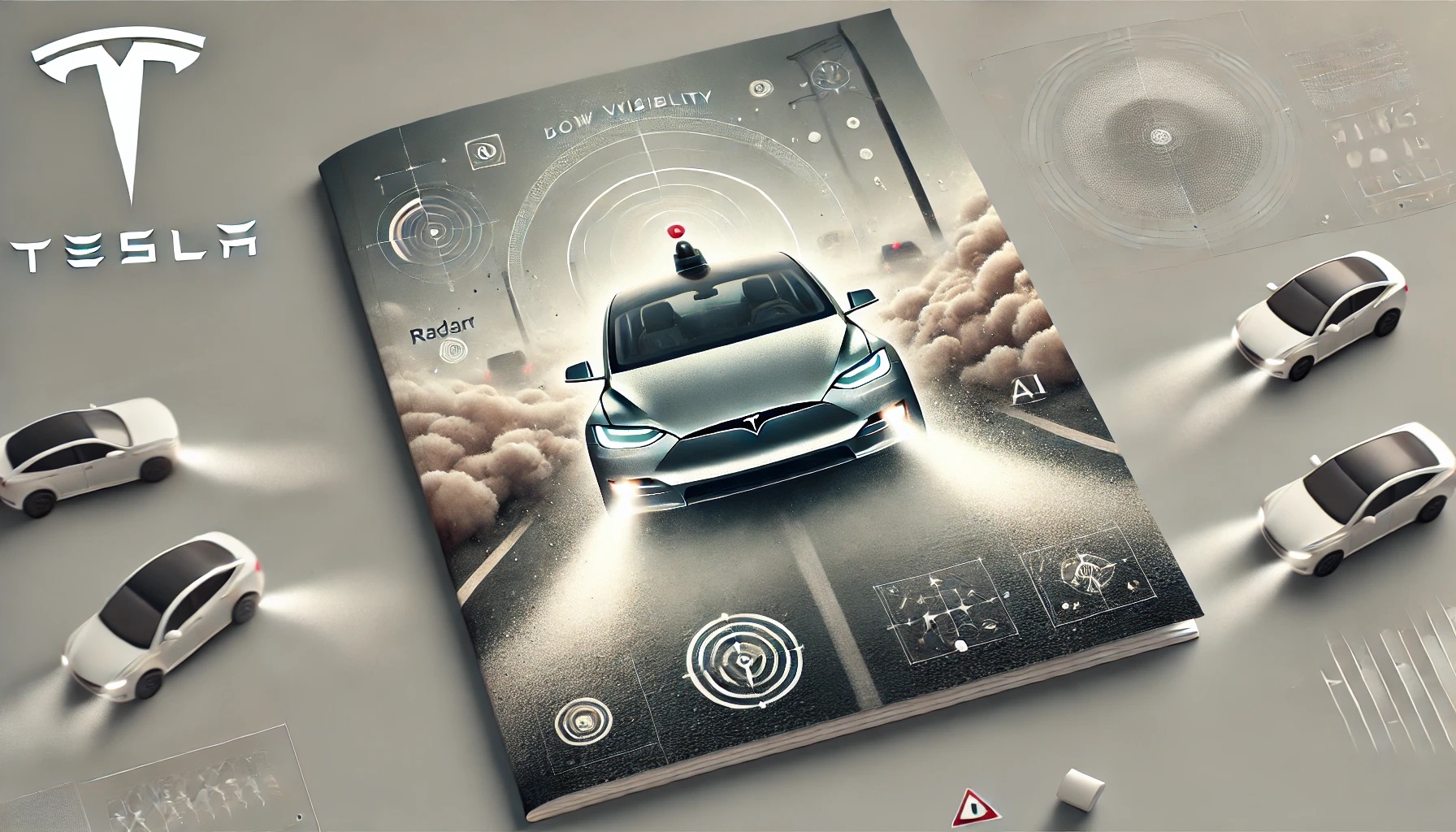
The National Highway Traffic Safety Administration (NHTSA) has launched an investigation into Tesla's Full Self-Driving (FSD) system after multiple accidents occurred in low-visibility conditions like sun glare, fog, and dust. The outcome could delay Tesla’s rollout of unsupervised FSD capabilities set for 2024.
NHTSA Probes Tesla's FSD for Visibility Issues, Threatening 2024 Full Autonomy Rollout Plans
Tesla continues to face significant skepticism regarding its reliance on a vision-only approach for autonomous driving. As the electric vehicle giant prepares to introduce an unsupervised version of its Full Self-Driving (FSD) system as early as next year, the National Highway Traffic Safety Administration (NHTSA) has initiated a new investigation into Tesla's system. This probe focuses on the FSD's purported challenges in navigating reduced visibility conditions.
According to Wccftech, the NHTSA has launched a preliminary investigation into several accidents when Tesla’s FSD was engaged in poor visibility, with one of the four cases resulting in a fatality. According to the agency:
"In these crashes, the reduced roadway visibility arose from conditions such as sun glare, fog, or airborne dust."
While this investigation is still in its early stages, any negative findings could significantly delay Tesla’s plans to roll out unsupervised FSD capabilities by next year. Such a setback could, in turn, hinder the planned launch of its fully autonomous "Cybercab," envisioned for 2026.
Musk Confirms Tesla's Full Autonomy by 2027, But NHTSA Probe Could Force Key Changes
Elon Musk recently confirmed during the Cybercab unveiling on October 10 that a "completely autonomous" version of FSD for Tesla’s Model S, 3, X, and Y vehicles would begin rolling out in Texas and California in 2024, with the Cybercab launch slated for "before 2027."
Despite these ambitious plans, many analysts remain cautious. Available data from the California DMV reveals that Waymo's autonomous vehicles experience a disengagement every 17,311 miles, a performance surpassing Tesla's FSD capabilities.
A potentially unfavorable ruling from the NHTSA could force Tesla to reconsider its vision-only approach by incorporating LiDAR sensors, which offer a more reliable method of detecting objects in various visibility conditions. However, this shift would come at a considerable cost. It would likely push back Tesla’s autonomy-related ambitions, mainly since its current FSD system relies solely on a vision-based neural network.







