


 SpaceX Prioritizes Moon Mission Before Mars as Starship Development Accelerates
  Tencent Shares Slide After WeChat Restricts YuanBao AI Promotional Links
  Nintendo Shares Slide After Earnings Miss Raises Switch 2 Margin Concerns
  OpenAI Expands Enterprise AI Strategy With Major Hiring Push Ahead of New Business Offering
  Jensen Huang Urges Taiwan Suppliers to Boost AI Chip Production Amid Surging Demand
  Instagram Outage Disrupts Thousands of U.S. Users
  Nvidia CEO Jensen Huang Says AI Investment Boom Is Just Beginning as NVDA Shares Surge
  SoftBank and Intel Partner to Develop Next-Generation Memory Chips for AI Data Centers
  Elon Musk’s SpaceX Acquires xAI in Historic Deal Uniting Space and Artificial Intelligence
  Google Cloud and Liberty Global Forge Strategic AI Partnership to Transform European Telecom Services
  Amazon Stock Rebounds After Earnings as $200B Capex Plan Sparks AI Spending Debate
  Baidu Approves $5 Billion Share Buyback and Plans First-Ever Dividend in 2026
  Oracle Plans $45–$50 Billion Funding Push in 2026 to Expand Cloud and AI Infrastructure
  SpaceX Pushes for Early Stock Index Inclusion Ahead of Potential Record-Breaking IPO
  Sony Q3 Profit Jumps on Gaming and Image Sensors, Full-Year Outlook Raised
  Nvidia Nears $20 Billion OpenAI Investment as AI Funding Race Intensifies


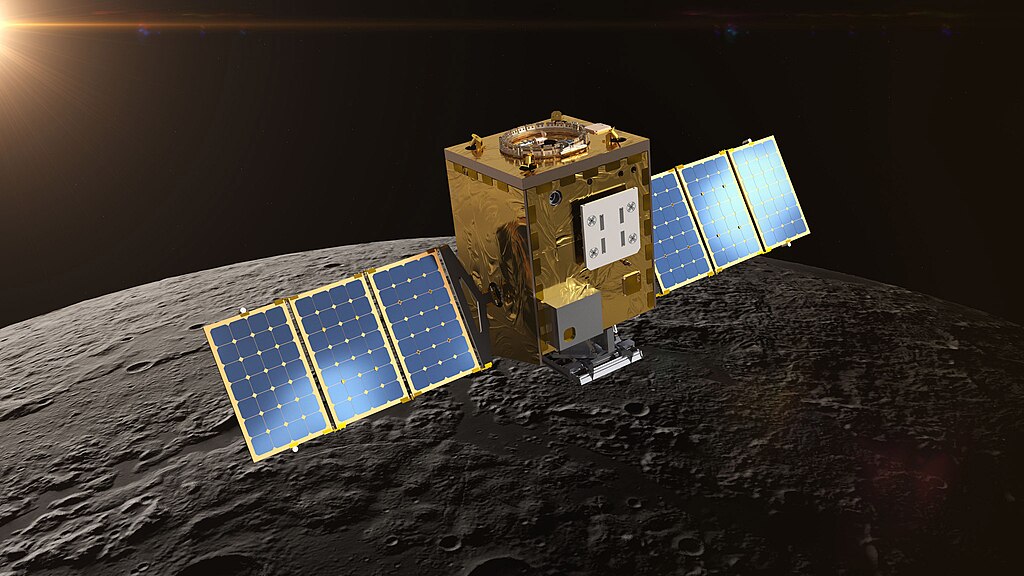
NASA’s Lunar Trailblazer satellite, launched aboard a SpaceX Falcon 9 from Florida, aims to map water on the Moon—crucial for future lunar missions. Built by Lockheed Martin, the dishwasher-sized satellite was deployed as a secondary payload alongside Intuitive Machines’ lunar lander.
Though the Moon appears dry, previous studies suggest water exists, even in sunlit areas. At the permanently shadowed lunar poles, scientists suspect significant ice deposits. Weighing 200 kg and spanning 3.5 meters with solar panels deployed, Lunar Trailblazer will orbit 100 km above the surface, capturing high-resolution images to analyze water distribution and the lunar water cycle.
Lunar water is vital for long-term human exploration, providing potential drinking water, oxygen, and hydrogen fuel. The mission's principal investigator, Bethany Ehlmann of Caltech, highlights its importance: "Understanding where a rover or astronaut should go will benefit future missions."
Equipped with two key instruments, the Lunar Thermal Mapper (LTM) and the High-resolution Volatiles and Minerals Moon Mapper (HVM3), the satellite will measure surface temperatures and detect water’s spectral signature. According to Oxford planetary scientist Tristram Warren, water movement on the Moon is likely temperature-driven, making this research essential for exploration planning.
Lunar water may originate from solar wind reactions with minerals or from comet and meteorite impacts over billions of years. While its exact quantity remains unknown, estimates suggest hundreds of millions of tons. Beyond aiding astronauts, understanding lunar water could offer insights into Earth’s water origins.
As Lunar Trailblazer begins its mission, its findings could shape the future of space exploration, unlocking the Moon’s potential as a sustainable outpost for humanity.













