


 Trump Administration to Launch Autism Initiatives Targeting Acetaminophen Use and New Treatment Options
  SpaceX Pivots Toward Moon City as Musk Reframes Long-Term Space Vision
  China Reviews Broadcom Switch Use in State Data Centres
  Tabletop particle accelerator could transform medicine and materials science
  DOJ Will Investigate AI-Related Crimes, Attorney General Blanche Says
  Japan, U.S. Discuss $19 Billion GlobalFoundries Chip Plant
  FDA Adds Fatal Risk Warning to J&J and Legend Biotech’s Carvykti Cancer Therapy
  Cathie Wood Backs AI Slowdown as Safety Concerns Grow
  SpaceX Nasdaq 100 Weight to More Than Double in Rebalance
  NASA Partners with Katalyst to Save Swift Observatory with Innovative Docking Mission
  Apple Pay Set for India Launch With Axis Bank
  Physicists zoom into the birth of cosmic rainstorms with new CERN study
  Trump Administration Releases New UFO Files and Apollo Mission Records
  Big AI wants to slow down AI research. Is it a safety pause or a strategic retreat?
  Cogent Biosciences Soars 120% on Breakthrough Phase 3 Results for Bezuclastinib in GIST Treatment
  Hyundai CEO Warns Chinese Automakers Could Disrupt US Market
  SpaceX’s Starship Completes 11th Test Flight, Paving Way for Moon and Mars Missions


 Add as a preferred source on Google
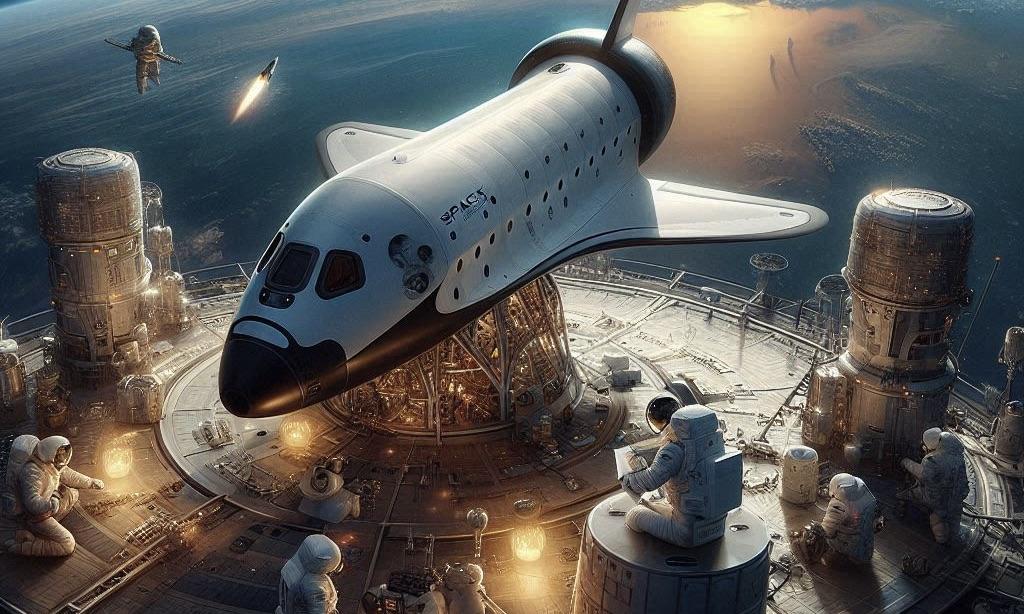
NASA is evaluating the possibility of using SpaceX's Crew Dragon to return astronauts Butch Wilmore and Suni Williams to Earth due to ongoing thruster issues with Boeing's Starliner. The agency remains cautious, weighing the risks and ensuring safety in its final decision.
NASA Evaluates SpaceX Crew Dragon for Astronaut Return Amid Starliner Thruster Concerns
NASA appears to be more receptive to the possibility of transporting astronauts Butch Wilmore and Suni Williams on SpaceX's Crew Dragon during a press conference that took place on August 7 earlier. NASA's associate administrator for space operations, Ken Bowersoxx, disclosed that the agency is "becoming increasingly serious about the evaluation of our alternative options," which include the possibility of returning Williams and Wilmore to Earth aboard SpaceX's Crew Dragon.
Steve Stich, the agency's commercial crew program manager, stated that NASA has collaborated with SpaceX to guarantee that the astronauts can be reboarded on the Crew 9 Dragon, which will launch next month. Nevertheless, the agency remains convinced that the most effective course of action in an emergency on the ISS is to return the crew to Earth via the Starliner.
NASA is collaborating with SpaceX to maintain the possibility of returning the crew to Earth on a Dragon spacecraft. However, Bowersoxx later stated that this analysis is one of the options that could potentially result in future work, "where we need to bring a Dragon crew or a Soyuz crew back on a Starliner." The "uncertainty bound" for the data for the ship's propulsion and thruster systems is the primary factor preventing NASA from carrying Wilmore and Williams with them.
Stich elaborated on the work being conducted by NASA and Boeing and the agency's contingency plan for SpaceX to illustrate this "bound further." He believes that the Teflon seal in the thruster system is the primary factor presently restricting NASA's decision-making process. This seal initially halted fuel flow, resulting in a thrust loss.
NASA Investigates Thruster Anomalies with Ground Tests to Ensure Safe Starliner Return for Crew
During the fire test last weekend, the NASA official clarified that the thrusters were all launched at nominal levels. Additionally, the thruster that exhibited the most thrust degradation (or loss) was at approximately 80% degradation before the test, but it has since returned to 98% thrust. This has prompted NASA to posit that "that piece of Teflon must have contracted and is no longer obstructing the flow in the same way."
Although this offers the agency greater assurance, it needs to verify that the anomalies it and Boeing have replicated on the ground are the same as those that the thrusters are experiencing in space. Consequently, teams are currently endeavoring to comprehend "the conditions that caused the thruster to fail offs," as "it is not always at the same temperature and the same number of pulses," as stated by Stich.
NASA is conducting ground modeling to ascertain the forces acting on Teflon and its potential to contract over time. The key to comprehending this is the physics of Teflon's behavior, which includes the underlying causes of its heating and contraction. This comprehension will be employed to simulate the Starliner's return profile (its descent phase) to assist NASA in making the final decision regarding the crew's return home.
NASA Delays Crew-9 Launch, Evaluates Flexible Return Options for Astronauts Amid Starliner Issues
NASA postponed the launch of SpaceX's Crew-9 until late September when it investigated the causes of the thruster anomalies on the Starliner. According to Wccftech, the agency has collaborated with SpaceX to fly two passengers in September and return with four in February to incorporate "flexibility" into its return options for Wilmore and Williams. It has identified the suits for the Boeing crew, configured the seats with the appropriate foam inserts, and identified additional supplies that will be sent on Crew 9 if Starliner returns unmanned.
Nevertheless, Stich advised that NASA has yet to approve this mission profile officially, and a decision is expected to be made in the middle of August. Stat departs the ISS before Crew 9 can dock with it. If an uncrewed Starliner undocks, Boeing must update the ship's software parameters and train ground teams for this specific mission profile. These actions require additional time before a return attempt.
Notably, he stated later on during the call that the "right course of action would be to return Butch and Suni in Starliner should there be an emergency at ISS where it's an uninhabitable environment or they need to get off station, Starliner would be their best option."
Bowersox further stated that the discrepancy in the thought process results from "how we make decisions about risk in contingency situations." He also stated that NASA is prepared to fly Wilmore and Williams in Starliner during an emergency while simultaneously evaluating other options for their routine return. He emphasized that encountering such contingency situations is exceedingly unlikely. However, given the critical nature of these scenarios, NASA would generally be ready to assume an additional level of risk.







