


 Australia's Social Media Ban for Under-16s Sparks Global Movement
  OpenAI Pulls the Plug on Sora, Ending $1 Billion Disney Partnership
  Microsoft Eyes $7B Texas Energy Deal to Power AI Data Centers
  Annie Altman Amends Sexual Abuse Lawsuit Against OpenAI CEO Sam Altman
  Chinese Universities with PLA Ties Found Purchasing Restricted U.S. AI Chips Through Super Micro Servers
  Apple Turns 50: From Garage Startup to AI Crossroads
  Cybersecurity Stocks Tumble After Anthropic's Claude Mythos AI Leak Sparks Market Fears
  Microsoft's $10 Billion Japan Investment: AI Infrastructure and Data Sovereignty Push
  NASA Artemis II: First Crewed Moon Mission Since Apollo Takes Four Astronauts on 10-Day Lunar Journey
  MATCH Act Targets ASML and Chinese Chipmakers in New U.S. Export Crackdown
  Google's TurboQuant Algorithm Sends Memory Chip Stocks Tumbling
  Nanya Technology Shares Surge 10% After $2.5 Billion Private Placement from Sandisk and Cisco
  Britain Courts Anthropic Amid US Defense Department Dispute
  Federal Judge Blocks Pentagon's Blacklisting of AI Company Anthropic
  TSMC Japan's Second Fab to Produce 3nm Chips by 2028


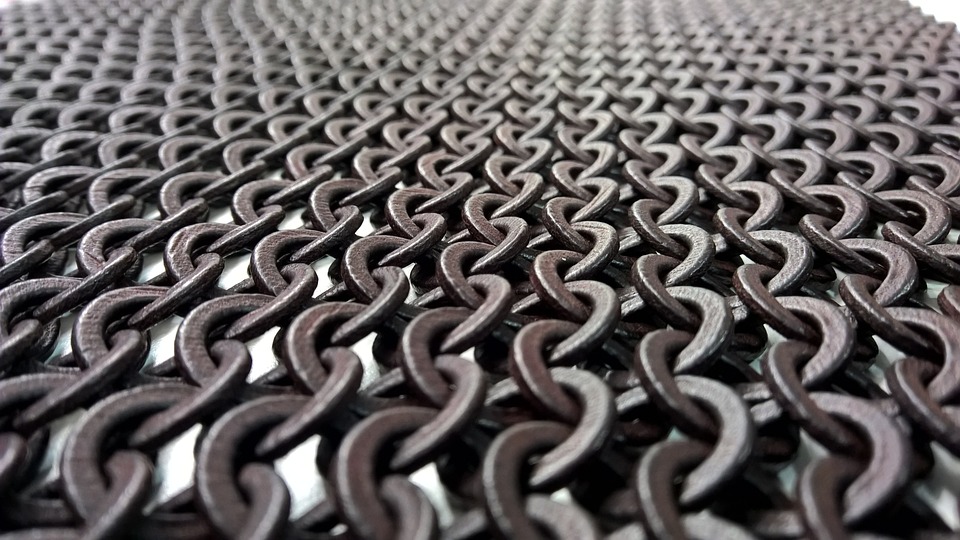
Space is a dangerous environment, arguably the most dangerous when taking all of the hazards into account. There’s cosmic radiation, debris, asteroids, solar storms, and human error. In order to increase the level of protection that astronauts get while living under such perilous circumstances, NASA is continuously developing new safety technologies. Its newest offering is a 3D-printed chainmail, similar to what medieval knights used to wear in battle.
Of course, since it is chainmail, NASA developed it as a means of adding extra protection to spacecraft and spacesuits by basically lining them with the new fabric, The Space Reporter reports. Much like how chainmail is basically made up of interlocking rings, the new material is made up of interconnected tiles that are made of tough alloy. It’s a versatile, durable resource that can work with a variety of uses without its strength getting compromised.
The new material was actually created by Raul Polit Casillas, one of NASA’s systems engineers working in its Jet Propulsion Laboratory. What might have influenced the development of the fabric is Casillas’ background in the fashion industry since he is actually the son of a designer from Spain.
In terms of the idea behind the fabric, it’s pretty easy to understand why the space-age 3D-printed chainmail would make a lot of sense. The material is foldable and is easy to integrate into several pieces of machinery and delicate mechanical aspects of satellites, suits, and the International Space Station. As a result, it’s not too difficult to adopt both during preparations and emergency responses.
Casillas designed the fabric to have four main properties, Futurism reports, with considerable tensile strength working with its reflective characteristics, flexibility, and passive heat management. This covers many of the threats that astronauts and space ships often contend with in space. Best of all, thanks to advancements in 3D-printing technology, the material is incredibly cheap to produce.







