


 Nintendo Shares Jump as Switch 2 Sales Boost Earnings
  AI Data Center Boom Faces New Risks as Public Backlash and Policy Scrutiny Grow
  SK Hynix Bonus Dispute Deepens as Union Rejects Stock-Based Payout Proposal
  Alphabet Stock Slides as Google AI Pioneer Jeff Dean Exits to Launch Discovery Loop
  T-Mobile Executives Reportedly Oppose $300 Billion Deutsche Telekom Merger
  Telegram Restored on Apple App Store After Temporary Removal
  DeepSeek to Raise AI API Prices as Demand for New Models Surges
  Roblox Stock Drops 16% as Q3 Bookings Forecast Misses Expectations
  Meta Cuts Wipro Outsourcing by 25% After AI-Led Restructuring
  Nvidia to Invest Up to $3 Billion in Blackstone-Backed Lancium
  Apple Restores Telegram to App Store After Content Policy Violation
  Western Digital Q4 Earnings Beat Estimates as FY2027 Outlook Tops Expectations
  Sony Raises Full-Year Outlook After Q1 Profit Jumps 40% on Gaming and Chip Growth
  Palantir Stock Soars as AI Demand Drives Strong Q2 Earnings and Higher 2026 Outlook


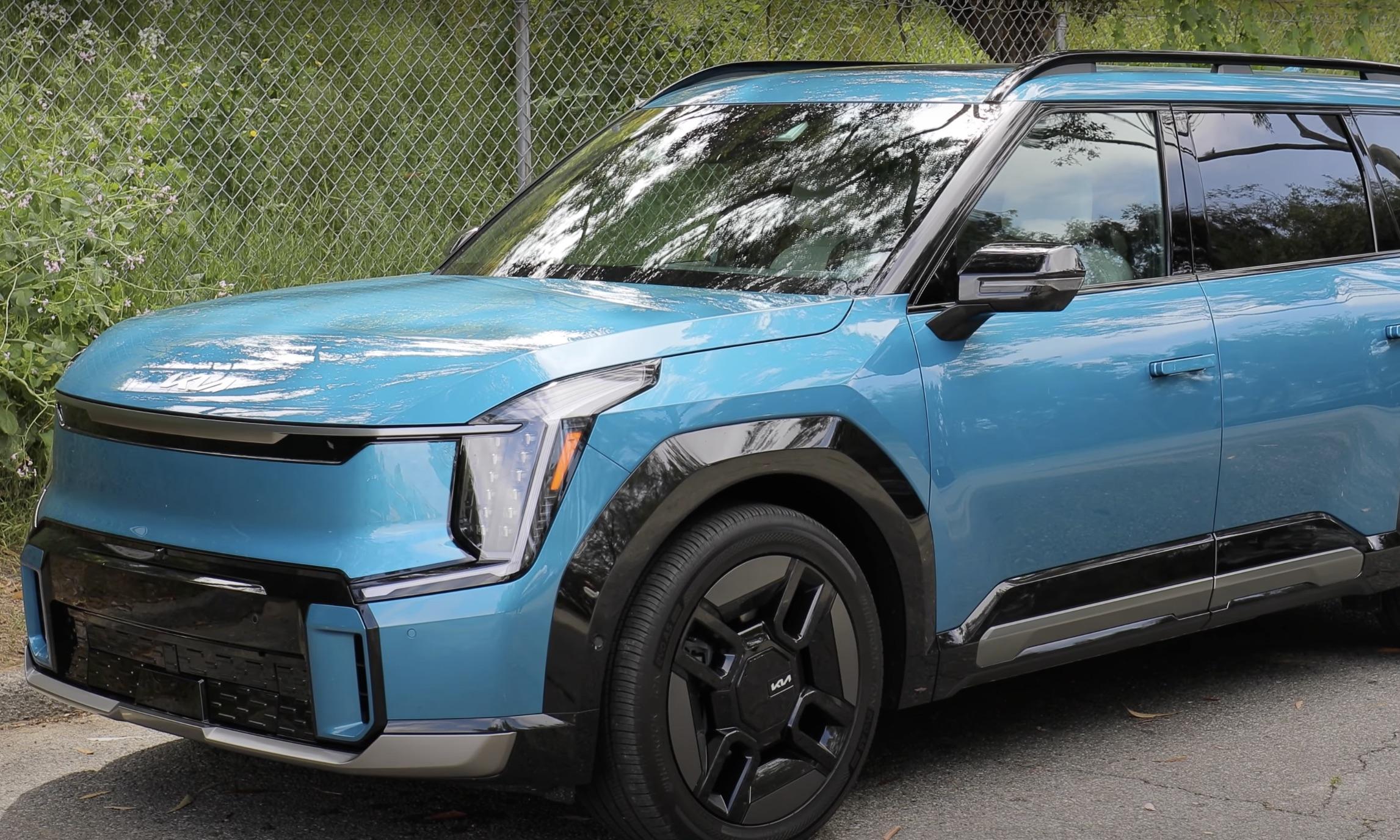
Although the three-row Kia EV9 has been a huge success up to this point, it does have one significant drawback: because it is manufactured in Korea, it is not eligible for a tax credit of up to $7,500 unless it is obtained through leasing. This is going to change in a short amount of time because, as of today, the EV9 is an SUV manufactured in the United States.
Kia's West Point Facility Achieves Operational Status, Qualifying EV9 for Federal Tax Credit
Today, Kia and local lawmakers in Georgia made the announcement that the facility that the manufacturer operates in West Point is now operational and has not experienced any of the delays that have plagued other electric vehicle facilities. This significant achievement not only places the electric SUV in a position to be eligible for the federal tax credit but also brings it into the ranks of a select few three-row electric SUVs that are manufactured in the United States, such as the Rivian R1S and the Tesla Model X, as per InsideEVs.
The announcement was made by Kia and local authorities, such as the United States Senator for Georgia, Jon Ossoff, who has been advocating for the development of American manufacturing and federal subsidies to stimulate Georgia's economy. According to a statement released by Ossoff, "I would like to extend my congratulations to Kia Georgia on this significant achievement that was accomplished less than two years after the enactment of made-in-America manufacturing incentives that we passed into law."
Currently, the Kia EV9 is produced at the Autoland Gwangmyeong automobile plant, which is located in South Korea. Initially, Kia intended to produce approximately 50,000 units for the first model year at this plant. Subsequently, the company intends to diversify its manufacturing internationally by beginning this year. It was Kia's only production line for the EV9 up to this point, and it could turn out approximately 140 vehicles every day.
It comes in five different trim levels and may be configured with six or seven seats in the United States. Customers have the option of selecting from two different battery capacities. According to the EPA, the smaller battery pack with 76.1 kilowatt-hours capacity can range 230 miles. The larger 99.8 kWh battery has the potential to provide a range of up to 304 miles when used in the rear-wheel-drive configuration.
Kia EV9 Praised for Performance but Faces Price Concerns; Local Battery Plants to Boost Tax Credits
In the early reviews, the EV9 received accolades for its performance and range, but the expensive retail price is a cause of contention for many potential buyers. From the standard rear-wheel-drive model with the smaller battery, which costs $54,900, to the GT-Line all-wheel-drive model with the larger battery, which costs $73,900, the price range is quite extensive.
Nevertheless, it is anticipated that it will gain from local battery manufacturing. The Hyundai-SK and Hyundai-LG Energy Solution battery plants are anticipated to go online in Georgia later. As a result, we anticipate that the EV9 will initially qualify for the half tax credit and then later, at some point in 2025, when the battery plants go live, qualify for the full tax credit.
Located in the Southeastern United States, Georgia is a member of the Battery Belt, which is experiencing tremendous growth. As a result, Georgia has received the biggest share of federal subsidies from the Inflation Reduction Act concerning sustainable energy projects. The state of Georgia has announced investments totaling $18 billion, which will be distributed among solar, electric vehicle, and battery projects. As a result of this, around 11,000 jobs in the field of clean energy would be created.
The West Point plant, worth $2.8 billion, also produces Kia's Telluride, Sorento, and Sportage SUVs. The facility operates around the clock, with three shifts per day, and has the potential to produce 350,000 units yearly. It sells to countries in the Pacific region, Canada, Mexico, the Caribbean, and the Middle East.







