


 Japan Defense Stocks Rally on Report of New Defense Ministry Bureau for Global Cooperation
  US Stock Futures Slip as Fed Minutes, Earnings Season Take Center Stage
  Iran Begins Oil Sale Talks With Japan Under U.S. Sanctions Waiver Amid Shipping Risks
  Japan Regional Bank Stocks Drop After Zentoshin Bankruptcy Sparks Credit Risk Concerns
  Cuba Power Grid Collapse Triggers Nationwide Blackout Amid Deepening Energy Crisis
  Asian Currencies Slip as Stronger US Dollar, Iran Tensions Pressure Regional FX
  Gold Price Today: Gold Slips as Dollar Rebounds Ahead of Fed Minutes
  Asian Stocks Slip as AI Chip Valuation Fears, Rising Oil Prices Weigh on Markets
  RBNZ Raises Interest Rates to 2.50%, Signals More Tightening as Inflation Risks Persist
  Oil Prices Slip as OPEC+ Boosts August Output, Oversupply Concerns Weigh on Crude Market
  Gold Prices Fall Amid Rate Jitters; Copper Steady as China Stimulus Eyed


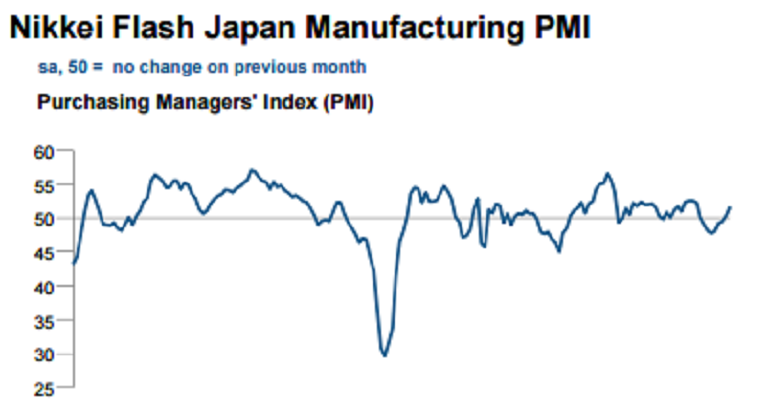
Manufacturing conditions in Japan rose at the fastest pace in nine months during the period of October, helped by a surge in sales, which have risen for the first time since January this year. A reading above 50 indicates expansion, while below the mark represents contraction in manufacturing activity.
Japan's flash manufacturing Purchasing Managers’ Index (PMI) rose to 51.7 in October, compared to 50.4 in September, data released by IHS Markit showed Monday. Also, flash Japan Manufacturing Output Index jumped to 53.7 in October, from 50.8 in September, with production increasing at the fastest rate since December 2015.
Published on a monthly basis approximately one week before final PMI data are released, this makes the PMI the earliest available indicator of manufacturing sector operating conditions in Japan. The estimate is typically based on approximately 85-90 percent of total PMI survey responses each month and is designed to provide an accurate indication of final PMI data, reports from HIS Markit confirmed.
Further, the data suggested that a strong expansion in foreign demand led to the rise in total new orders, as new exports rose at the fastest rate in nine months.
"Not surprisingly, goods producers were more confident to take on additional workers, with the rate of job hiring picking up to a two-and-a-half year high. Firms also benefitted from lower cost burdens, as input prices declined," said Amy Brownbill, Economist, HIS Markit.







