


 Gold Prices Fall Amid Rate Jitters; Copper Steady as China Stimulus Eyed


 Add as a preferred source on Google
The number of Japan's job seekers that dropped out of the labour force increased in March and April, but jobseekers returned to the labour force in May and June. Most of them were absorbed by the increase in employment numbers.
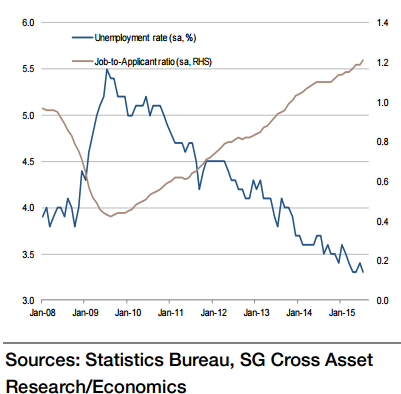
"In July, however, the number of job seekers dropping out of the labour force increased again. Japan's unemployment rate is expected to rise to 3.4% in August, from 3.3% in July. As a result, the unemployment rate fell to 3.3% in July (from 3.4% in June). An adjustment to 3.4% is expected in August", says Societe Generale.
Companies are feeling the labour shortage and are stepping up hiring. As more employees are changing jobs to seek better labour conditions, the unemployment rate has remained at around 3.4%, including those who exit or return to the labour force.
"The unemployment rate is likely to remain below 3.5%, corresponding to the NAIRU level. This, in turn, should underpin sentiment just as aggregate wages start to expand, thus enabling Japan to make a full exit from deflation", states Societe Generale.
However, if this situation fails to materialise, the BoJ's 2% price stability target will be difficult to achieve. The unemployment rate needs to fall below 3% for the target to be met, but this level currently seems very far away.
"The job-to-applicant ratio is likely to remain unchanged at 1.21 in August, which is the highest level since 1992, indicating that companies remain willing to increase their hiring", added Societe Generale.

- News

- Economy

- Central Banks
- Investing
- Research
- Roundups
- Digital Currency
- Insights
- Technical Analysis
- Technology
- Business
- Law
- Health
- Nature
- Fintech
- Science
- Topic
- Opinions
- ©Econometrics LLC . All Rights Reserved.
Japan's job-to-applicant ratio likely to remain at 1.21 in August
Monday, September 28, 2015 5:28 AM UTC
Editor's Picks



- Market Data
Most Popular




