


 Synthetic data could ease people’s concerns about privacy breaches. But who gets to create it?
  Bill Gates Warns Governments Are Unprepared for AI Disruption
  SoftBank Shares Jump 8% as SB Energy IPO Optimism Builds
  Cathie Wood Backs AI Slowdown as Safety Concerns Grow
  Japan, U.S. Discuss $19 Billion GlobalFoundries Chip Plant
  Databricks to Invest $350 Million in Singapore AI Expansion
  Trump Rejects Calls for Tougher AI Regulation
  DOJ Will Investigate AI-Related Crimes, Attorney General Blanche Says
  Cyber attacks? Bioterrorism? To ‘Pace the Frontier’ of AI effectively, we must improve our anticipatory thinking
  Europe can’t achieve space sovereignty alone. Here’s why
  Nvidia CEO Jensen Huang Expected at Trump-Xi State Dinner
  Unsustainable – or manageable? We don’t yet know how data centres will impact Australia’s environment
  Physicists zoom into the birth of cosmic rainstorms with new CERN study
  Qualcomm Gains on $60B Amazon AI Chip Deal
  Apple Pay Set for India Launch With Axis Bank
  US Federal Register Drops Alibaba Qwen AI Search Tool
  NASA, Boeing Discuss Expanding Starliner Missions


 Add as a preferred source on Google
A recent Massachusetts Institute of Technology (MIT) study challenges the prevailing notion that artificial intelligence (AI) is poised to replace a significant portion of jobs cost-effectively.
The MIT study, titled "Beyond AI Exposure," addressed growing concerns about the potential displacement of human workers across various industries.
Limited Viability of AI in Job Replacement
In one of the initial in-depth investigations into the practicality of AI displacing human labor, researchers focused on the cost-effectiveness of automating tasks in the United States, particularly those utilizing computer vision, such as teaching and property appraisal. The study revealed that only 23% of workers, measured in terms of dollar wages, could be efficiently replaced by AI. The upfront costs associated with implementing AI systems, especially in visual recognition, proved to be a limiting factor, making human labor more economical in some instances.
The study, funded by the MIT-IBM Watson AI Lab, surveyed approximately 1,000 visually-assisted tasks across 800 occupations.
According to Fortune, the findings indicated that a mere 3% of such tasks can be cost-effectively automated today, a figure projected to potentially increase to 40% by 2030 as data costs decrease and accuracy improves.
AI's Impact on Various Industries
Computer vision, a subset of AI enabling machines to extract meaningful information from digital images, demonstrated a favorable cost-benefit ratio in retail, transportation, warehousing, and healthcare sectors.
MIT researchers highlighted that the current feasibility extends to only 6% of tasks related to quality control in a hypothetical bakery. While the sophistication of AI tools like ChatGPT has led to concerns about job displacement, the MIT study suggests that a careful balance is needed to harness AI's potential fully without causing negative repercussions.
Neil Thompson, Director of the FutureTech Research Project at the MIT Computer Science and Artificial Intelligence Lab, emphasized that the study delves into the widespread applicability of computer vision across various occupations and industries.
According to Bloomberg, he highlighted the likelihood of increased automation in retail and healthcare, while areas like construction, mining, or real estate might see less impact from AI integration.
In conclusion, the MIT study challenges the narrative of imminent widespread job displacement due to AI, emphasizing the nuanced impact across different sectors and the need for a cautious approach to AI integration in the workforce.
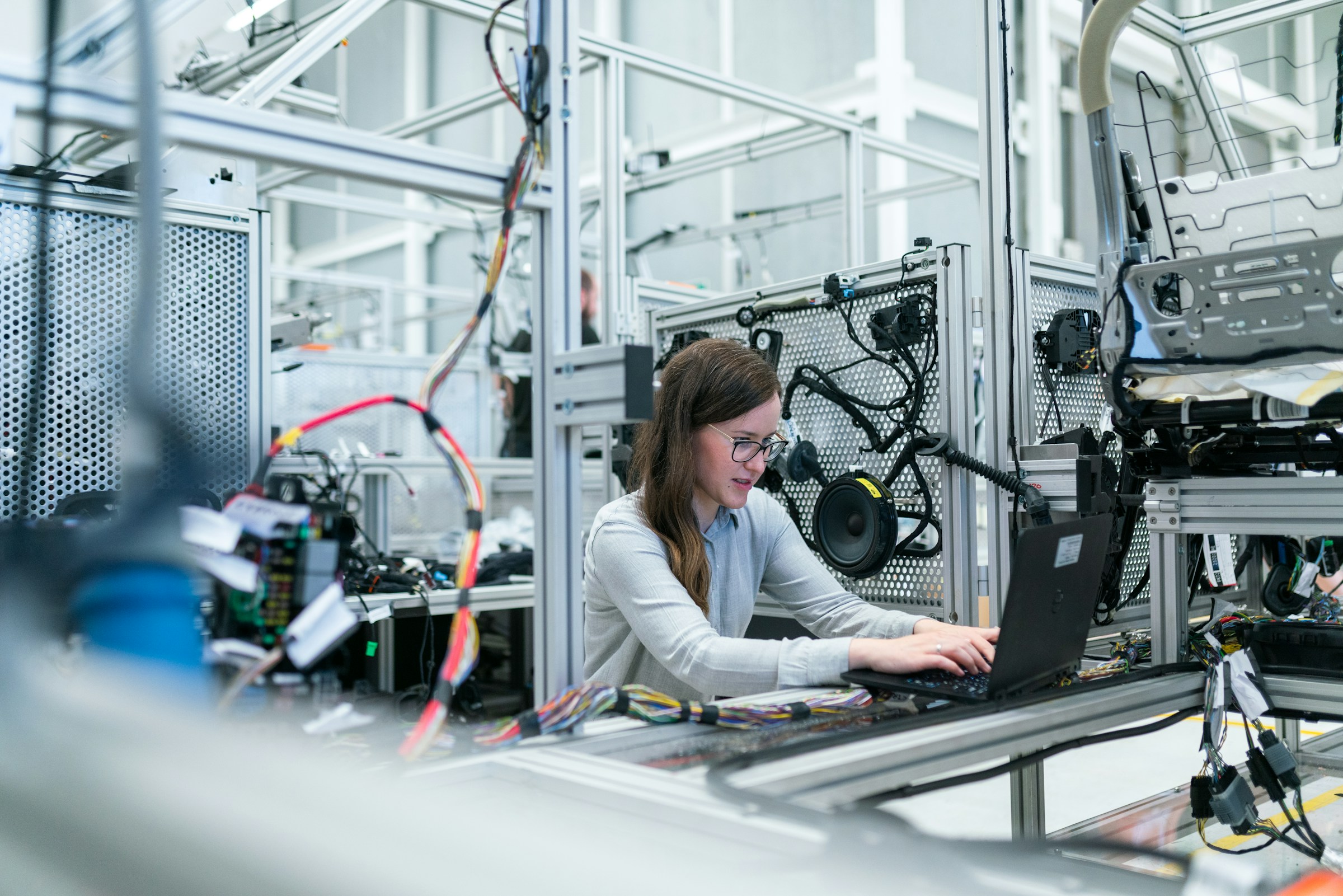
Photo by: ThisisEngineering RAEng/Unsplash







