


 SpaceX’s Starship Completes 11th Test Flight, Paving Way for Moon and Mars Missions
  NASA and SpaceX Target Crew-11 Undocking From ISS Amid Medical Concern
  Neuralink Plans High-Volume Brain Implant Production and Fully Automated Surgery by 2026
  Trump and Merck KGaA Partner to Slash IVF Drug Costs and Expand Fertility Coverage
  China vs. NASA: The New Moon Race and What's at Stake by 2030
  FDA Pilot Program Eases Rules for Nicotine Pouch Makers
  Trump Administration to Launch Autism Initiatives Targeting Acetaminophen Use and New Treatment Options
  SpaceX Pivots Toward Moon City as Musk Reframes Long-Term Space Vision
  Trump Administration Releases New UFO Files and Apollo Mission Records
  Trump Signs Executive Order to Boost AI Research in Childhood Cancer
  Blue Origin New Glenn Explosion Could Delay Launch Operations Until 2028
  Tabletop particle accelerator could transform medicine and materials science
  Is space worth the cost? Accounting experts say its value can’t be found in spreadsheets


 Add as a preferred source on Google
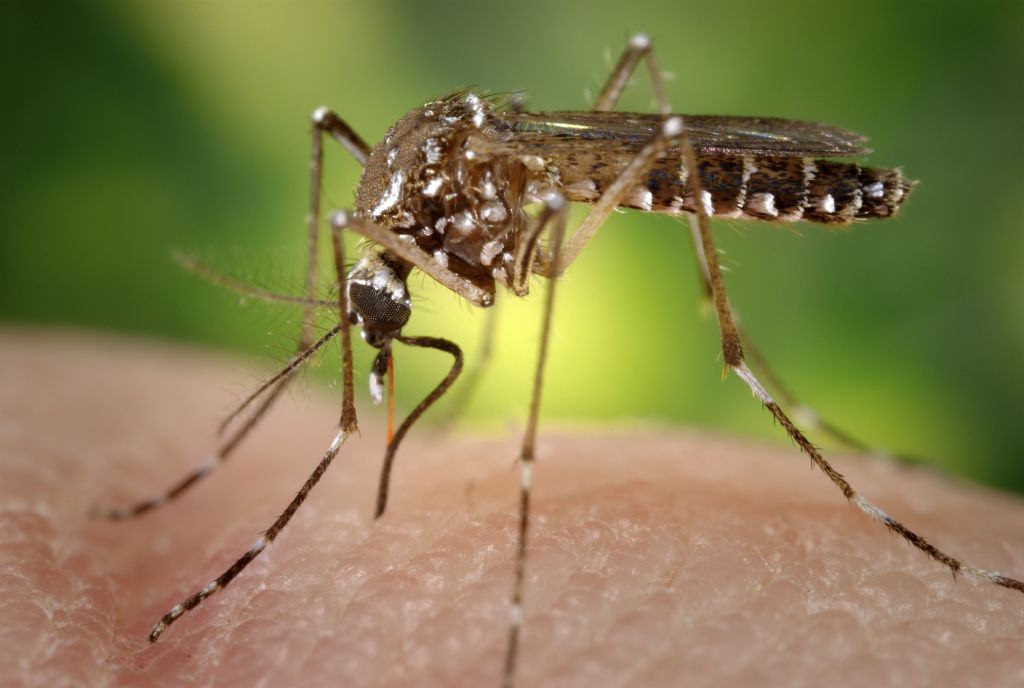

One of the world’s dominant malaria vectors is Anopheles arabiensis. Humans are its preferred blood meal although it also feeds on other livestock such as cattle, goats and sheep. But recent research shows that chickens are a non-host species for this vector. This means the birds could possibly act as repellents for mosquitoes which carry malaria. The Conversation Africa’s energy and environment editor Ozayr Patel spoke to Professor Rickard Ignell about his findings.
How can chickens repel mosquitoes?
Our research found that chickens emit volatile chemical compounds that act as long range repellents. We refer to these compounds as spatial repellents. The mosquitoes are repelled by the chicken odours and will actively fly outside when they encounter them.
To put it simply, if there’s a chicken or the smell of chickens' chemical compounds in a room, this particular mosquito buzzes off.
This is really intriguing in light of mosquitoes' growing resistance to traditional control programmes. It’s important to stay one step ahead of these small but very deadly insects by developing additional tools to keep mosquitoes away from humans.
Our study showed that when the volatile compounds found in chickens are combined with established control programmes, such as sprays and nets, they have the ability to protect humans from the risk of mosquito-vectored diseases.
What’s unique about chickens?
Malaria mosquitoes have developed preferences for various human and animal hosts. The most severe vectors of malaria will feed almost exclusively on humans. Others have a wider preference, but will still be selective in their diet.
Mosquitoes use their sense of smell to both locate and avoid their blood hosts. We found that chickens emit both specific compounds and some compounds that were shared with livestock like cattle, sheep or goats. These repel Anopheles arabiensis, one of the primary vectors of malaria in Ethiopia.
We believe that the mosquitoes respond to these volatiles either because chickens actively feed on the mosquitoes or because the quality of chicken blood is inferior compared to that of livestock blood.
How was this discovery made?
We studied the host preference of Anopheles arabiensis by human and livestock surveys in three villages in Ethiopia. Combined with blood analysis of caught mosquitoes we found that they do not feed on chickens. This was despite the fact that chickens were the third most abundant species, following humans and cattle, in the villages.
By analysing the odours given off by the various animals and looking into what compounds mosquitoes were able to sense, we identified the chicken-derived repellent compounds. We synthesised the repellent compounds and tested them in houses with sleeping volunteers to see if they were able to deter host-seeking mosquitoes. Six of the identified compounds did, four of which were as repellent as a chicken.
Can the research be applied to other regions?
We believe that chicken odours have the ability to repel Anopheles arabiensis throughout most of Africa. But this has to be validated through experiments. How effective these volatiles, or chickens that emit them, are in repelling other species of malaria mosquitoes should be tested next.
 Rickard Ignell receives funding from the Swedish Research Council and the Swedish Research Council Formas.
This article was originally published on The Conversation. Read the original article.







