


 Mahmoud Khalil Sues Columbia Over Alleged Pro-Palestinian Harassment
  FxWirePro- Crypto Weekly Alpha: ETF Rebounds, L2 Rallies & Key Resistance Levels
  AI is supercharging money scams – here’s what you can do to protect yourself
  FxWirePro- Crypto Weekly Alpha: ETF Rebounds, L2 Rallies & Key Resistance Levels
  Nvidia-Groq AI Chip Deal Faces U.S. Antitrust Probe
  Trump’s Arlington Arch Project Faces New Court Restrictions
  Who should own the knowledge that underpins AI technology?
  CNN, MS NOW and Politico Sue Trump Over White House Media Ban
  What is Zionism? The different meanings of a contested term
  US Judge Dismisses Imran Ahmed Deportation Lawsuit
  SEC Seeks ISS Client Voting Records in Proxy Adviser Probe
  Rodrigo Duterte Makes First Public Appearance at ICC in 18 Months


 Add as a preferred source on Google
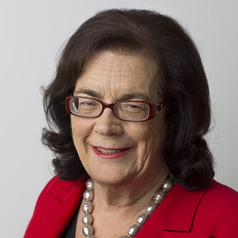
The next big judgement day for Pauline Hanson will be the election in her home state of Queensland, due in under a year. Her vote there will determine how much fear she puts into the Coalition ahead of the federal election.
This is the broader context for Hanson’s threat (aka stunt) at the start of this parliamentary week, for One Nation to abstain from voting on Coalition legislation until the government intervened in the long-running Queensland sugar dispute between canegrowers and a Singaporean-owned miller.
The government wants the dispute settled either by agreement or by action from the Queensland government, although it is preparing to intervene if it has to.
Hanson’s threat had ministers scurrying around on Monday. But the Hansonites weren’t seriously tested, given there was no contentious legislation before the Senate – although Labor amendments did get up because of their absence.
By late in the day Hanson declared progress was being made on sugar, the government was working “extremely hard”, and she was pleased with her talks with Finance Minister Mathias Cormann. So now One Nation will be voting again.
Hanson was both having and eating her cake. Her big public fuss will enable her to claim some credit for whatever comes on sugar – though Deputy Prime Minister Barnaby Joyce will deny she had any effect. And One Nation gets to vote on 18C and the company tax cuts.
In the battle for credit on issues, Hanson has some advantages. Journalist David Marr writes in his Australian Quarterly essay, The White Queen: One Nation and the Politics of Race, published on Monday: “People listen to Hanson. It’s her gift. The only political asset she has is an unshakable belief out there that she speaks for real Australians as no politician can.”
Hanson recently talked up her influence in the government’s backing away from the compulsory acquisition of North Queensland pastoral land for training Singaporean troops. “I had a meeting with the Prime Minister in depth … I showed him the charts,” she told 2GB’s Ray Hadley, amid his effusive congratulations. She flagged in the interview that she was well into the cane growers fight.
Hanson and her Senate colleagues have sniffed the wind on penalty rates. After supporting “in principle” the Fair Work Commission’s decision, on Monday she announced her opposition. It will interesting to see what One Nation does if Labor’s private member’s bill calling for the cut to be overruled comes to a vote on Thursday.
Quizzed on whether she’s not thus selling out the interests of small businesses, Hanson says they’ll be getting the company tax cuts. She is backing these for businesses with turnovers of up to $50 million - lower than what the government wants but higher than Nick Xenophon’s $10 million limit.
Politically, Hanson needs to be seen in tune with – and where possible using her Senate influence on behalf of – her support base.
In his essay, Marr describes this base. “One Nation voters in 2016 were absolutely Australian: the Aussie children of Aussie parents. They identify as proudly working class. They aren’t dying out: roughly a third of those who voted for Hanson last year were under forty-five.
"Despite its reputation as a bush party, half One Nation’s strength lies in big cities. Almost all Hanson’s voters left school early but went on to make a good fist of their lives. She is typical of her kind: out at 15 and a prosperous woman by forty. Her followers aren’t poor or unemployed. One Nation was very much a man’s party in the early days but now many more women are backing Hanson.
"There’s not a whiff of faith-based moralising about One Nation. It’s a rare Hanson voter who ever darkens the doors of a church. These people are secular, working-class conservatives who see eye to eye on a short list of big issues.”
Marr lists these as: affection for Hanson; deep disenchantment with politics; fierce nostalgia (a desire “to go back to a country that had factories and tariffs and a sure place for them”); profound hostility to immigration; and race.
In the wake of last week’s London terrorist attack Hanson was playing strongly to the last two of these.
It prompted her “Pray4MuslimBan” hashtag and her particularly outrageous and inflammatory “analogy”.
“We have a disease, we vaccinate ourselves against it,” she said. “Islam is a disease. We need to vaccinate ourselves against that.” Joyce lambasted her “disease” comment as “mad” and “bat-poo crazy”.
The Hanson’s “disease” remark should be a wake up call – if they haven’t had one already – to those Liberals who argue that Hanson has changed and One Nation Mark 2 is more “sophisticated”.
The government is caught between having to deal with Hanson on the specifics she takes up and distancing itself from her dangerous and degrading anti-Muslim crusade.
As Turnbull keeps options open on preferencing Hanson at the federal election, he can look forward to spending the rest of this term alternatively receiving her representations and denouncing her prejudices.








