


 NASA Artemis II: First Crewed Moon Mission Since Apollo Takes Four Astronauts on 10-Day Lunar Journey
  Alibaba Shares Slide as Jefferies Slashes Price Target Over AI Spending and Business Losses
  TSMC Japan's Second Fab to Produce 3nm Chips by 2028
  TSMC Posts Strong Q1 2025 Revenue, Riding AI Chip Demand Wave
  Britain Courts Anthropic Amid US Defense Department Dispute
  Microsoft's $10 Billion Japan Investment: AI Infrastructure and Data Sovereignty Push
  Apple's Foldable iPhone Faces Engineering Setbacks, Mass Production Timeline at Risk
  Bendigo and Adelaide Bank Posts Strong Q3 Earnings, Announces AI-Driven Job Cuts
  Anthropic's Mythos AI Model Sparks Emergency Cybersecurity Meeting With Top U.S. Bank CEOs
  OpenAI Executive Shake-Up Ahead of Anticipated 2026 IPO
  Samsung Electronics Posts Eightfold Profit Surge Driven by AI Chip Demand
  Annie Altman Amends Sexual Abuse Lawsuit Against OpenAI CEO Sam Altman
  Anthropic Fights Pentagon Blacklisting in Dual Federal Court Battles
  U.S. Disrupts Russian Military Hackers' Global DNS Hijacking Network
  China's Push to Steal Taiwan's Chip Technology and Talent Raises Security Alarms
  MATCH Act Targets ASML and Chinese Chipmakers in New U.S. Export Crackdown
  NASA's Artemis II Mission: First Crewed Lunar Journey Since Apollo


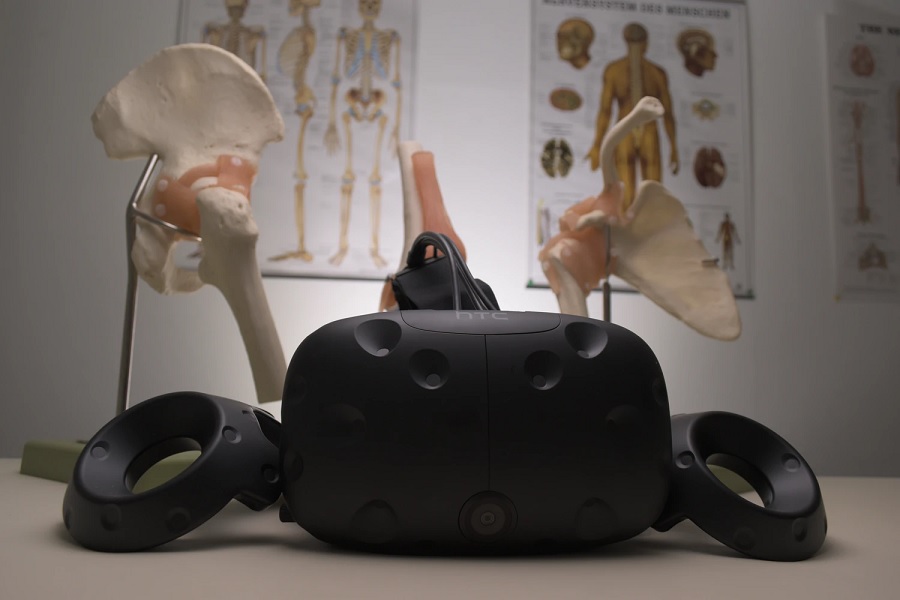
There is no new HTC Vive virtual reality (VR) headset launching right now, but the company has unveiled two new movement tracking accessories promised to improve the device’s overall function. The Vive Tracker 3.0 and the new Facial Tracker accessories have been confirmed to become available in the United States this month.
HTC Vive Tracker 3.0: What’s new
Fans of the VR brands have been hoping to see an all-new headset this year. While that might not be happening anytime soon, the company has something new to offer that might also make the VR fans feel like getting an upgrade in 2021.
HTC Vive’s motion tracking accessory line is getting its third iteration this month with several upgrades from its design to its battery life. Since the device was officially announced, one of the biggest selling points of the Vive Tracker 3.0 is its longer battery life. It is promised to offer 75% battery improvement and advertised to continuously function for seven hours in one charge. The company has also emphasized that it offers a 240-degree field of view tracking.
The Vive Tracker 3.0 is also designed to be more lightweight and more compact compared to its predecessors. It weighs 75 grams, which is 15% lighter than its predecessor released in 2018. Meanwhile, its official dimensions are listed as 70.9 x 79.0 x 44.1 mm or 33% smaller than previous accessories.
Despite the design changes, the new Vive Tracker sports the same layout for Pogo pin and mount to maintain compatibility with currently available VR devices. For $129.99 apiece, HTC Vive fans are getting the third-gen Vive Tracker, a dongle, a USB-C dongle cradle, and a USB-C cable.
HTC Vive accessories lineup gets new Facial Tracker
HTC Vive is also launching the Vive Facial Tracker in the U.S. this month. It is designed to track 38 facial movements of the user’s lips, jaw, teeth, tongue, chin, and cheeks promised to deliver an “accurate real-time depiction” of the lower facial area when using the VR headset through its dual-camera setup.
The Vive Facial Tracker will also cost $129.99. Both new HTC Vive VR accessories will arrive in the U.S. Market on March 24 and can be purchased through Vive.com.
Featured photo by Jesper Aggergaard on Unsplash







