


 China Set to Exit Deflation Cycle in Early 2026, ANZ Analysts Say
  Gold Prices Dip Amid Middle East Uncertainty and Inflation Fears
  Foreign Investors Pour $18.65 Billion into Japanese Stocks Amid Market Stabilization
  Trump-Iran Ceasefire Sends Dollar Tumbling as Global Currencies Surge
  Japan Consumer Confidence Drops Sharply Amid Rising Fuel Costs and Middle East Tensions
  Asian Markets Retreat as Gulf Crisis Fuels Oil Surge and Inflation Fears
  Goldman Sachs, ANZ Cut Oil Forecasts Amid U.S.-Iran Ceasefire Hopes
  U.S. Futures Dip as Iran Ceasefire Faces Early Challenges
  U.S. Stock Futures Surge as Trump Announces Iran Ceasefire, Oil Prices Plunge
  Gold Prices Surge to Three-Week High as Trump-Iran Ceasefire Weakens Dollar
  Sterling Slides as Dollar Holds Firm Amid U.S.-Iran Tensions
  Goldman Sachs Cuts 2026 Copper Price Forecast Amid Global Growth Concerns
  Asian Stocks Surge as U.S.-Iran Ceasefire Deal and Samsung Earnings Boost Market Confidence
  Asian Currencies Hold Steady as Middle East Ceasefire Doubts Weigh on Markets
  U.S.-Iran Ceasefire: Fragile Truce Raises Hopes for Strait of Hormuz Peace Deal
  Dollar Stabilizes Amid Fragile US-Iran Ceasefire as Markets Watch Hormuz Strait
  Italy's Service Sector Contracts for First Time in 16 Months Amid Rising Costs and Weakening Demand


The RBNZ said it has ended its easing cycle and will remain on hold until 2020. That will anchor the short end, although markets will not abandon their expectations for earlier tightening which means occasional spikes in the 2yr will be likely.
The long end will continue to follow mainly US yields, which we expect to rise. That means the curve steepening trend should continue.
Granted, the NZ economy is strong and dairy prices have risen, but these forces are subservient to the US dollar’s trend. Better data, but falling real rates and tightening credit keep us bearish.
We expect NZD to fall through this year, reaching 0.62 at year-end. The support to growth from migration will fade, while the RBNZ -at the very least–are likely to hold rates steady as inflation normalizes, pushing real rates materially lower.
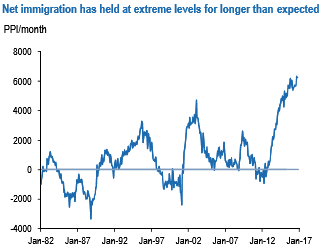
Since our NZD outlook piece in November 2016, the economy has continued to perform strongly in real terms. GDP growth was over 1% QoQ in Q3, which would see the economy rounding out the year with annual growth comfortably above 3%. Still, much of the upside surprise in activity indicators is owed to the positive supply shock from migration (see above chart).
We expect that growth impulse to fade through 2017, which would deliver growth performance more in keeping with subdued inflation, and would also remove some of the pressure on housing.
It is even easier for the RBNZ to maintain a low for long bias in an environment where spreads are widening, and delivered mortgage rates are rising. We believe the overvalued exchange rate is preventing sufficient capital inflow to the non-bank economy to compensate for a swelling current account deficit. This has resulted in leakage of NZD liquidity, and rising funding costs for the bank.
The economy is also now subject to credit tightening through numerous channels: macro-prudential constraints, widening mortgage rate spreads, and banks’ discretionary tightening of credit criteria to businesses. We now expect the RBNZ to be on hold this year, but there is a clear downside risk to the OCR in the near term.







