


 Fed’s Logan Signals 50 Basis Points More in Rate Hikes
  Bank of America Predicts Yen Rebound as USD/JPY Faces Risks
  RBA Signals More Rate Hikes as Inflation Risks Rise
  Trump Demands Powell Resign Over Fed Renovation Cost Overruns
  NEAR Price Surges 11% as Trading Volume Doubles
  Cardano Hits Five-Year Transaction Record as ADA Price Falls
  RBI Rate Hike Bets Surge as Inflation Rises
  BNB Price Faces Pressure as DOJ Investigates Binance
  ECB May Stop Rate Hikes After December, Capital Economics Says


 Add as a preferred source on Google
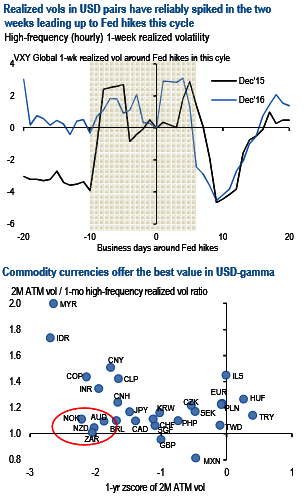
After a month of relentless pounding, FX option markets are ending February with front-end vols in USD-pairs on a slightly firmer footing, thanks to what looks like a concerted campaign by Fed officials to nudge the market towards pricing in a March hike. That effort is largely successful judging by the climb in OIS-implied probability of a March move to 90%, but we suspect that markets will additionally test the odds of a rise in the 2017 median dot from the current three hikes to four in the run-up to the meeting.
If so, this week’s snappy dollar rally can extend over the next two weeks, but there is a palpable risk of disappointment should stretch-expectations of a dot-plot upgrade prove optimistic.
Either way, the dollar narrative is back in play after a subdued start to the year and realized vols in USD-pairs are liable to firm in coming weeks much as they have done around the last two Fed meetings that featured rate increases this cycle (refer above chart).
At current market, the best value gamma in USD pairs is to be found in the commodity currencies – AUD, NZD, NOK, ZAR and MXN – where not only are implied vols historically low and implied/realized vol ratios suitably depressed (refer above chart) but also cash valuations are screening rich in many cases after their breakneck YTD rally and susceptible to further correction from recent highs. Additionally, AUD and NZD bloc vols have been relative outperformers vis-à-vis other currencies over the past month (refer above chart) and have the advantage of return momentum tailwind behind them.







