


 FxWirePro: AUD/USD drifts lower, uninspired by jobs beat
  FxWirePro: USD/CAD uptrend loses steam, remains on bullish path
  FxWirePro: EUR/AUD bullish outlook with scope to target 1.6550
  ETH Bounces as Shorts Cover, Yet ETF Bleed Warns $1,850 Resistance Won’t Break
  FxWirePro: USD/ZAR remains buoyant, looks to extend gains
  FxWirePro: USD/JPY dips as Japanese Yen consolidates near 40-year low
  BTC Slips Below $60K as Institutional Demand Dries Up — Bears Eye $59K Support, Rallies to $63K for Shorts
  EURJPY Bounce Loses Steam Below 184 — Sell-the-Rally Setup Eyes 183 Target
  FxWirePro: USD/CAD hits 14-month high , Scope for further upside
  FxWirePro: GBP/AUD sustains gains as uptrend remains strong
  FxWirePro : AUD/USD drifts lower, could be on verge of bigger drop
  FxWirePro- Major Pair levels and bias summary
  FxWirePro- Major Crypto levels and bias summary
  FxWirePro: USD/ZAR slips as dollar weakens after PCE inflation data
  Bitcoin Sheds $491M in ETF Outflows and Retreats Below $64K; Sellers Reload for $50K
  FxWirePro: NZD/USD extends losing run, eyes 0.5600 level


What's cooking with AUD fundamentals: It still seemed clear in the RBA's last statement that it would not cut rates again today's labour market report for September questions this impression. The only reason why the loss of almost 14k full time positions did not lead to a rise in the unemployment rate was that the participation rate eased. The RBA is not yet out of the woods. In particular as long as China is struggling, a further rate cut is possible.
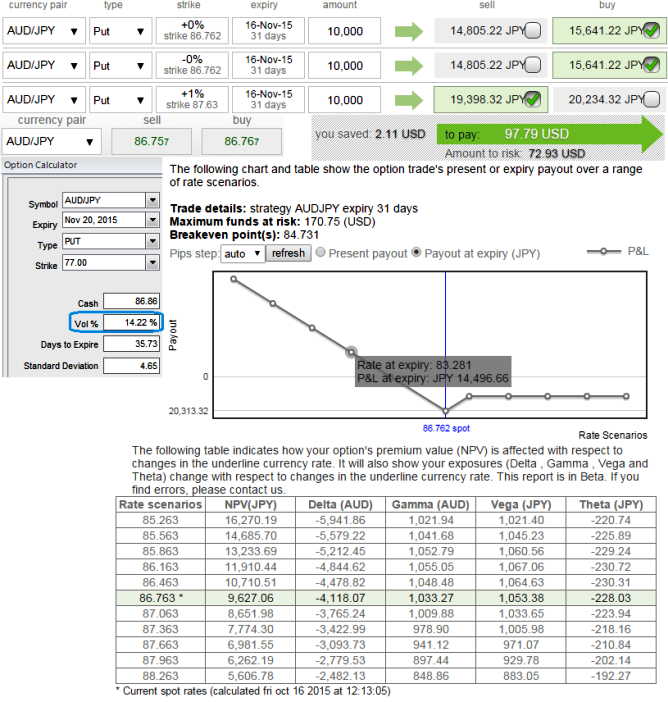
Higher Implied Volatility and Put Ratio Back Spread: AUD/JPY
Traders tend to view the put ratio back spread as a bear strategy, because it employs puts. However, it is actually a volatility strategy. The implied volatility of 1M ATM put contract is at 14.22% and it is quite higher side which is good sign for option writers.
As we expect the underlying currency exchange rate of AUDJPY to make a larger move on the downside. As shown in the figure purchase 1M 2 lots of At-The-Money -0.52 delta puts and sell 1W one lot of (1%) In-The-Money put option.
So far we all know that the position uses long and short puts in the ratio, such as 2:1 or 3:2 and so on to maximize returns depending upon risk appetite and returns expectations. In most long/short spreads, you make money if the underlying price moves, but you lose if it remains in the middle loss zone. Now with increased volatility option shorter can get benefitted from this.
Options with a higher IV cost more. This is intuitive due to the higher likelihood of the market 'swinging' in your favour. If IV increases and you are holding an option, this is good. You should also note short-dated options are less sensitive to IV, while long-dated are more sensitive.
A ratio put back spread is different because it creates a net credit, so even if the underlying price does not move very much, you keep the credit if all of the puts expire worthless.
Entering into this AUDJPY position which has higher implied volatility at 14.22% and expecting for the inevitable adjustment is a smart approach, regardless of the direction of price movement. Based on volatility and time decay, the strategy is a "price neutral" approach to options, and one that makes a lot of sense.

- News

- Economy

- Central Banks
- Investing
- Research
- Roundups
- Digital Currency
- Insights
- Technical Analysis
- Technology
- Business
- Law
- Health
- Nature
- Fintech
- Science
- Topic
- Opinions
- ©Econometrics LLC . All Rights Reserved.
FxWirePro: AUD/JPY put ratio back spreads not only mitigate downside risks but to beat higher IVs
Friday, October 16, 2015 6:48 AM UTC
Editor's Picks



- Market Data
Most Popular




