


 Want to muck around with a real quantum computer? Now you can
  Bashar al-Assad Sentenced to Death by Syrian Court
  U.S. Unseals Charges Against Five Alleged CJNG Leaders, Raises Reward for New Cartel Chief
  China opens new Arctic trade route – but obstacles will prevent its wider use
  California ICE Detention Center Found to Have Inadequate Medical Care, Court Monitor Says
  SEC Sues Former Tricolor Executives Over $1.9 Billion Investor Fraud Scheme
  UN Chief Raises Concern Over US Sanctions on ICC Officials
  ING Says Yen Is 20% Undervalued Against Dollar
  The world’s biggest trees could hold the secret to coping with drought
  New Mexico Sues DOJ Over Unredacted Jeffrey Epstein Files Amid Ongoing Investigation
  Barclays Downgrades Renault as Cost Savings Challenges Grow
  CK Hutchison Seeks $1.5 Billion From Panama Over Canal Ports


 Add as a preferred source on Google
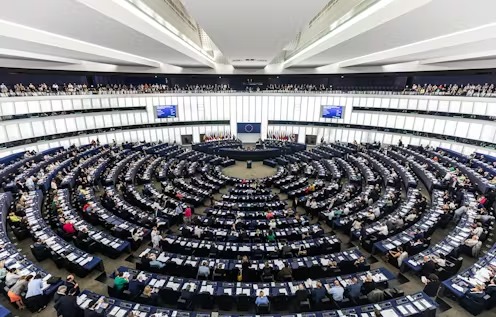

An Argentinian colleague recently posed a rather blunt question to me: “How, pray tell, does your beloved European Union help you and me?”
Her doubts are valid. Given the bureaucratic immensity of the EU, it is not unreasonable to wonder what purpose it serves, and whether it has any meaningful impact on the lives of its citizens.
Many would shut this discussion down by saying something along the lines of “the European Union is a unique institutional experiment that has allowed for the longest period of peace ever known on the continent.”
A full answer, however, would require a lengthy explanation, as the EU has a very wide sphere of influence. The framework for developing and executing its decisions is also extremely complex: legislation passes first through the EU’s institutions, but its 27 Member States are responsible for implementing it.
Nevertheless, many of the EU’s innumerable directives and regulations have had an unquestionably direct impact on the lives of its citizens. My colleague’s question therefore merits a clear response, which we can divide into four key areas where change is happening today, along with a multitude of established measures that have affected citizens for, in some cases, decades.
1. Electricity and fuel prices
The price of electricity depends significantly on the EU’s actions. We witnessed this in 2022, when Russia’s invasion of Ukraine sparked an energy supply crisis across much of the continent.
The EU responded with a barrage of both structural and fiscal measures that aimed to ensure supplies of natural gas and diversify energy sources. They also sought to intervene in gas prices through price corrective mechanisms, thus curbing electricity price spikes.
These systems were rolled out in different ways across the continent. In Spain, for example, their impact on the lives of millions was decisive: drivers faced with soaring prices were given a discount of 20 cents per litre of fuel from April 2022 until the end of the year.
2. Agricultural regulation
This winter, much of Europe bore witness to widespread tractor protests. Farmers and their households know all too well how keenly the effects of EU legislation – such as the European Green Deal or the Commission’s proposed (and subsequently withdrawn) regulations on pesticides – can be felt.
However, the complex system of vitally important subsidies – which are paid directly to farmers – comes from the EU budget, and is rooted in three pieces of legislation: 2021/2115, 2021/2116 and 2021/2117.
3. Artificial intelligence
The Artificial Intelligence Act was endorsed by the European Parliament and all 27 member states in February. Once it comes into force, companies operating within the internal market will have to rate the level of risk posed by the AI systems they use.
They will also have to adopt security measures in order to safeguard the fundamental rights of people affected by their activity. These include the right to challenge unfair discrimination when decisions are made by algorithmic systems.
The regulation is already drawing criticism for the negative effects it may have on the industry, as detractors say it will entail additional costs, discourage innovation and reduce competitiveness. However, the rule is pioneering in its protection of citizens against, for example, untargeted use of facial recognition software by security forces.
4. Social measures
Some of the EU’s social measures are perhaps more limited in scope, and address specific areas. Examples include the directive on the work life balance of parents and carers, the very recently agreed directive on digital platform workers, and the proposed directive on the European disability card.
The first of these introduces a leave period of five working days per year to care for those who need assistance.
The second shifts the burden of proof onto digital platforms, meaning they are responsible for proving that people working for them are not their employees. This puts workers in a much better position when it comes to exercising their employment rights.
Thanks to the third directive, card holders will be treated in the same way as disabled residents of those EU countries to which they travel for short stays, allowing them to, for example, park their cars in disabled spaces.
Longstanding examples
As well as these more recent developments, there are countless examples of EU legislation that have impacted the daily lives of citizens for decades.
ECTS credits are part of the fabric of university life for millions across the EU. These units of measurement (known in full as the European Credit Transfer and Accumulation System) were introduced in the late 1980s. Today, they continue to enable smooth transitions for students moving between universities within Europe.
Likewise with driving licenses: EU citizens have little to worry about when crossing international borders by car, as EU driving licenses are recognised throughout the continent. This is thanks to article 2 of the 2006 directive on driving licenses.
The same goes for receiving medical attention in another member state: travelling EU citizens are afforded the same care as residents of their host country under the 2011 directive on cross border healthcare.
And with air travel: if a flight is seriously delayed, passengers are likely entitled to compensation under the terms of a 2004 EU regulation.
The list could go on indefinitely, but what is clear is that there is little justification for scepticism regarding the effect – and effectiveness – of EU activity in our lives.







