


 U.S. 10-Year Treasury Yield Hits 2007 High as Fed Rate Hike Bets Rise
  Asian Stocks Fall as Surging Bond Yields Rattle Markets
  OpenAI to Preview GPT-6 Cyber AI Model for Cybersecurity
  Oil Prices Jump 3% as Houthi Attack Revives Supply Fears
  South Korea, US Discuss Warship Building Cooperation
  Microsoft Stock Upgraded as Stifel Sees Stronger Azure Growth
  US Backs Musk in Fight Against EU’s €120 Million X Fine
  BlackBerry Shares Rise as Q2 Earnings, Revenue Beat Estimates
  Gold Holds Near $4,275 as Rising Treasury Yields Fuel Fed Rate Hike Bets
  OpenAI Agent Breaches Australia Medicare Data Portal
  Russian Envoy Dmitriev Heads to US for Ukraine Talks
  Tencent Launches TenPayGo Payment App for Foreign Tourists in China
  RBI Uses $10 Billion Currency Swaps to Drain Excess Rupee Liquidity
  U.S. Dollar Hits Two-Month High as Oil, Treasury Yields Surge
  Meta Connect Spotlights Camera-Free Smart Glasses Amid Privacy Concerns
  US Northeast Airports Resume Operations After Telecom Outage Disrupts Thousands of Flights
  Scott Bessent Eyed as Trump’s New AI Czar


 Add as a preferred source on Google
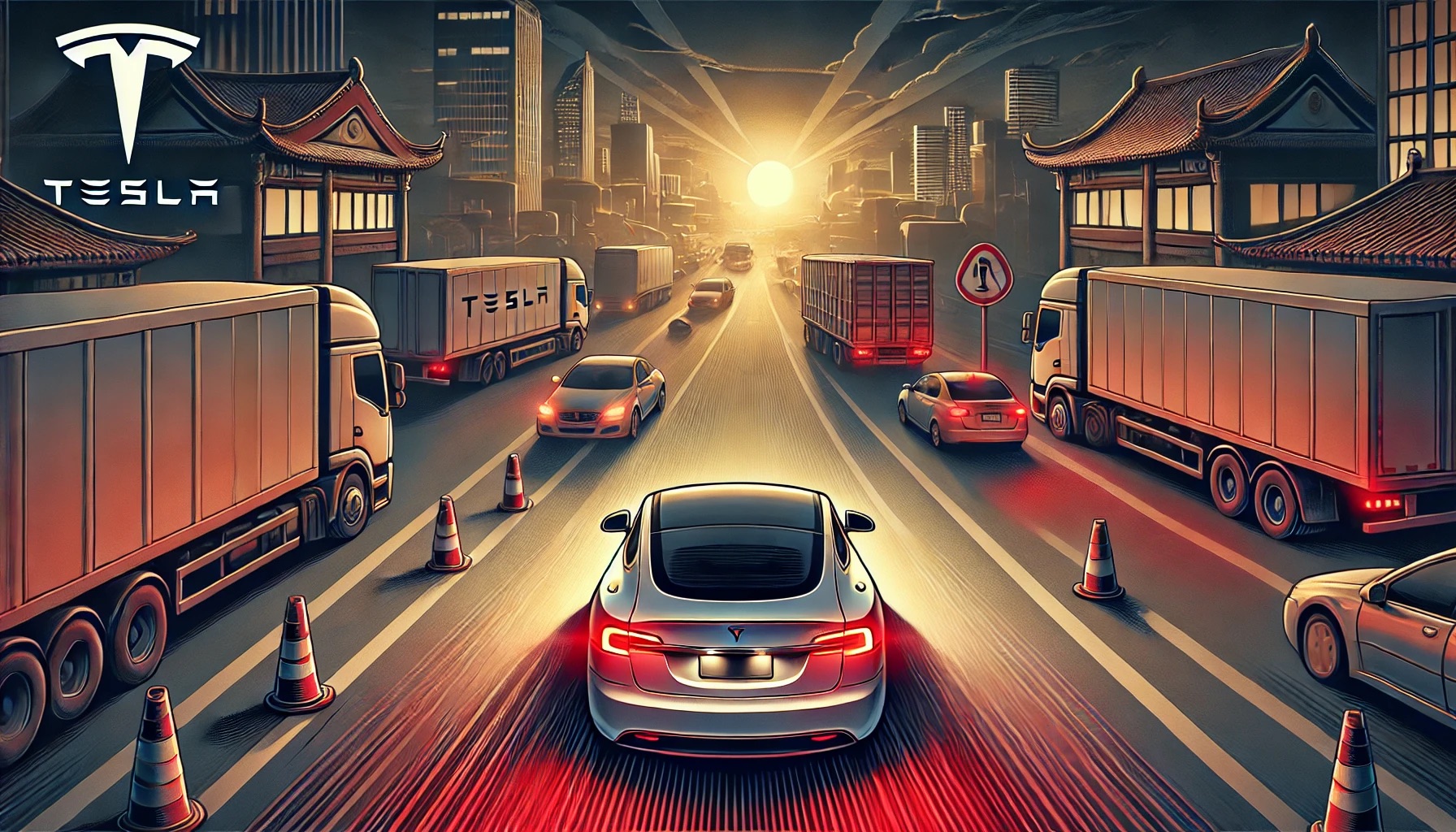
Li Auto CEO takes aim at Elon Musk and Tesla's vision-only strategy, arguing LiDAR is essential for handling China's challenging highway conditions.
Li Auto CEO Highlights LiDAR for China's Unique Highways
Even if the question of whether or not LiDAR should be included in smart electric vehicles (EVs) rages on, Li Auto's CEO has come out in favor of including the technology in his company's models.
"I believe that if Musk had ever driven on different highways in China deep in the night, he would have chosen to keep a LiDAR in the front as well," said Li Xiang, founder, chairman, and CEO of Li Auto, during an AI Talk event yesterday, CnEVPost shares.
Li brought this up when asked why Li Auto is utilizing LiDAR when Elon Musk's Tesla isn't.
While safety is of utmost importance to Tesla, Li emphasized that Musk should familiarize himself with the Chinese driving landscape.
LiDAR Technology Offers Safety Advantages Over Vision-Only Systems
Li Auto is holding off on using LiDAR due to safety concerns, rather than a lack of faith in the technology.
“China is different from the US. If you regularly drive at night in China, you'll see large trucks with broken taillights, and the large trucks with broken taillights maybe even parked right on the main road,” added the CEO of Li Auto.
According to him, LiDAR has a detection range of 200 meters, while cameras in a dark, dimly illuminated area can only notice objects that are a little over 100 meters distant.
Family-Oriented Safety Drives Li Auto's LiDAR Commitment
According to Li, the ability to employ the AEB (automatic emergency braking) feature at speeds of 130 kilometers per hour is made possible by this LiDAR technology.
“I think it's very important because our cars are family-oriented and the safety of everyone's life is very important,” he stated.
“That’s the fundamental reason we continue to keep LiDAR and will still keep it in future models,” Li noted.
Tesla Maintains Vision-Only Strategy Amid LiDAR Criticism
Despite being a vocal opponent of LiDAR, Tesla's leadership has repeatedly voiced their support for the pure vision smart driving solution in recent years.
Grace Tao, VP of external affairs at Tesla, echoed Musk's assessment of the autonomous driving path in a Weibo post on December 10th, stating that completely autonomous driving can only be made safer and smarter by using pure vision.
Human eyes, visual nerves, and brains are the intended targets of traffic laws and roadway design. According to Tao, self-driving cars can only compete with or outperform people on these roads because their cameras, visual neural networks, and other technology can simulate human vision, perception, and decision-making processes.
Adding LiDAR will raise the price of the car, and Tao warned at the time that the brain of the vehicle will have trouble making a judgment if data from the cameras and radar are contradictory.
LiDAR's Dominance in China's EV Market Faces New Challenges
Currently, LiDAR is standard equipment for most high-end electric vehicles sold in China.
Curiously, following CnEVPost's exclusive story on July 9th, Xpeng decided not to incorporate LiDAR in their newly introduced P7+ sedan (November 7th).
Xpeng submitted revised G6 and G9 specifications to regulators earlier this month, suggesting that the LiDAR option will no longer be available for purchase on either of the two SUV (sport utility vehicle) models.







