


 US Northeast Airports Resume Operations After Telecom Outage Disrupts Thousands of Flights
  Qualcomm Gains on $60B Amazon AI Chip Deal
  Burnham Eyes UK Leadership Role in AI Ahead of Trump Meeting
  OpenAI Urges US-Led Global Standards for Frontier AI
  SoftBank Launches $11 Billion Bond Sale to Fund OpenAI Investment
  Nvidia CEO Jensen Huang Expected at Trump-Xi State Dinner
  Microsoft Stock Upgraded as Stifel Sees Stronger Azure Growth
  MediaTek Unveils 2nm Dimensity 9600 Pro AI Chip
  China Reviews Broadcom Switch Use in State Data Centres
  Hyundai CEO Warns Chinese Automakers Could Disrupt US Market
  France Urges Faster AI Push Despite Safety Risks
  Westinghouse Targets $50 Billion Valuation in U.S. IPO
  Meta CEO Zuckerberg Backs Independent AI Safety Reviews Over Development Slowdown
  Apple Pay Set for India Launch With Axis Bank
  Guterres Urges Stronger Global AI Safeguards Ahead of UN Assembly
  US Federal Register Drops Alibaba Qwen AI Search Tool
  NASA, Boeing Discuss Expanding Starliner Missions


 Add as a preferred source on Google
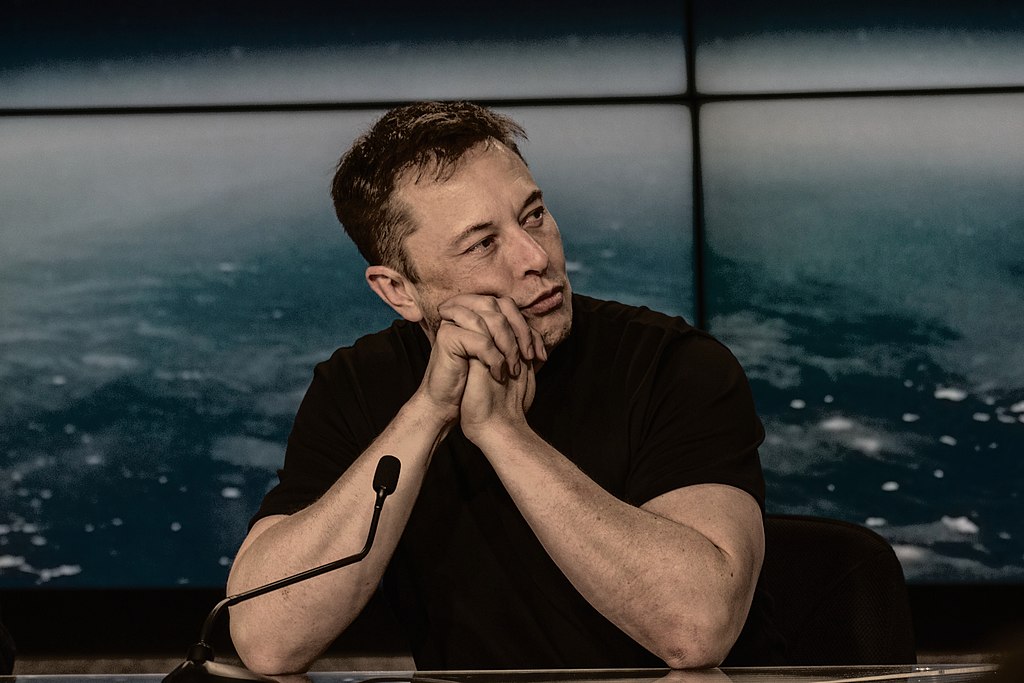
Elon Musk has denied reports that his artificial intelligence (AI) business, xAI, had received $500 million in investor commitments toward a $1 billion objective.
"This is simply not accurate," he said in a reply to a user post about the Bloomberg article on social media platform X.
xAI Navigates Valuation Talks Amidst Unique Equity and Resource Negotiations
The artificial intelligence (AI) startup xAI is discussing a valuation of $15 billion to $20 billion, though terms could still change in the coming weeks, Bloomberg reported, citing people familiar with the matter, as per Reuters. xAI was not immediately available for comment.
Musk and investors are likely to settle terms in the coming weeks, and some parties are considering receiving processing power in addition to, or even instead of, xAI equity shares, according to Bloomberg.
Musk announced last December that his artificial intelligence business would not be raising cash, a day after the startup filed with the US Securities and Exchange Commission to raise up to $1 billion in an equity offering.
Musk founded xAI in July of last year in reaction to Big Tech's AI initiatives, which he has criticized for excessive censorship and a lack of proper safety precautions.
Starlink Helps Communications In Quake-hit Central Japan
Rescue workers and people on the disaster-hit Noto Peninsula in central Japan are increasingly turning to Elon Musk's Starlink satellite internet service, as the magnitude-7.6 earthquake on New Year's Day wrecked communications infrastructure and continues to interrupt services, as per Japan Today.
KDDI Corp, a Japanese telecom operator that operates the Starlink service run by SpaceX, one of the tech billionaire's firms, has provided 550 Starlink routers to shelters, government offices, and disaster medical support teams operating in the affected areas.
At a fire station in Wajima, Ishikawa Prefecture, one of the hardest damaged locations, 300 firemen began using the service for rescue operations. The Starlink service was also made available to 350 evacuees at an elementary school in Suzu, Ishikawa.
Starlink debuted in Japan in December 2022. The service uses low-orbit satellites to provide faster internet than conventional satellite services that lack large-scale infrastructure.
The debut of the Starlink service in Japan follows the technology's success in war-torn Ukraine, where it was used to supply communications technology in places where existing infrastructure was devastated.
Previously, wireless radio and existing satellite communication systems were used in disaster-stricken areas, but services requiring high-speed connections and large amounts of data, such as video calls, proved difficult, according to Yuichiro Usuda, head of a government panel tasked with promoting disaster preparedness measures.
He explained that a communication service like Starlink is especially useful in the Noto Peninsula, where transportation is limited.








