


 Trump Reports $1.4 Billion in Crypto Income as Digital Assets Become Top Wealth Source
  Anthropic Restores Claude Fable 5 and Mythos 5 After U.S. Lifts AI Export Controls
  Northern Star Appoints New CEO as Activist Elliott Pushes for Leadership Overhaul
  Chinese Copper Foil Maker Londian Files U.S. IPO as EV Battery Demand Grows
  Texas Man Charged After Fatal Tesla Full Self-Driving Crash in Katy
  Tesla Q2 Deliveries Lift Chinese Auto Suppliers as EV Demand Improves
  Samsung to Invest $90 Billion in South Korea to Expand AI Chip, Display, and Battery Production
  ShareChat Eyes 2027 IPO After Reaching Operational Profitability, Report Says
  Meta Stock Jumps as AI Cloud Expansion Challenges AWS, Microsoft, and Google
  Apple Expands iPhone Lineup, Boosts Foldable iPhone Production Plans Through 2027
  SoftBank’s LY Corp, Bain Raise Kakaku.com Bid to ¥670 Billion, Intensifying Takeover Battle
  Suncorp Cuts 2026 Premium Growth Forecast as Australia, New Zealand Markets Weaken
  Meta CEO Zuckerberg Says AI Agent Development Has Slowed Despite Massive AI Investment
  Trump Administration to Launch Voluntary AI Standards for Frontier Models
  Super Micro Employees Detained in Taiwan AI Server Export Investigation


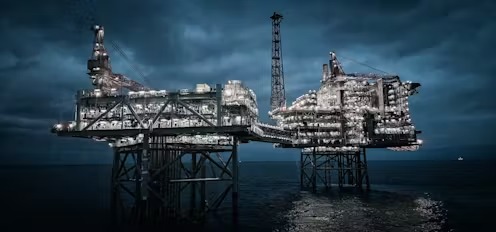

We are all familiar with the greenhouse gas emissions that come from burning fossil fuels in car engines, central heating systems and power stations. Little discussed is the climate footprint of producing oil and gas in the first place.
Extracting, refining and distributing oil and gas requires energy. Pumps, compressors, heaters and drilling units treat and move the fuels from many kilometres underground using electricity typically generated by gas turbines. Clearly, burning gas at offshore production sites will result in local emissions of climate-heating CO₂.
The North Sea Transition Authority (NSTA) regulates the UK’s oil and gas industry and has a remit to reduce the amount of greenhouse gas emissions from UK operations. This does not, however, extend to emissions arising from the subsequent use of that oil and gas.
With what little scope it has to reduce the industry’s emissions, the NSTA is keen for oil and gas platforms to be electrified. In essence, converting these offshore production sites from running on gas turbines to imported electricity from renewable sources like wind turbines.
Conventional oil production only accounts for roughly 5-10% of the emissions associated with the fossil fuel. By far the bulk of these emissions come from when it is used in transport, heating and power generation.
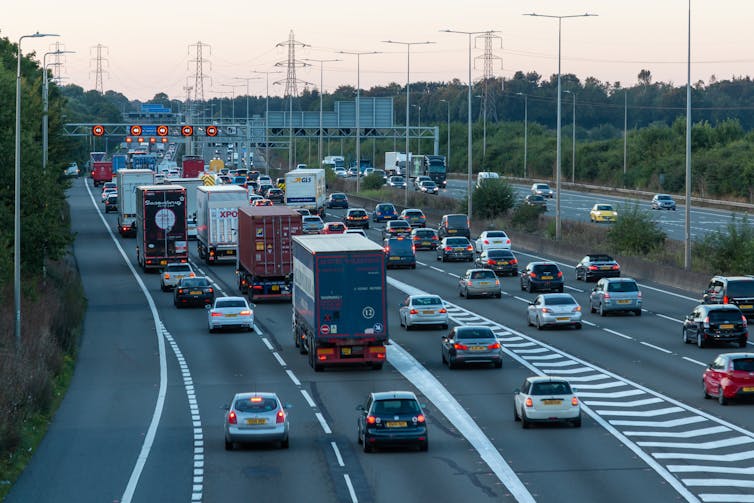
Burning oil and gas for energy emits far more than producing these fuels. Jarek Kilian/Shutterstock
It’s clear that, by pursuing platform electrification, the NSTA is focusing on the wrong emissions source.
Open heart surgery at sea
I worked in the oil and gas sector for over 40 years and know from experience that modifying an existing installation can be a risky undertaking. When dealing with equipment that is several decades old, unforeseen issues can emerge.
Shell’s UK chief Steve Phimister has compared the complicated process of converting oil and gas platforms to renewable electricity to open heart surgery. Some oil and gas companies have described electrification as a “huge concern”.
The configuration and location of some of the older installations mean that electrification will prove to be prohibitively expensive. On some installations, access to relevant equipment is limited.
Electrification is being proposed for clusters of platforms so that costs can be shared. For more remote platforms, sharing costs will not be feasible, so not all offshore platforms will be suitable for the switch to renewable electricity. Future North Sea oil and gas production would be a mix of electrified platforms and those which continue to burn gas.
For those offshore platforms that can be electrified, my experience tells me that costs are likely to be in the billions of pounds. Electrification costs are not quantified in the NSTA’s 2022 report on the industry’s emissions – in fact, there is only one mention of cost.
But even without cost and schedule overruns, electrifying a platform does not tackle all of its emissions. According to the NSTA itself, a large portion of the emissions from producing oil and gas will be unaffected by electrification. The authority estimates that around 35% of platform emissions come from activities unrelated to energy generation, mainly flaring and venting gas.
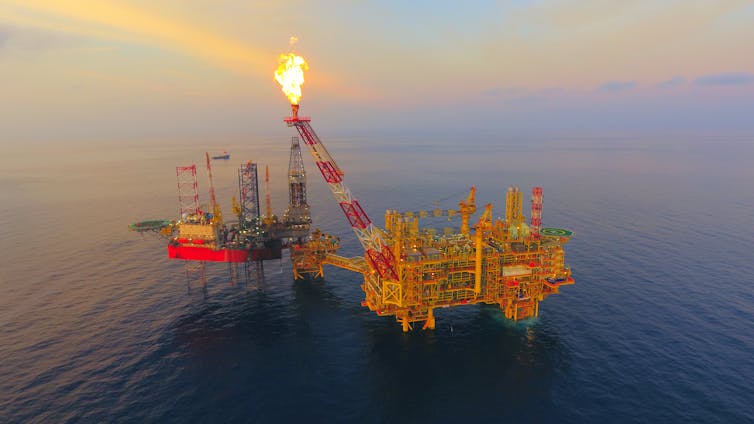
Gas flaring allows operators to alleviate pressure on equipment. AzmanMD/Shutterstock
The NSTA does estimate that an electrification campaign could save 1.2 million tonnes of CO₂ a year. That might sound like a big number, but the UK emits greenhouse gases equivalent to around 420 million tonnes of CO₂ annually. The climate benefit of the UK oil and gas industry shedding 1.2 million tonnes of CO₂ from its offshore operations amounts to just 0.3% of the country’s yearly emissions.
Cut fossil fuel use instead
I believe electrifying offshore oil and gas platforms is a wrong-headed use of taxpayer and industry money and fails to address the wider picture.
The UK would cut far more CO₂ per pound spent if the billions earmarked for offshore electrification were directed at reducing the much larger carbon footprint from fossil fuel use instead. The government could cut these emissions by improving building insulation, building more electric vehicle charging points, investing in wind and solar installations and expanding the electricity grid.
But shifting money from offshore electrification to abating fossil fuel use will not be straightforward. Perhaps the NSTA could agree to let oil and gas firms operate without electrification, provided they can demonstrate they are operating their equipment in such a way as to reduce these emissions to as low as reasonably practical. This would not cut emissions as much as electrification, but it would free up money for more effective decarbonisation elsewhere.
And in this scenario, oil and gas companies would not need to undertake open heart surgery at sea. That sounds like a win-win for everyone.







