


 Kioxia Targets U.S. Listing as AI Chip Boom Accelerates
  Gold Surges Above Key EMAs, Bulls Eye Resistance Amidst Bullish Momentum
  Trump’s Iran Strategy: What Has Been Achieved After Three Months of Conflict?
  US Judge Seeks Explanation for DOJ’s Decision to Drop Gautam Adani Bribery Case
  Morgan Stanley Sees Chinese Auto Market Recovery Gaining Momentum in Late Summer
  World Cup technology: from ref cams to AI analysts, cutting-edge research is changing the game
  Samsung and SK Hynix Shares Jump After Micron Earnings Boost AI Chip Optimism
  Pelosi Discloses Major Intel and Uber Call Option Purchases Worth Up to $6 Million
  Nike CFO Shake-Up Fuels Concerns Over Turnaround Strategy
  Doncasters Raises $919 Million in NYSE IPO as Aerospace Growth Accelerates
  Nomura Stock Upgraded to Buy by BofA as Stronger ROE and Earnings Growth Boost Outlook
  Amazon Prime Day 2026 Sales Top $26.4 Billion as Shoppers Chase Discounts Amid Inflation
  China Eastern Orders 25 Airbus A330neo Jets in $9.35 Billion Deal to Boost International Expansion
  Anthropic AI Model Uncovers Vulnerabilities in Classified U.S. Government Systems During Security Test
  J.P. Morgan Sees Potential Vestas Guidance Upgrade Amid Strong Wind Energy Demand
  OpenAI May Delay IPO to 2027 Amid $1 Trillion Valuation Goal


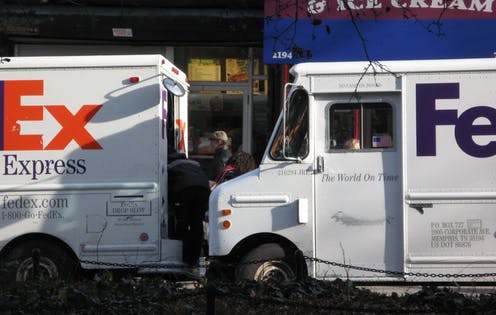

A rise in online shopping is often blamed for an increase in the number of parcel delivery vehicles clogging up our busy city roads.
But a study we at Vienna University carried out for a European postal service found parcel delivery vehicles made up only a fraction (0.8%) of a city’s traffic flow. Tradespeople and other services were more than seven times more likely to be making up the business traffic.
Yet the claim that parcel delivery plays a significant part in urban road traffic is used regularly in reports. Hopefully our study can help to change the attitude.
Who’s on our city roads?
The unfair focus on parcel delivery neglects other commercial sectors using vehicles on a city’s roads for transport and parking. In fact, there is a lack of studies investigating specifically to what extent parcel delivery impacts and contributes to urban road traffic in major cities worldwide.
To examine the true impact of parcel delivery – technically known as CEP for courier, express and parcel deliveries – our team at the Vienna University of Economics in Business was commissioned by the Austrian postal organisation to study the traffic composition in Vienna, Austria, between March and June 2019.
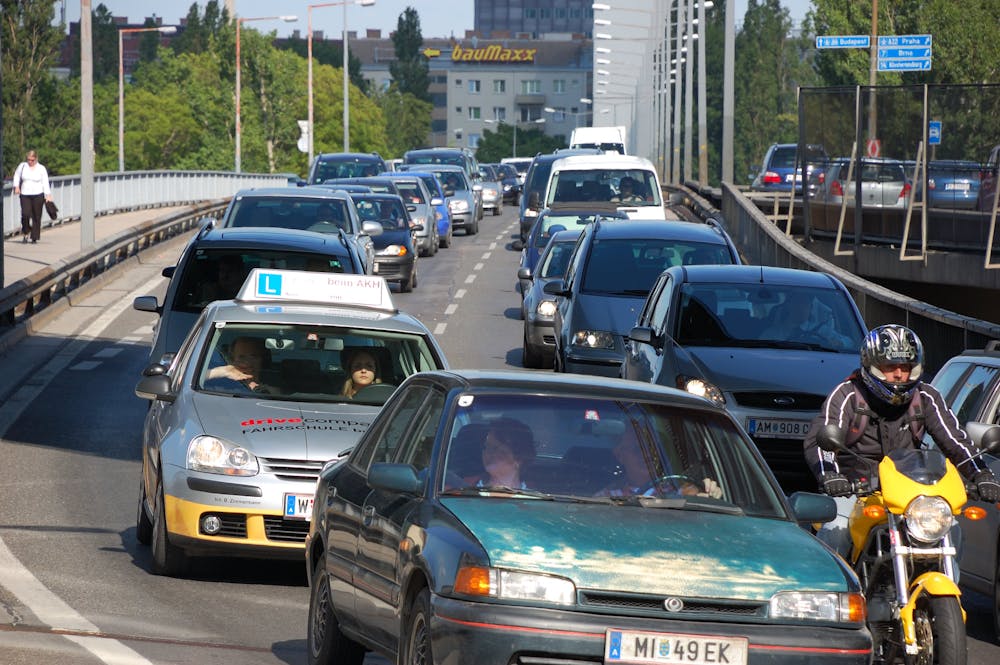
Busy traffic in Vienna, Austria. Flickr/Cha gi Jos, CC BY-SA
The goal of the study was to identify the share of parcel delivery and other specific categories of light commercial vehicles used in the city.
The city’s traffic was videoed and manually counted at key times over a 15 week period on main and secondary roads. In addition, we used secondary data from the city of Vienna for validation.
The results showed passenger cars accounted for 86.5% of urban road traffic. The remaining share of light and heavy commercial vehicles comprised 13.5% of traffic.
Of that, we found parcel delivery vehicles accounted for only 0.8% of the traffic. This clearly contradicts the often-heard and reported claim that they are a main contributor to urban congestion and delays.
Other light commercial vehicles played a much more significant part in urban road traffic.
Tradesmen and technicians had the largest share among light commercial vehicles with 6.0% of traffic. This is more than seven times higher than the share of parcel delivery.
Any transport policies that aim to deal with traffic reduction should consider all vehicle categories and the respective industry specific logistics.
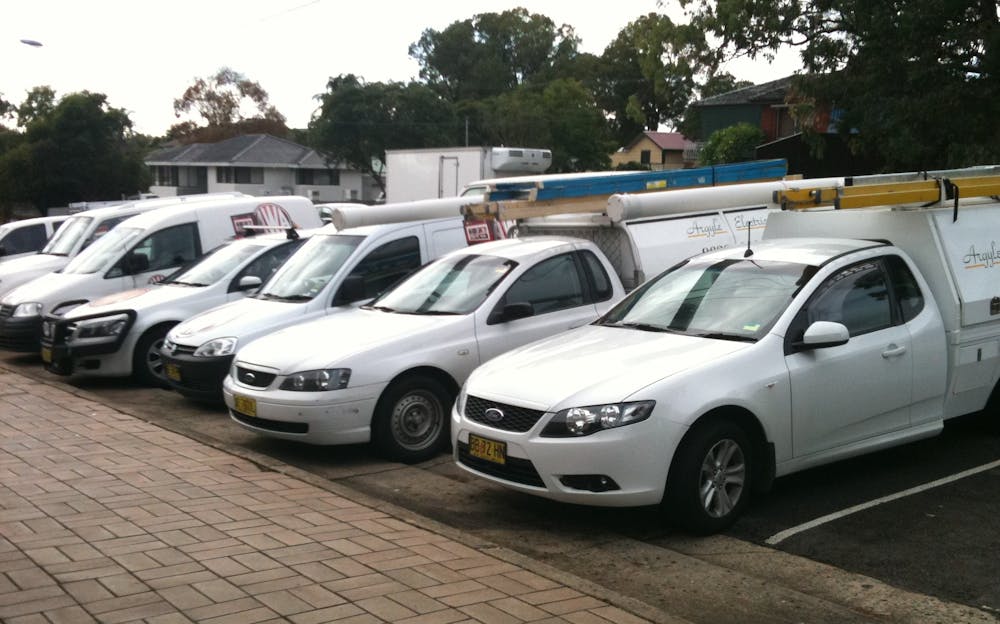
Those tradespeople utes get everywhere. Flickr/Ryan Phillips, CC BY-ND
From Austria to Australia
Some may argue that European cities differ from Australian cities, but we believe our findings are also relevant to cities here and in other industrialised counties.
For example, Vienna is not that different to Brisbane, in Queensland. Vienna is a city with almost 2 million people – similar to Brisbane (depending on how you define the area).
Moreover, Vienna’s traffic is - like Brisbane’s - impacted by a significant share of commuters travelling in and out of the city every business day.
Both cities have similar congestion rates – Brisbane 27% and Vienna 25% – and are served by all major local and global parcel delivery companies.
But more importantly, the traffic composition in Austria and Australia’s bigger cities seems to be very similar. Researchers in Melbourne measured the share of light commercial vehicles entering the CBD and found 13.4% cent of the vehicles entering the central business district were light commercial and service vehicles.
This corresponds almost exactly with our Vienna findings.
Congestion is getting worse
Traffic is on the rise in many cities around the world, including here in Australia, which already creates traffic congestion.
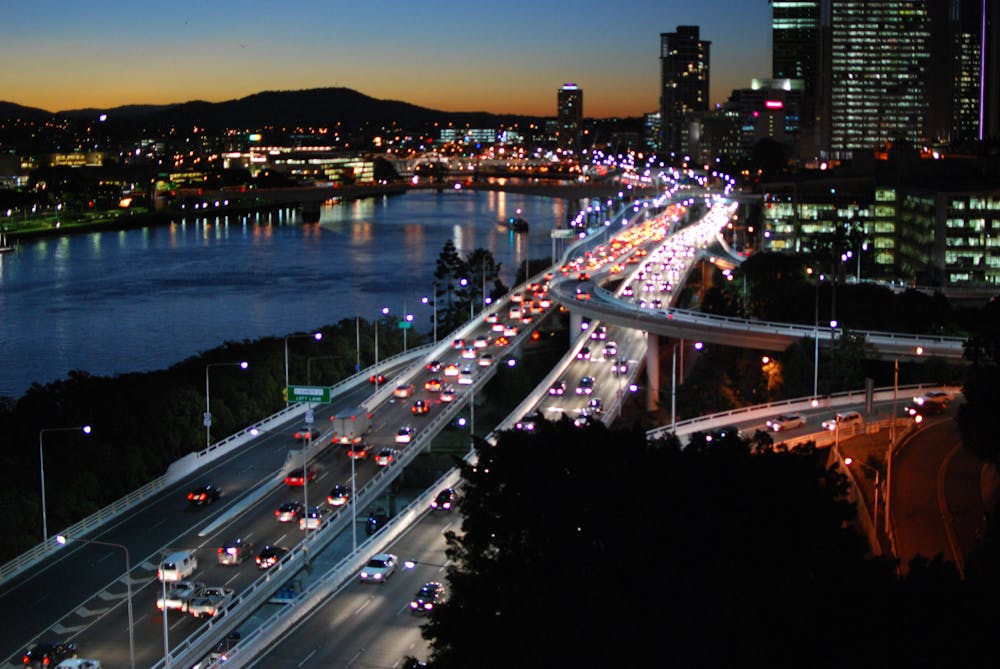
Traffic in Brisbane and other cities is only getting busier. Flickr/Andrew O Brien, CC BY-NC
One area of growth in Australia is also the number of light commercial vehicles on our streets, up from 39.3 billion kilometres travelled in 2008 to 54 billion kilometres in 2018. That means potentially more such vehicles in our cities.
When it comes to looking at who needs to do more to try to cut congestion, you need to consider more than just the parcel delivery companies.
Studies show that further consolidation efforts within the parcel delivery industry would only lead to a maximum saving of a further 10% of delivery vans, that’s 9 instead of 10 delivery vans on the street. Given they only have a share of 0.8% of total traffic, that would only lead to reduction in traffic of less than 0.1%.
But for tradespeople and technicians, for example, with a share of 6.0% in city traffic, developing better logistics could lead to a greater reduction in the overall traffic in cities.







