


 Trump Scales Back Endangered Species Act Protections
  Scott Bessent Eyed as Trump’s New AI Czar
  Trump Meets Venezuela’s Delcy Rodriguez at UN Assembly
  Zelenskiy Meets CIA Chief John Ratcliffe at Ireland’s Shannon Airport
  UK, Mauritius Seek Diego Garcia Base Deal
  Marco Rubio to Meet Russia’s Lavrov in New York
  Burnham Eyes UK Leadership Role in AI Ahead of Trump Meeting
  Canada Unveils Bill to Fast-Track Major Resource Projects
  US, Japan and South Korea Back Taiwan Ahead of Trump-Xi Summit
  Macron Challenges Trump’s Gaza Peace Claims at UN
  Trump Open to Pezeshkian Meeting as Iran Tensions Escalate
  US, Denmark and Greenland Set to Sign Arctic Security Deal
  Trump Administration Prepares Sanctions Against Entire ICC
  Lula Meets Mamdani in New York as Elections Approach
  CNN, MS NOW and Politico Sue Trump Over White House Media Ban
  Paramount-Warner Bros $110 Billion Deal Draws Antitrust Backlash
  China Tightens Fentanyl Rules Ahead of Trump-Xi Summit


 Add as a preferred source on Google
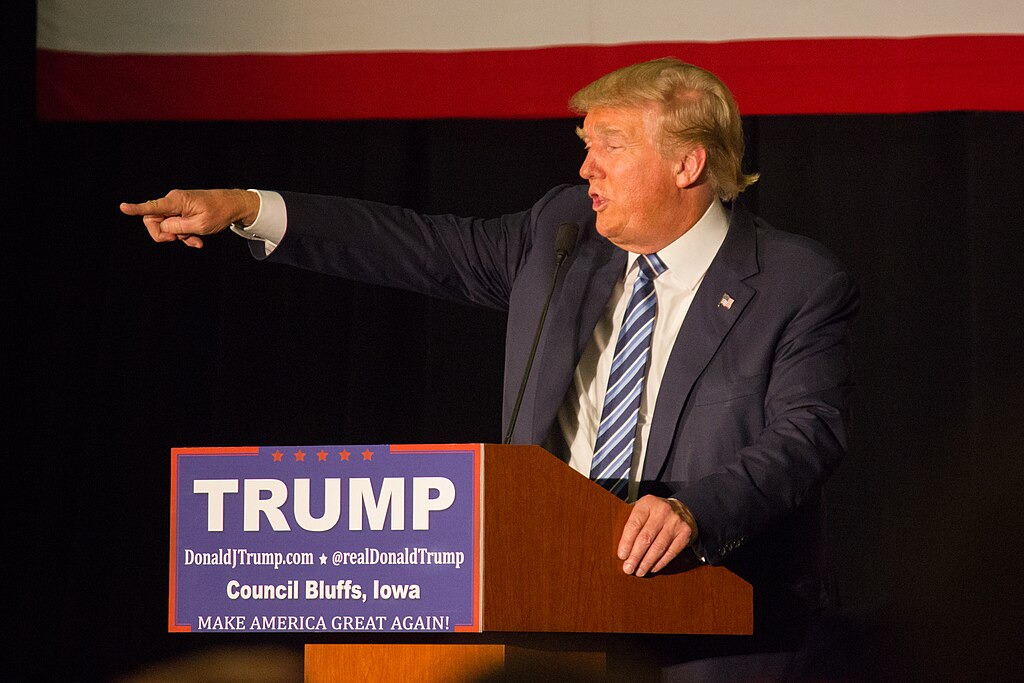
Former President Donald Trump is seeing a notable uptick in support from Muslim-American voters, with nearly one-third now backing his candidacy, according to a new poll conducted by the Rainey Center. The data reveals a 7-point increase in support for Trump among Muslim-Americans compared to the 2020 election, reflecting a surprising shift in political alignment for a demographic that historically leaned Democratic.
The poll, released this week, found that 30% of Muslim-American voters are now backing Trump, up from 23% in 2020. While President Joe Biden still holds a majority among Muslim voters, the data indicates growing disillusionment with the current administration and an increasing openness to conservative policies. This shift comes as Trump positions himself for a potential 2024 run, further signaling that he may be broadening his appeal beyond traditional Republican voter bases.
Trump’s improved standing with Muslim-American voters marks a significant departure from the 2016 election, when his rhetoric and proposed Muslim travel ban alienated many within the community. At that time, he received minimal support from Muslim voters, who overwhelmingly favored Democratic candidates. However, the landscape appears to be evolving as concerns about economic issues, foreign policy, and domestic security take center stage in the political discourse.
Analysts suggest that the shift may be driven by a combination of economic anxieties and frustrations with the Biden administration’s handling of key issues. Inflation, rising interest rates, and a sluggish economic recovery have left many voters feeling dissatisfied, including those within the Muslim-American community. Additionally, some voters have expressed disappointment with the Biden administration’s approach to foreign policy in the Middle East, viewing it as inconsistent and ineffective.
In contrast, Trump’s messaging on economic growth, tax cuts, and strong national security resonates with certain segments of the Muslim-American population, particularly business owners and those concerned with job creation. His tough stance on foreign policy, while controversial, has garnered some support among voters who prioritize national security and view his policies as a deterrent to global instability.
Despite these gains, Trump still faces significant challenges in winning over the broader Muslim-American electorate. Many continue to harbor reservations about his previous statements on immigration and religious freedom. However, the 7-point increase signals that his campaign may be successfully appealing to a subset of voters who are increasingly focused on economic and policy-driven issues rather than identity politics.
The poll’s findings have sparked conversation among political strategists about the future of Muslim-American voting patterns. Traditionally aligned with the Democratic Party, this demographic’s shift toward Trump could foreshadow a broader realignment as economic concerns take precedence over social and cultural issues. With Muslim-Americans representing an influential voting bloc in key battleground states like Michigan, Pennsylvania, and Florida, their evolving political preferences may have a significant impact on future elections.
As Trump eyes a return to the White House, his ability to maintain and expand his support among minority groups like Muslim-Americans could be crucial to his path forward. For now, the poll underscores a growing trend: a more complex and nuanced Muslim-American electorate that is not as solidly Democratic as it once was.







