


 Nvidia CEO Jensen Huang Says AI Investment Boom Is Just Beginning as NVDA Shares Surge
  TrumpRx Website Launches to Offer Discounted Prescription Drugs for Cash-Paying Americans
  Instagram Outage Disrupts Thousands of U.S. Users
  Rio Tinto Shares Hit Record High After Ending Glencore Merger Talks
  Nvidia, ByteDance, and the U.S.-China AI Chip Standoff Over H200 Exports
  Global PC Makers Eye Chinese Memory Chip Suppliers Amid Ongoing Supply Crunch
  TSMC Eyes 3nm Chip Production in Japan with $17 Billion Kumamoto Investment
  Nvidia Nears $20 Billion OpenAI Investment as AI Funding Race Intensifies
  Missouri Judge Dismisses Lawsuit Challenging Starbucks’ Diversity and Inclusion Policies
  Once Upon a Farm Raises Nearly $198 Million in IPO, Valued at Over $724 Million
  Sony Q3 Profit Jumps on Gaming and Image Sensors, Full-Year Outlook Raised
  Uber Ordered to Pay $8.5 Million in Bellwether Sexual Assault Lawsuit
  Prudential Financial Reports Higher Q4 Profit on Strong Underwriting and Investment Gains
  FDA Targets Hims & Hers Over $49 Weight-Loss Pill, Raising Legal and Safety Concerns
  Baidu Approves $5 Billion Share Buyback and Plans First-Ever Dividend in 2026
  SpaceX Prioritizes Moon Mission Before Mars as Starship Development Accelerates
  Amazon Stock Rebounds After Earnings as $200B Capex Plan Sparks AI Spending Debate


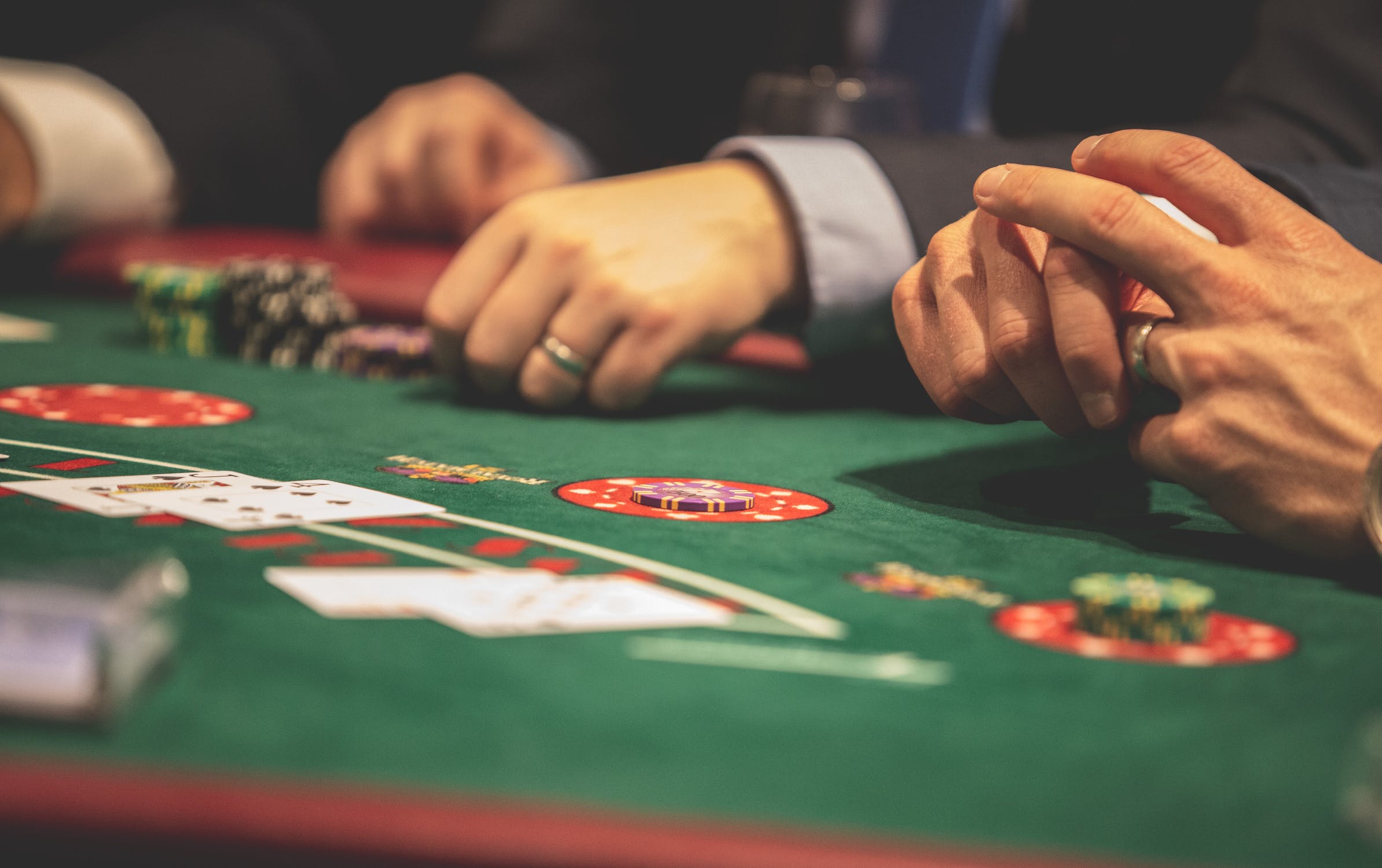
When trying to define the economy, there are many different routes people have taken. Some revert to letters and shapes – will it be a V-shaped recovery from recession or perhaps a U-shaped one? Others try to explain national economies as though they are a household’s finances. But a study from 2009 saw the economy compared to blackjack, which provides an insightful and possibly prophetic look at how the understanding of a table game could help us with our economic outlook.
What Did the Study Find?
The study, which came after the global recession of 2008, took data from a Las Vegas casino. Helmed by Anderson School’s Bruce Carlin from UCLA and Fuqua School’s David T Robinson from Duke University, the study produced some intriguing results. Collecting the data from a casino, they would then go on to amplify the findings in a business sense to explain the economy. Specifically focusing on the blackjack table, the findings could then show how blackjack can be used to explain the economy.
The pair watched 4,300 hands of blackjack and saw the exchange of $120,000, which is a large enough sample size to extrapolate their recommendations based on what they discovered. What they found was an omission bias. This means that players were too conservative with their bets to make any money from them. Omission bias refers to the tendency to not act instead of to act. So in the context of blackjack, this would be a tendency to not bet when betting would have been the better option. When faced with risk, players never rose to it and ended up missing chances.
Source: Pexels
Risk Management
Blackjack is a good comparison for the economy because both are inherently built on risk. The economy may seem strong, but it is actually a series of promises. As the threat of trade sanctions shows, the economy as it stands is on thin ice. Similarly, blackjack players – no matter how skilled – rely on risk and their management of it as they play the game.
Some variants of blackjack are developed to provide a greater level of risk exposure for players. When playing online blackjack, there are many different variants. As well as the standard format based on traditional casino gameplay, there is also European Blackjack, Double Exposure Blackjack, and Live Blackjack. The latter incorporates a real-time dealer to give an immersive sense of play. Each format changes the player’s perception of the game. Some are suited for beginners and others for more advanced players.
Blackjack and the Economy
While playing blackjack doesn’t give us any indication on how to improve an economy, it does help explain why there may be some stalling of it. The fear of making a decision in the face of risk, which then leads to a lack of action could be used to explain many issues from the household’s own economy to a business’s decision and even wider governmental ones. Making risky and reckless decisions isn’t good. Sometimes with a lack of information, not doing anything can be as bad as making the wrong move.
The omission bias in the blackjack study could refer to the passive way in which economic issues are dealt with. Inaction is often favoured over a perceived riskier action. But as the study and blackjack has shown, sometimes inaction can be less beneficial in the long run. The key takeaway is that the economy can be defined through how blackjack is played and the relationship to risk.
Taking micro-transactions in real life, such as a hand of blackjack, and scaling them up to explain economic issues can be useful. Of course, it does represent a reductionist approach that ignores many other factors involved in the economy. But it can help explain the approach to action and inaction in a risk-based economy.
This article does not necessarily reflect the opinions of the editors or management of EconoTimes













