


 Why a ‘rip-off’ degree might be worth the money after all – research study
  NASA's Artemis II Crew Arrives in Florida for Historic Moon Mission
  Why have so few atrocities ever been recognised as genocide?
  Stuck in a creativity slump at work? Here are some surprising ways to get your spark back
  Blue Origin New Glenn Rocket Explodes During Launch Pad Test, Delaying Space Ambitions
  Trump Administration Releases New UFO Files and Apollo Mission Records
  Time to buy local: war fuel price shocks reveal the folly of a long food supply chain
  The American mass exodus to Canada amid Trump 2.0 has yet to materialize
  Trump Administration to Launch Autism Initiatives Targeting Acetaminophen Use and New Treatment Options
  Cogent Biosciences Soars 120% on Breakthrough Phase 3 Results for Bezuclastinib in GIST Treatment
  Booked to travel through the Middle East? Here’s why you shouldn’t cancel your flight
  Trump Signs Executive Order to Boost AI Research in Childhood Cancer
  6 simple questions to tell if a ‘finfluencer’ is more flash than cash
  SpaceX’s Starship Completes 11th Test Flight, Paving Way for Moon and Mars Missions
  Trump and Merck KGaA Partner to Slash IVF Drug Costs and Expand Fertility Coverage


 Add as a preferred source on Google
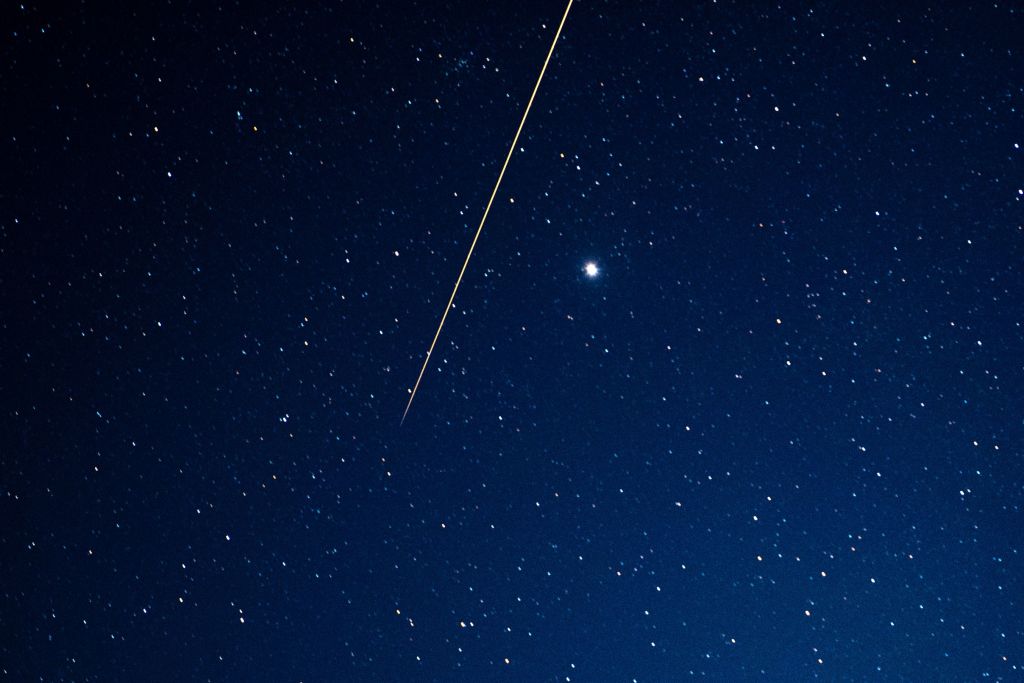
NASA has announced that an asteroid, comparable in size to a 10-story building, will make a close approach to Earth on Christmas Eve. The space rock, designated 2003 SD220, is expected to pass by our planet at a speed of approximately 14,743 miles per hour.
Asteroid 2003 SD220's Trajectory and Characteristics
Asteroid 2003 SD220 is estimated to be about 1,100 meters (3,600 feet) in length, making it one of the larger near-Earth objects to pass by our planet. Despite its size and proximity, NASA assures that there is no threat of collision. The asteroid will maintain a safe distance of about 6.8 million miles (11 million kilometers) from Earth during its flyby.
This asteroid is notable for its elongated shape, which has intrigued astronomers. Radar images captured by NASA's Deep Space Network antenna in Goldstone, California, have provided detailed views of its structure. These observations are crucial for understanding the composition and behavior of such celestial bodies.
Public Reaction and Social Media Buzz
The announcement of the asteroid's flyby has generated significant interest and discussion on social media platforms. Twitter user @SpaceEnthusiast remarked, "A Christmas Eve asteroid flyby? That's a holiday treat for astronomy lovers!" In contrast, @ConcernedCitizen tweeted, "Should we be worried about this asteroid? 14,743 mph sounds dangerously fast." Meanwhile, @AstroGeek noted, "It's fascinating how these space rocks pass by Earth unnoticed. Space is truly vast." User @SkepticalMind commented, "Is this another exaggeration by the media? How close is 'close' in space terms?" Additionally, @NightSkyWatcher shared, "Planning to set up my telescope tonight. Hoping to catch a glimpse of the asteroid!" Lastly, @ScienceTeacher added, "Great opportunity to discuss near-Earth objects with my students after the holidays."
Understanding Near-Earth Objects (NEOs)
Near-Earth Objects, or NEOs, are comets and asteroids that have been nudged by the gravitational attraction of nearby planets into orbits that allow them to enter Earth's neighborhood. NASA and other space agencies monitor these objects to assess any potential threat they may pose to our planet. The study of NEOs also provides valuable insights into the early solar system and the formation of planetary bodies.
In recent years, advancements in radar technology have enhanced our ability to detect and analyze NEOs. These technologies enable scientists to determine an asteroid's size, shape, rotation, and surface features, contributing to our overall understanding of these celestial objects.
NASA's Planetary Defense Efforts
NASA's Planetary Defense Coordination Office (PDCO) is responsible for detecting, tracking, and characterizing potentially hazardous asteroids and comets that could approach Earth. The PDCO collaborates with other U.S. government agencies, international partners, and academic institutions to coordinate efforts in response to potential impact threats.
While asteroid 2003 SD220 poses no danger, its flyby serves as a reminder of the importance of monitoring near-Earth objects. Continuous observation and research are essential to ensure that any potential threats are identified and mitigated well in advance.







