


 How America courted increasingly destructive wildfires − and what that means for protecting homes today
  Nvidia CEO Jensen Huang Says AI Investment Boom Is Just Beginning as NVDA Shares Surge
  An unexpected anomaly was found in the Pacific Ocean – and it could be a global time marker
  Russian Stocks End Mixed as MOEX Index Closes Flat Amid Commodity Strength
  FDA Targets Hims & Hers Over $49 Weight-Loss Pill, Raising Legal and Safety Concerns
  Weight-Loss Drug Ads Take Over the Super Bowl as Pharma Embraces Direct-to-Consumer Marketing
  Tencent Shares Slide After WeChat Restricts YuanBao AI Promotional Links
  Alphabet’s Massive AI Spending Surge Signals Confidence in Google’s Growth Engine
  Trump’s Inflation Claims Clash With Voters’ Cost-of-Living Reality
  Parasites are ecological dark matter – and they need protecting
  Baidu Approves $5 Billion Share Buyback and Plans First-Ever Dividend in 2026
  Fungi are among the planet’s most important organisms — yet they continue to be overlooked in conservation strategies
  Gold and Silver Prices Slide as Dollar Strength and Easing Tensions Weigh on Metals


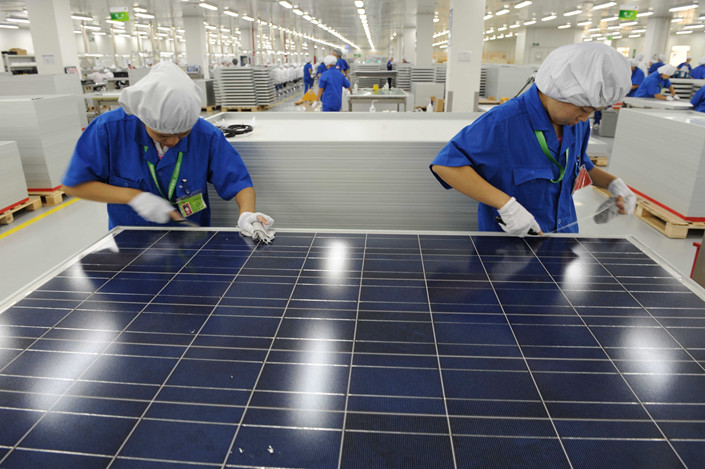
The proportion of locally-made parts dropped as Chinese-made parts increased in the South Korean solar power market in the last five years.
The proportion of South Korean-made solar modules was at 68 percent as of June this year, down by 5 percentage points from 2017.
In contrast, the proportion of Chinese-made solar modules rose from 27 percent to 32 percent.
According to data supplied by Rep. Lee In-sun of the ruling People Power Party, the actual proportion of Korean products is much lower when taking into account the present method of measurement, which counts modules built with Chinese cells as Korean products.
Solar cell output in South Korea is falling behind; it fell from 40% in 2017 to 35 percent in June of this year.
In contrast, the share of Chinese-made solar cells in the Korean solar cell market increased from 52 percent to 59 percent.
According to the Korea Energy Economics Institute, South Korean manufacturers of polysilicon, ingots, and wafers have completely disappeared, while the U.S. and the EU have made investments to strengthen their domestic supply networks and solar panel value chains.
South Korea’s domestic value chain for solar panels has de facto been cut off, Lee said.













