


 Gold Prices Fall Amid Rate Jitters; Copper Steady as China Stimulus Eyed
  Oil Prices Jump 3% as Houthi Attack Revives Supply Fears
  U.S. Treasury Yields Surge as 30-Year Hits 22-Year High
  ECB May Stop Rate Hikes After December, Capital Economics Says
  US Comfortable With Canada Trade Standoff as Import Bans Loom
  Best Gold Stocks to Buy Now: AABB, GOLD, GDX
  UK PM Burnham to Unveil Economic Vision at Labour Conference
  European Stocks Fall as Bond Yields and Geopolitical Risks Weigh
  Fed Unveils Stablecoin Rules Under GENIUS Act
  Dollar Falls as Oil Eases, Yen Jumps on Intervention Signals
  Germany’s 2026 Growth Outlook Strengthens on Fiscal Spending


 Add as a preferred source on Google
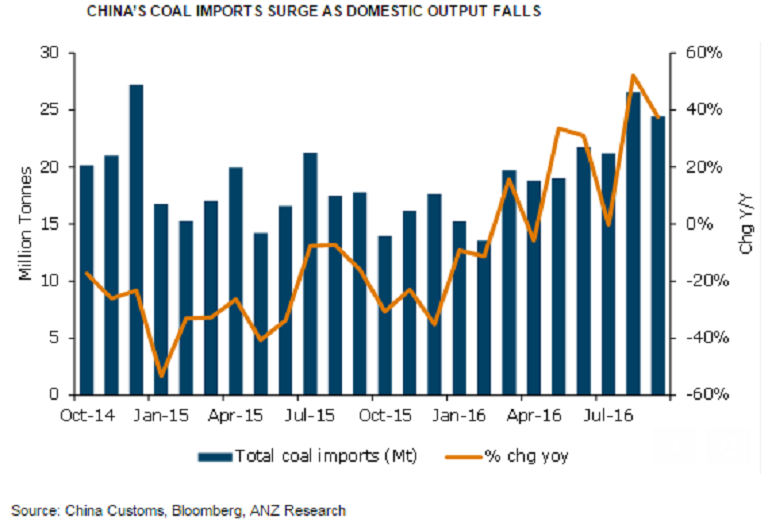
Coal imports in China are expected to remain strong in the near term, despite efforts to limit the impact of capacity closures on utilities, while prices are likely to be dictated by the country’s policy measures.
Thermal coal prices hit USD100/ton this week as exporters struggled to react to the shifting dynamics in the seaborne market. Led by China’s sudden reliance on the international market, import demand in the Asian sub-continent has surged higher in recent months.
Stocks held on major exchanges have fallen across the board in September. The main reason behind the falls has been falling supply around the world, rather than a pickup in demand. Zinc stocks suffered the biggest fall (-7 percent m/m), while copper was the only metal to register an increase (+2 percent). Even then, it seems base metal markets are tightening.
"If coal output can be temporarily raised leading into the northern hemisphere winter, we could see prices slip over the next couple of months. Even so, we expect spot prices to remain above USD80/t over the northern hemisphere winter," ANZ commented in its latest research note.







