


 Trump, Xi Focus on Trade and AI at White House Summit
  Gold Holds Near $4,275 as Rising Treasury Yields Fuel Fed Rate Hike Bets
  Wall Street Falls as Treasury Yields Surge, Oil Rebounds on Iran Tensions
  Soybean Futures Slip as Traders Await Trump-Xi Trade Signals
  Asian Stocks Fall as Bond Yields Surge Ahead of Trump-Xi Summit
  US Stock Futures Fall as Treasury Yields Surge Ahead of Trump-Xi Summit
  European Stocks Fall as Bond Yields and Geopolitical Risks Weigh
  US, China Extend Trade Truce to Jan. 10 Ahead of Trump-Xi Summit
  China’s ‘Lipstick King’ Says AI Won’t Replace Livestream Hosts
  Mexico-US Trade Talks Delayed to October as Tariff Negotiations Continue
  RBI Uses $10 Billion Currency Swaps to Drain Excess Rupee Liquidity
  Japan Private-Sector Growth Slows as Domestic Demand Weakens
  Russian Envoy Dmitriev Heads to US for Ukraine Talks
  Asian Stocks Fall as Surging Bond Yields Rattle Markets
  Fed Unveils Stablecoin Rules Under GENIUS Act
  U.S. Treasury Yields Surge as 30-Year Hits 22-Year High
  Fed Unveils Stablecoin Rules Under GENIUS Act


 Add as a preferred source on Google
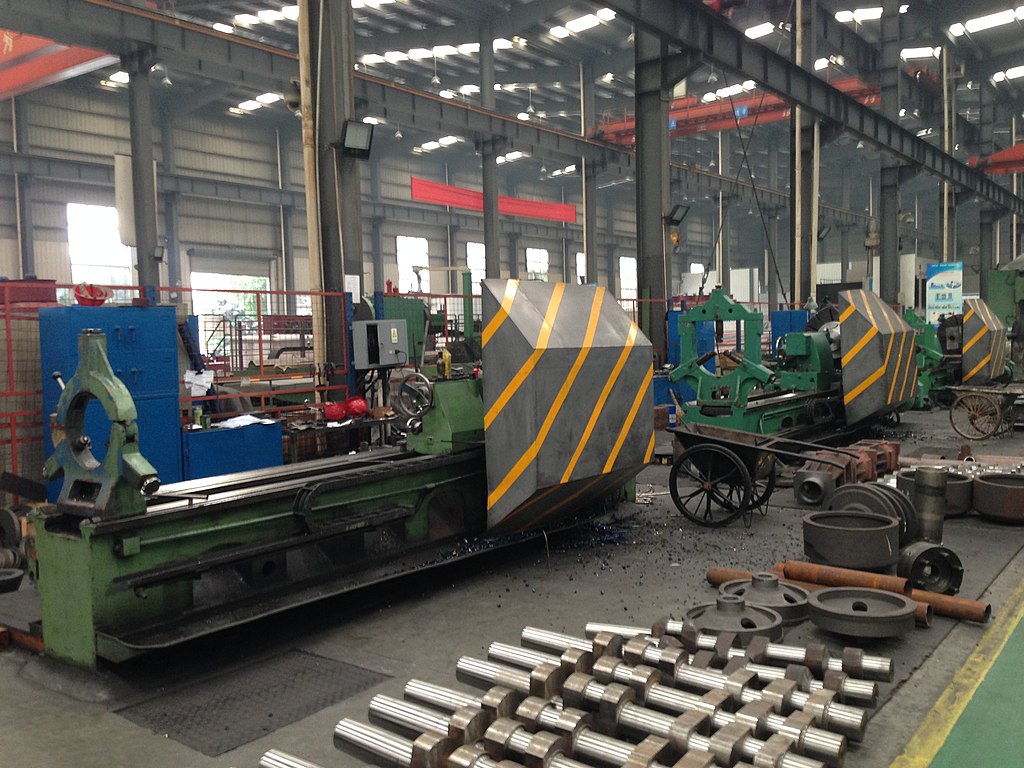
China posted its first annual increase in industrial profits in four years in 2025, signaling tentative relief for businesses after a prolonged period of margin pressure and price competition. Official data released on Tuesday showed that profits at large industrial firms rose 0.6% for the full year, marking a turnaround from years of stagnation and decline as government efforts to curb destructive price wars began to take effect.
The recovery comes against the backdrop of weak overall economic growth in the world’s second-largest economy, estimated at around $19 trillion. Authorities have recently issued strong rebukes to sectors such as automobiles and solar panels, where excessive competition and aggressive price cutting had driven profits sharply lower. While these measures have not yet reversed the long-running decline in producer prices, they have helped stabilize conditions for many manufacturers.
Momentum improved notably toward the end of the year. Industrial profits rose 5.3% in December compared with the same month a year earlier, a sharp reversal from November’s 13.1% year-on-year decline. For the first 11 months of 2025, profits had risen only 0.1%, underscoring how late-year gains were critical in delivering the first full-year increase since 2021.
Exports played a key role in supporting industrial earnings. The auto industry, for example, recorded a 0.6% increase in profits in 2025, reversing an 8% drop the previous year as overseas sales strengthened. Broader export diversification away from the United States also helped cushion the impact of tariffs imposed by U.S. President Donald Trump on Chinese imports, reducing reliance on a single market.
The data revealed uneven performance across ownership types. Profits at state-owned enterprises fell 3.9% last year, while privately owned firms saw profits remain flat. In contrast, foreign-invested companies posted a 4.2% gain, benefiting from stronger export exposure and operational efficiency.
China’s industrial profit data covers companies with annual revenue of at least 20 million yuan, or about $2.88 million, from their main operations. While challenges remain, the return to annual profit growth suggests early signs of stabilization in China’s industrial sector.







