


 Dollar Falls as Oil Eases, Yen Jumps on Intervention Signals
  Fed Unveils Stablecoin Rules Under GENIUS Act
  U.S. Dollar Hits Two-Month High as Oil, Treasury Yields Surge
  US Comfortable With Canada Trade Standoff as Import Bans Loom
  Australia Unemployment Hits Five-Year High Despite Strong Jobs Growth
  Gold Holds Near $4,275 as Rising Treasury Yields Fuel Fed Rate Hike Bets
  Asian Stocks Fall as Bond Yields Surge Ahead of Trump-Xi Summit
  Gold Prices Fall as Treasury Yields Rise on Fed Rate Hike Bets
  Oil Prices Fall on U.S.-Iran Hormuz Deal Hopes
  Germany’s 2026 Growth Outlook Strengthens on Fiscal Spending
  Dollar Holds Near Two-Month High as Yen Approaches 160
  Japanese Bank Stocks Surge as Bond Yields Fuel Rate Hike Bets
  US 10-Year Treasury Yield at 6% Emerges as New Market Risk Threshold
  Trump, Xi Focus on Trade and AI at White House Summit
  Oil Prices Jump 3% as Houthi Attack Revives Supply Fears
  Fed Unveils Stablecoin Rules Under GENIUS Act
  RBI Uses $10 Billion Currency Swaps to Drain Excess Rupee Liquidity


 Add as a preferred source on Google
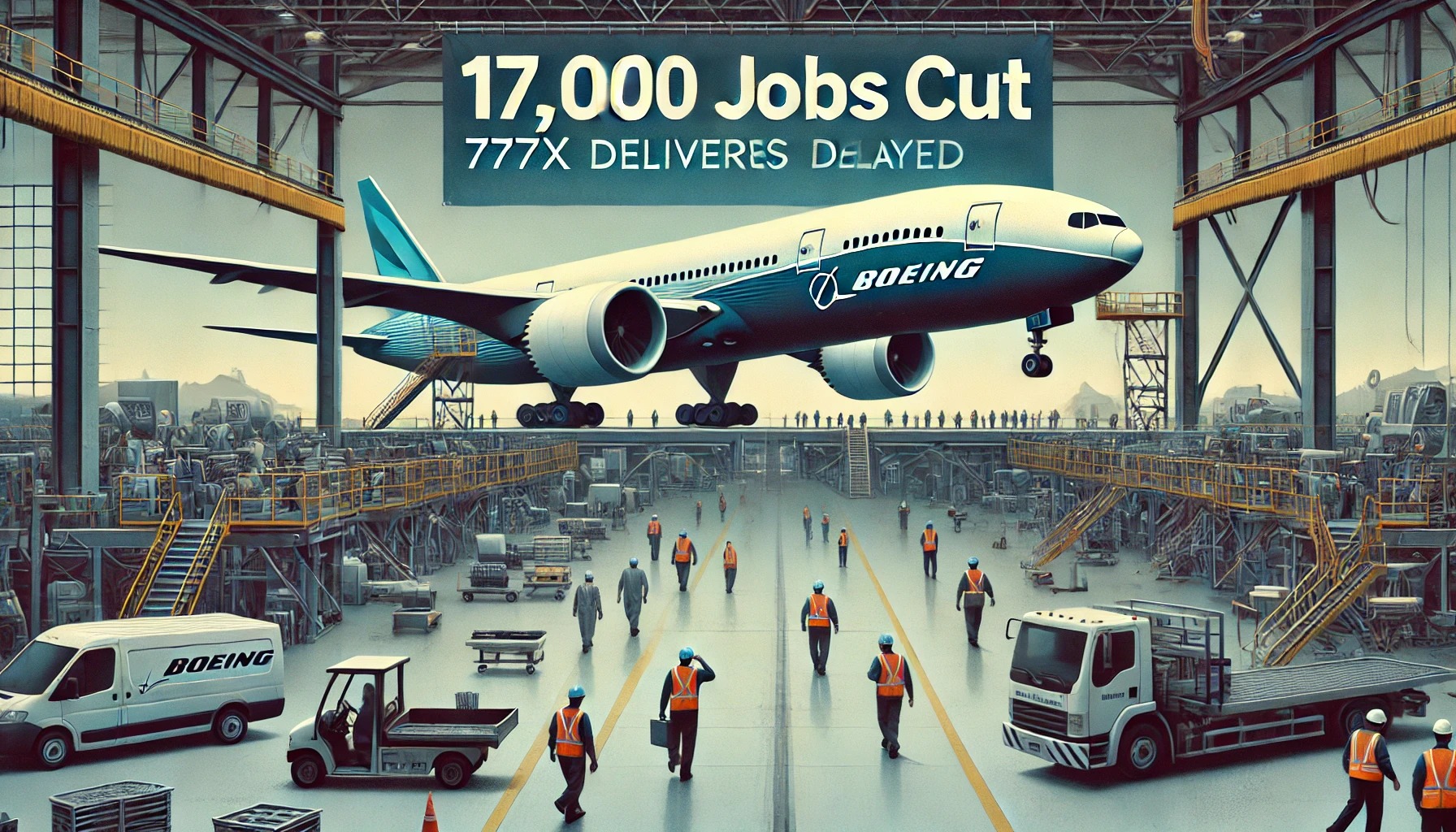
Boeing Announces 17,000 Job Cuts Amid Strikes and Financial Losses
Boeing, one of the world's largest aerospace manufacturers, is set to reduce its workforce by 17,000 employees—representing a 10% cut globally. This announcement comes as the company faces significant financial challenges, including a $8 billion loss in the third quarter and delayed deliveries of its 777X jet.
CEO’s Statement on Downsizing
Boeing CEO Kelly Ortberg addressed employees in a company-wide message, explaining that the decision to cut jobs was necessary to "align with our financial reality." The production of key aircraft, including the 737 MAX, 767, and 777 jets, has been impacted by an ongoing strike involving 33,000 workers from Boeing's U.S. West Coast plants.
Ortberg emphasized that workforce reductions would span all levels of the company: “Over the coming months, we plan to reduce our workforce by 10%, including executives, managers, and employees.”
Impact on Boeing’s Stock and Financial Projections
Following the announcement, Boeing's (NYSE: BA) stock fell by 1.1% in after-hours trading. This move marks a significant step for Ortberg, who assumed the role of CEO in August, with a mission to mend relationships with the union and Boeing employees.
Boeing has been dealing with a series of financial setbacks. Pre-tax earnings charges of $8 billion were recorded for its defense and commercial plane programs. Additionally, the company expects to report third-quarter earnings on October 23, projecting revenue of $17.8 billion, a loss of $9.97 per share, and a negative operating cash flow of $1.3 billion—better than analysts’ expectations, who predicted a $3.8 billion cash burn according to LSEG data.
Analysts Weigh in on Job Cuts and Strike Resolution
The job cuts are expected to put pressure on striking employees. Thomas Hayes, equity manager at Great Hill Capital, stated that the layoffs may expedite the strike resolution: “Striking workers without paychecks do not want to become unemployed. I estimate the strike will be resolved within a week.”
The strike is costing Boeing an estimated $1 billion per month, according to ratings agency S&P, and threatens the company’s investment-grade credit rating. Boeing has already filed an unfair labor practice charge, accusing the machinists union of not bargaining in good faith.
Delays in 777X Deliveries and Program Adjustments
Ortberg also revealed that the first delivery of the highly anticipated 777X has been postponed to 2026 due to development challenges and the current work stoppage. This is not the first delay for the 777X, which has faced ongoing certification issues that have already pushed back its launch.
Despite the challenges, Boeing is making strategic decisions to secure its future. The company will conclude its 767 freighter program in 2027 after delivering the remaining 29 ordered planes, although production for the KC-46A Tanker will continue.
Legal Troubles and Financial Strategies
In addition to the strike and production challenges, Boeing is navigating legal issues. The company faces a court hearing in Texas concerning its offer to plead guilty to fraud under a settlement with the U.S. Department of Justice. Boeing has agreed to pay up to $487.2 million in fines, allocate at least $455 million toward safety improvements, and endure three years of court-supervised probation.
Meanwhile, Boeing is exploring ways to raise billions of dollars through stock and equity-like securities. Sources suggest that the company could raise around $10 billion by selling common stock or issuing convertible bonds and preferred equity.
With approximately $60 billion in debt and an operating cash flow loss of over $7 billion in the first half of 2024, analysts predict Boeing will need to secure between $10 billion and $15 billion to maintain its credit rating, which is currently one notch above junk.
Outlook for Boeing’s Future
Michael Ashley Schulman, partner at Running Point Capital Advisors, noted that Boeing's latest downsizing and delays are unsurprising: “Boeing’s cash and credit reserves have been in jeopardy for years. The ongoing strike could be the final tipping point.”
Boeing’s ability to navigate these financial and operational challenges will determine whether it can restore its reputation and position in the aerospace industry.







