


 Australian Business Conditions Hold Steady as Easing Cost Pressures Face New Oil Price Risks
  Best Gold Stocks to Buy Now: AABB, GOLD, GDX
  China Home Prices Fall Again in June Despite Slower Pace of Decline
  Asian Stocks Slide as Chip Selloff Deepens Ahead of TSMC Earnings
  Asian Currencies Stay Rangebound as Middle East Tensions, Weak China GDP Weigh on Sentiment
  Oil Prices Surge as U.S.-Iran Conflict Escalates and Strait of Hormuz Risks Grow
  UBS Boosts China Tech Bets, Adds Kuaishou and Meituan to Focus List
  China Q2 2026 GDP Misses Forecast as Weak Domestic Demand Offsets Export Strength
  US Inflation Expected to Ease in June, but Fed Rate Hike Risks Persist Amid Middle East Tensions


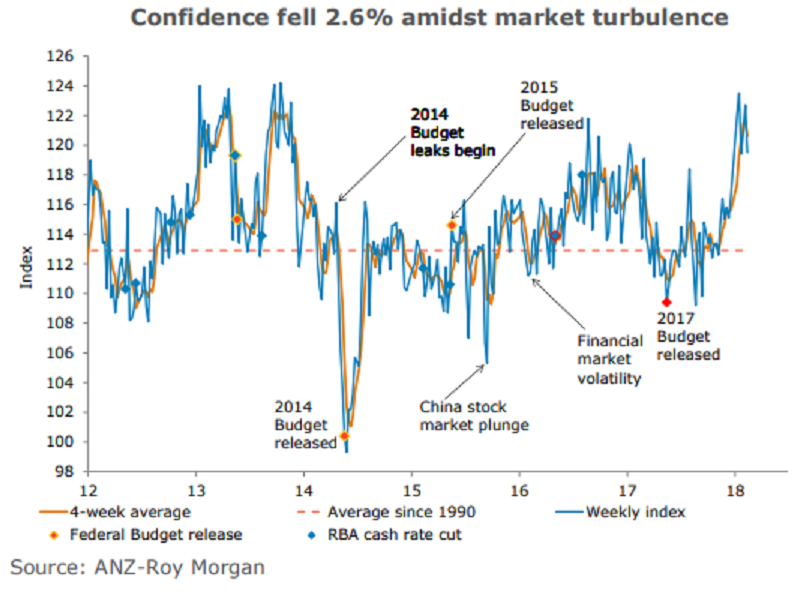
Australia’s ANZ-Roy Morgan consumer confidence fell 2.6 percent last week to 119.5, retracing gains over the previous two weeks. All sub-indices posted declines, though the ‘current economic conditions’ sub-index was the main culprit.
Households’ sentiment towards current economic conditions dropped a sharp 6 percent, unwinding much of the 8.3 percent cumulative rise over the previous two weeks. Views towards future conditions slipped 0.7 percent, its second straight weekly fall.
Consumers were also less optimistic about financial conditions this week. Views towards current and future conditions fell 2.6 percent and 1.8 percent respectively. In four week moving average terms, aggregate financial conditions sit at 116.0, down from their high of 118.5, two weeks ago.
Sentiment around the ‘time to buy a household item’ fell for the fourth straight week, slipping 1.9 percent to 136.9. Inflation expectations edged down to 4.4 percent on a four-week basis.
"Together with moderating house prices and high levels of debt, household finances remain under pressure. On this front, Governor Lowe’s speech last week, which in our view effectively removed the prospect of a rate hike this year, should provide some comfort. The upcoming employment and wage numbers will likely set the tone for confidence over the coming weeks. Further financial market volatility may also have an impact," said David Plank, Head of Australian Economics, ANZ Research.
Lastly, FxWirePro has launched Absolute Return Managed Program. For more details, visit http://www.fxwirepro.com/invest







