


 Yen Falls to 40-Year Low as Markets Watch Japan Intervention and U.S. Jobs Report
  Central Banks Eye Gold, Reduce Dollar Exposure as AI Adoption Accelerates: OMFIF Survey
  China Manufacturing PMI Edges Higher in June as Exports and AI Investment Boost Growth
  Trump Suspends Some Morocco Fertilizer Tariffs to Ease U.S. Supply Shortage
  Trump Questions Housing Bill as He Prioritizes SAVE America Act
  Best Gold Stocks to Buy Now: AABB, GOLD, GDX
  Dollar Slips Ahead of Key U.S. Jobs Data as Fed Rate Outlook, ECB, and Iran Talks Shape Forex Markets
  Asian Stocks End Strong Quarter as Dollar Surges, Yen Hits 40-Year Low Ahead of US Jobs Data
  Asian Currencies Stay Range-Bound as Investors Eye China Data, RBNZ Outlook and U.S.-Iran Ceasefire
  Oil Prices Slip as U.S.-Iran Peace Talks and Strait of Hormuz Risks Keep Markets on Edge
  Trump Urges Gasoline Retailers to Cut Prices to $2.50 Per Gallon, Warns of Legal Action
  UN Chief Urges Nations to Close $100 Million UNRWA Funding Gap


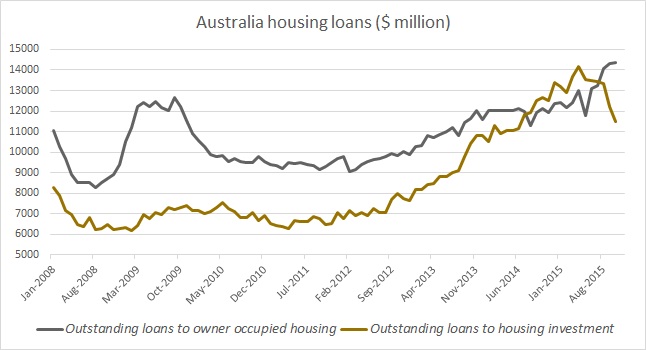
This year, since May, Reserve Bank of Australia (RBA) has hold out to any further easing of policy beyond current 2% interest rates and one of the key reasons for that has been excessive housing demand, fuelled by lower interest rates. Prices in Sydney were skyrocketing, so there rose significant risk of default in loans for speculative and investing purpose.
Loans issued by banks for investment purpose, just rose from $7 billion back in 2012 to $14 billion by early 2015. The size of outstanding loans issued for investment took over loans issued for ownership residential purpose by 2014. These were probably sufficient enough for RBA to address the issue and mention such in monetary policy statement.
However, latest data points that measures taken up by RBA and regulators to curb the growth for investing purpose, from both side seems to be working. RBA worked to make the banks more conservative towards investment lending, increased LVR to curb on the bubble buildup.
Latest data for October, point out, outstanding loans for investment purpose has dropped to $11.5 billion from their pick of 14.2 billion in April and since July outstanding loans for owner residential purpose has taken over the investing purpose outstanding.
Still the current improvement is not sufficient for RBA to focus fully towards further easing, more moderation towards $9 billion, would make the bank comfortable.
Australian Dollar is currently trading at 0.721 against Dollar.







