


 fnny Beta Launches With a Simple Idea: Find an Event, Show Up, Get Rewarded
  Hyundai CEO Warns Chinese Automakers Could Disrupt US Market
  MediaTek Unveils 2nm Dimensity 9600 Pro AI Chip
  Big AI wants to slow down AI research. Is it a safety pause or a strategic retreat?
  Trump Bans CNN, MS NOW and Politico From White House
  US Northeast Airports Resume Operations After Telecom Outage Disrupts Thousands of Flights
  Japan, U.S. Discuss $19 Billion GlobalFoundries Chip Plant
  Westinghouse Targets $50 Billion Valuation in U.S. IPO
  Paramount Skydance Faces $30 Million Film Penalty in Warner Bros. Deal
  Burnham Eyes UK Leadership Role in AI Ahead of Trump Meeting
  OpenAI Urges US-Led Global Standards for Frontier AI
  SoftBank Launches $11 Billion Bond Sale to Fund OpenAI Investment
  SpaceX Nasdaq 100 Weight to More Than Double in Rebalance
  Guterres Urges Stronger Global AI Safeguards Ahead of UN Assembly
  Nvidia CEO Jensen Huang Expected at Trump-Xi State Dinner
  Allegro Raises 2026 Outlook as International GMV Surges
  NASA, Boeing Discuss Expanding Starliner Missions


 Add as a preferred source on Google
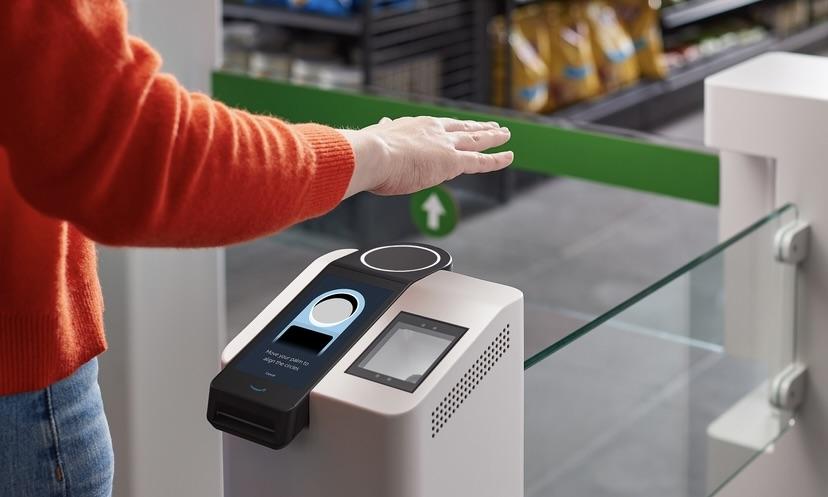
Amazon now allows users to set up palm recognition for seamless payments at Whole Foods, Panera, and other locations directly from their smartphones.
Amazon One Expands with Mobile App for Easy Palm Recognition Setup
Amazon now allows you to sign up for its palm recognition service from your phone. It is launching a new Amazon One app for iOS and Android. It will allow you to take a photo of your palm and set up your account before scanning it at locations supporting the verification technology.
Previously, Amazon required users to visit physical locations to enroll in Amazon One, which allows you to make purchases or verify your age using the palm print associated with your Amazon account. The Verge reported that the service is available at all Whole Foods stores in the United States, some Panera Bread locations, and more than 150 stadiums, airports, fitness centers, and convenience stores.
Amazon One employs generative AI to analyze your palm vein structure and generate a "unique numerical, vector representation" of your palm, which it recognizes when you scan your hand in-store. It does not use raw palm images to identify you.
On mobile, Amazon claims to use artificial intelligence to match a phone camera photo to "near-infrared imagery" from an Amazon One device. To use the app for age verification, you must first add a payment method and upload a photo of your ID. You can also integrate loyalty programs, season passes, and gym memberships.
Amazon One uses generative AI to analyze your palm vein structure and create a "unique numerical, vector representation" of your palm. It can recognize this representation when you scan your hand in-store; it does not identify you based on raw palm images.
On mobile, Amazon claims to use artificial intelligence to compare a phone camera photo to "near-infrared imagery" from an Amazon One device. To use the app for age verification, you must first enter your payment information and upload a photo of your ID. You can also combine loyalty programs, season passes, and gym memberships.
Privacy Advocates Raise Concerns Over Amazon One's Biometric Data Collection
Albert Cahn, founder of the digital privacy advocacy Surveillance Technology Oversight Project, told Bloomberg he was skeptical of the trade-off between the convenience of biometric-based services and the user data required to run them. He didn't see how it would be "better, or easier," to submit government IDs and biometrics to private companies when customers can simply take their ID out of their wallets during transactions.
Evan Greer, a director at Fight for the Future, a digital privacy advocacy organization, told CNBC that most of the time, people should not entrust their data to private corporations, citing tech companies' "terrible track record" of protecting personal information.
Amazon has stated that users' Amazon One palm signatures cannot be replicated to impersonate them, citing the palm's unique characteristics, such as creases, friction ridges, and underlying veins. The company has also implemented liveness detection, which allows it to distinguish between a real palm and a replica. It cites tests in which Amazon One rejected 1,000 silicone and 3D-printed palms.
Amazon has been scrutinized for the way it handles users' personal information. One notable example occurred last year when the tech giant paid the Federal Trade Commission more than $30 million to settle two separate lawsuits over privacy concerns.
One lawsuit, settled for $5.8 million, claimed Amazon-owned smart doorbell company Ring failed to notify or obtain permission from customers before allowing "thousands of employees and contractors" to view recordings of their private spaces.
The other lawsuit claimed that the company obtained and retained thousands of children's voice and geolocation data via Alexa, Amazon's virtual assistant product, providing "valuable" data to train its algorithms "at the expense of children's privacy," according to the FTC.
Amazon denied any wrongdoing in the lawsuits, telling Forbes that Ring addressed the privacy concerns on its own years ago.
Photo: About Amazon Newsroom







