


 JPMorgan Cuts Gold Price Forecast, Sees Bullion Reaching $4,500 by End of 2026
  In a rebuke to Trump, the Supreme Court rules that birthright citizenship is the law of the land
  Morgan Stanley Names BAE Systems Top European Defence Stock Despite Lower Price Target
  Bank of America Upgrades T-Mobile to Buy, Says LEO Satellite Fears Are Overdone
  Alcohol is one of the most dangerous drugs, yet its presence is ubiquitous in social settings and celebrations
  USA at 250: the Black American struggle for life, liberty and the pursuit of happiness
  Smartphones are helping filmmakers tell the stories the movie industry overlooks
  AI can be a personal trainer in your pocket – but is it safe?
  Michael Burry Shorts Tesla at $416 as AI and Semiconductor Bearish Bets Expand
  Gold Surges Past $4150 on Dovish Fed Signals and Weak Jobs Data; Bullish Outlook Prevails


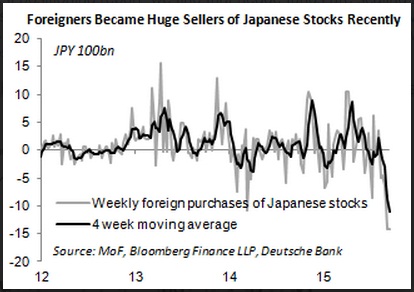
Abenomics, named after Japan's Prime Minister Shinzo Abe, who after coming to power influenced policies that resulted in one hand Bank of Japan (BOJ) providing massive stimulus through balance sheet expansion in tune of ¥ 80 trillion per annum and sales tax hike from 5% to 8%.
These policies together known as Abenomics was aimed to revive Japan from more than decade long deflation and to balance Japan's massive fiscal imbalance with debt to GDP ratio at 230%.
These policies resulted in massive devaluation in Yen, which rose from just around 76 per Dollar, back in 2012 to 125 per Dollar in 2015.
Nikkei gained from around 9000 to close to 21,000 by 2015. Even till summer of 2015, Japanese stock has been experiencing massive foreign inflow, which started to reverse in recent times have reached fastest pace since crisis.
End of buying by Japan's pension fund, largest in the world with $1.7 trillion assets and downgrade by S&P is weighing extra on Japanese stock market, which is down close to 11% in last three months.
Japanese economic dockets continue to pose doubts on Abenomics' ability to revive Japanese economy and reverse deflation, which makes two trades at risk of reversal - Long Nikkei, Short Yen.
Nikkei is currently at 18000, while yen is trading at 120.4 per Dollar.







