


 SK Hynix Eyes Up to $14 Billion U.S. IPO to Fund AI Chip Expansion
  Amazon's "Transformer" Phone: Can It Succeed Where Fire Phone Failed?
  Xiaomi's AI Model "Hunter Alpha" Mistaken for DeepSeek's Next Release
  Elon Musk Confirms SpaceX, xAI, and Tesla Will Continue Large-Scale Nvidia Chip Orders
  Super Micro Computer Shares Plunge After Co-Founder Charged in AI Chip Smuggling Case
  Elliott Investment Management Takes Multibillion-Dollar Stake in Synopsys
  Reflection AI Eyes $25 Billion Valuation in Massive $2.5 Billion Funding Round
  Meta and Google just lost a landmark social media addiction case. A tech law expert explains the fallout
  OpenAI Pulls the Plug on Sora, Ending $1 Billion Disney Partnership
  Meta Ties Executive Pay to Aggressive Stock Price Targets in Major Retention Push
  Federal Judge Blocks Pentagon's Blacklisting of AI Company Anthropic
  Makemation: a Nollywood movie that shows AI in action in Africa
  NVIDIA's Feynman AI Chip May Face Redesign Amid TSMC Capacity Crunch
  Golden Dome Missile Defense: Anduril and Palantir Join Forces on Trump's $185B Space Shield
  SpaceX IPO Filing Expected This Week as Valuation Could Surpass $75 Billion
  Cyberattack on Stryker Triggers U.S. Government Warning Over Microsoft Intune Security
  Palantir's Maven AI Earns Pentagon "Program of Record" Status, Reshaping Military AI Strategy


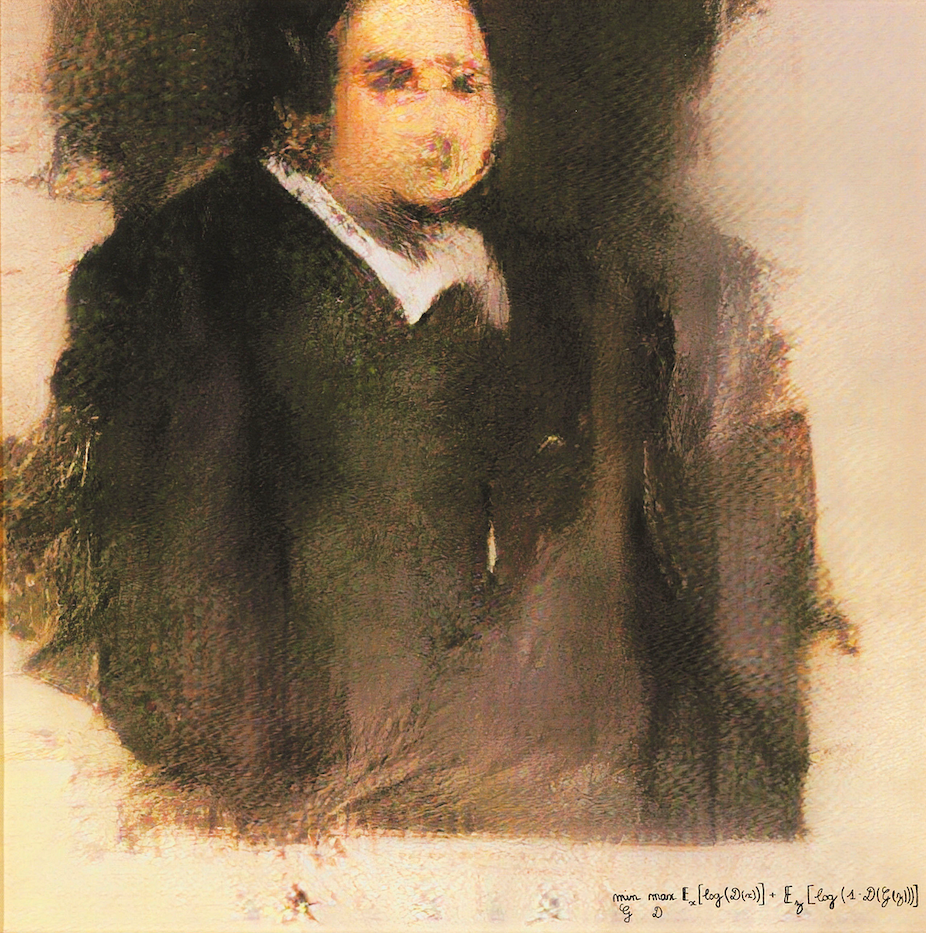


Is computational creativity possible? The recent hype around generative artificial intelligence (AI) tools such as ChatGPT, Midjourney, Dall-E and many others, raises new questions about whether creativity is a uniquely human skill. Some recent and remarkable milestones of generative AI foster this question:
-
An AI artwork, The Portrait of Edmond de Belamy, sold for $432,500, nearly 45 times its high estimate, by the auction house Christie’s in 2018. The artwork was created by a generative adversarial network that was fed a data set of 15,000 portraits covering six centuries.
-
Music producers such as Grammy-nominee Alex Da Kid, have collaborated with AI (in this case IBM’s Watson) to churn out hits and inform their creative process.
In the cases above, a human is still at the helm, curating the AI’s output according to their own vision and thereby retaining the authorship of the piece. Yet, AI image generator Dall-E, for example, can produce novel output on any theme you wish within seconds. Through diffusion, whereby huge datasets are scraped together to train the AI, generative AI tools can now transpose written phrases into novel pictures or improvise music in the style of any composer, devising new content that resembles the training data but isn’t identical. Authorship in this case is perhaps more complex. Is it the algorithm? The thousands of artists whose work has been scraped to produce the image? The prompter who successfully describes the style, reference, subject matter, lighting, point of view and even emotion evoked? To answer these questions, we must return to an age-old question.
What is creativity?
According to Margaret Boden, there are three types of creativity: combinational, exploratory, and transformational creativity. Combinational creativity combines familiar ideas together. Exploratory creativity generates new ideas by exploring ‘structured conceptual spaces,’ that is, tweaking an accepted style of thinking by exploring its contents, boundaries and potential. Both of these types of creativity are not a million miles from generative AI’s algorithmic production of art; creating novel works in the same style as millions of others in the training data, a ‘synthetic creativity.’ Transformational creativity, however, means generating ideas beyond existing structures and styles to create something entirely original; this is at the heart of current debates around AI in terms of fair use and copyright – very much unchartered legal waters, so we will have to wait and see what the courts decide.
The key characteristic of AI’s creative processes is that the current computational creativity is systematic, not impulsive, as its human counterpart can often be. It is programmed to process information in a certain way to achieve particular results predictably, albeit in often unexpected ways. In fact, this is perhaps the most significant difference between artists and AI: while artists are self- and product-driven, AI is very much consumer-centric and market-driven – we only get the art we ask for, which is not perhaps, what we need.
So far, generative AI seems to work best with human partners and, perhaps then, the synthetic creativity of the AI is a catalyst to push our human creativity, augmenting human creativity rather than producing it. As is often the case, the hype around these tools as disruptive forces outstrips the reality. In fact, art history shows us that technology has rarely directly displaced humans from work they wanted to do. Think of the camera, for example, which was feared due to its power to put portrait painters out of business. What are the business implications for the use of synthetic creativity by AI, then?
Synthetic art for business
Synthetic creativity on demand, as currently generated by AI, is certainly a boon to business and marketing. Recent examples include:
-
AI-enhanced advertising: Ogilvy Paris used Dall-E to create an AI version of Vermeer’s The Milkmaid for Nestle yoghurts.
-
AI-designed furniture: Kartell, Philippe Starck and Autodesk collaborated with AI to create the first chair designed using AI for sustainable manufacturing.
-
AI-augmented fashion styling: Stitch Fix utilised AI to capture personalised visualisations of clothing based on requested customer preferences such as colour, fabric and style.
The potential use scenarios are endless and what they require is another form of creativity: curation. AI has been known to ‘hallucinate’ – an industry term for spewing nonsense – and the decidedly human skill required is in sense-making, that is expressing concepts, ideas and truths, rather than just something that is pleasing to the senses. Curation] is therefore needed to select and frame, or reframe, a unified and compelling vision.







