


 SoftBank Shares Fall as Oracle Flags Stargate Data Center Delay Risk
  Jeff Bezos Invests $32 Billion in Blue Origin as Space Firm Targets Major Growth
  OpenAI Investigates Rogue AI Agents After Data Leaks and Security Incidents
  OpenAI, Anthropic CEOs Summoned to Australia AI Inquiry
  RedotPay Completes Audits as Stablecoin Firm Advances U.S. IPO Plans
  SpaceXAI to Double Nvidia Chips at Colossus 2 by Year-End
  OpenAI Scraps GPT-6.1 Astra Launch Over Safety Concerns
  Chainlink Launches CCIP 2.0 With Enhanced Cross-Chain Security
  Global Derivatives Monitor: BTC & ETH Options & Futures Matrix
  Meta Found Liable in New Mexico Facebook Data Privacy Case
  Nidec Shares Plunge on Report of $6.3 Billion Impairment Charge
  Bitget Resumes Crypto Withdrawals After $388M Security Breach
  Senate Democrats Say Tether USDT Helps Iran Evade Sanctions
  OpenAI to Preview GPT-6 Cyber AI Model for Cybersecurity
  Franklin Templeton Partners With Bybit for Tokenized Fund Collateral


 Add as a preferred source on Google
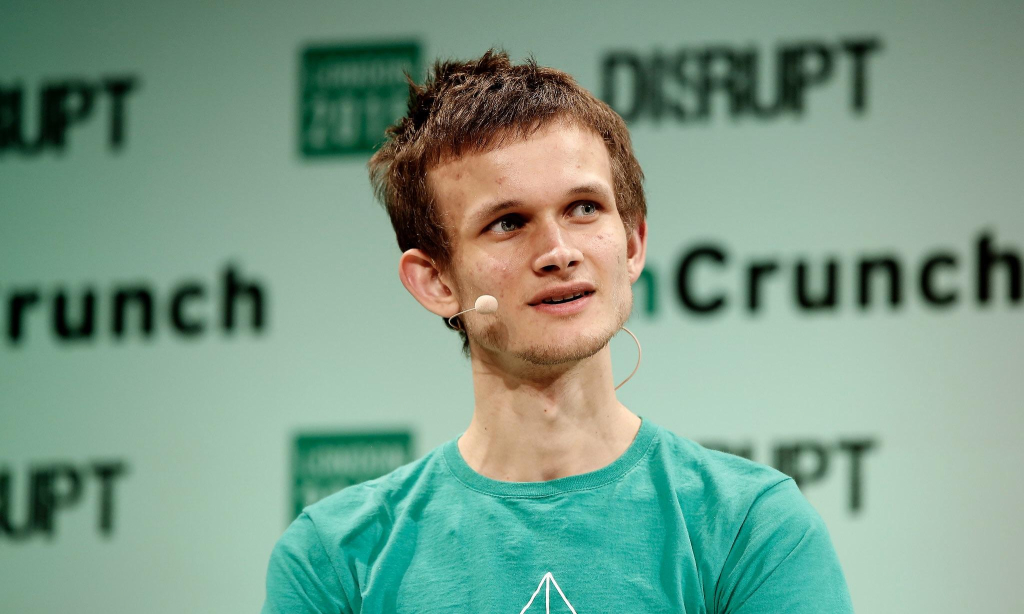
Vitalik Buterin has outlined his vision for Ethereum’s next decade, hinting at critical changes aimed at advancing the network’s capabilities. His 10-year roadmap suggests developments that could elevate Ethereum’s functionality and innovation.
Vitalik Buterin’s 10-Year Plan for Ethereum
Vitalik Buterin, co-founder of Ethereum, said on the Bankless podcast that, eventually, everyone will be involved in managing the Ethereum network.
The largest node-based decentralized smart contract network is Ethereum. Currently, a complex computing environment is being managed by thousands of individuals that operate these nodes.
Decentralization Comes with High Entry Requirements
Despite the protocol's decentralization, its growth is driven by its high entry requirement. Vitalik Buterin envisions Ethereum nodes operating on mobile devices in his future predictions. According to him, the group would have achieved significant strides in guaranteeing light computations to accomplish this.
He brought attention to the fact that the operator of the mobile phone node can download and hash data in less than 12 seconds. In order to verify a snark, the node will allow you to solve elliptic curve equations. Assuming this works, he thinks node verification will be "sleek and seamless."
According to Buterin, the massive data involved is the main issue of this projection. On the other hand, he thinks mobile phones are revolutionary for data storage. He seems to have laid out a course for Ethereum that will reshape developments in smart contract networks.
Ethereum Leads Smart Contract Innovation
As the pioneering protocol for smart contracts, Ethereum's blockchain has continued to pave the way for innovation in other Layer-1 networks.
Among the protocol's many improvements in recent years, according to U.Today, the Merge marked the most significant shift from proof-of-work to proof-of-stake.
Recent Upgrades Make Ethereum More User-Friendly
To make the protocol more user-friendly, Dencun recently upgraded by stepping down the gas charge for its Layer-2 networks.
A plethora of improvements have been courted by Ethereum, and even more are on the way in the days to come. In most cases, these enhancements are an attempt to stave off the formidable competition from companies like Solana and Cardano.







