


 US Delivers $13M Autonomous Maritime Drones to Philippines
  Trump’s Iran Strategy: What Has Been Achieved After Three Months of Conflict?
  Cait Conley Wins Democratic Nomination, Sets Up Key House Battle Against Mike Lawler in New York
  Russian Air Strikes Injure Six Across Ukraine as Kyiv Issues Air Raid Alert
  DOJ Opens Investigation Into NYC Coffee Shop Over Anti-Goldman Social Media Post
  J.P. Morgan Sees Potential Vestas Guidance Upgrade Amid Strong Wind Energy Demand
  Taiwan Launches Five-Day Combat Readiness Drill Amid Rising China Military Activity
  US Military Strike on Suspected Drug Trafficking Vessel Leaves Two Dead in Caribbean
  World Cup technology: from ref cams to AI analysts, cutting-edge research is changing the game
  China’s AI Manufacturing Boom Masks Weak Consumer Economy, Citi Says
  How AI prompting turned writerly description into an everyday skill


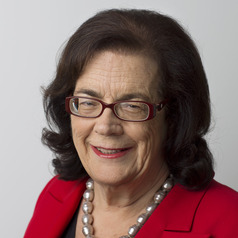
The Turnbull government is facing fresh trouble over its energy policy ahead of a crucial meeting next week, with Victoria’s Energy Minister Lily D'Ambrosio warning that the state won’t be rushed into signing onto the National Energy Guarantee (NEG).
In a speech to be delivered on Tuesday, D'Ambrosio will play on dissent in the Coalition, saying: “Malcolm Turnbull is trying to get us to sign up to something that hasn’t gone to his own party room – a place full of climate sceptics”.
“Every time we get close to a national energy policy, the Coalition party room shoots it down,” she will tell a clean energy summit in Sydney. An extract from her speech was issued ahead of its delivery.
“How can we have any confidence in what they’re asking from us if it hasn’t been through his party room first?
"We won’t rush into supporting a policy that we’re not certain is in the best interests of Victorians, just to appease to coal ideologues in Canberra.
"We won’t support a scheme that leaves the states in the dark and leaves us all hostage to the extremists in Turnbull’s party room,” D'Ambrosio will say.
Victoria’s shot across the bows on energy comes as Turnbull faces difficult fallout from the government’s disappointing byelection performance on Saturday, especially in the Queensland seat of Longman, where the Liberal National Party’s primary vote plunged by 9 points to just under 30%.
This is fuelling a push from some within the Coalition for the government to abandon its policy for tax cuts for big business if, as expected, a fresh attempt to get the legislation through the Senate fails. Labor successfully exploited the company tax issue in the byelections.
Turnbull’s weakened authority will also embolden party room critics of the energy policy, led by Tony Abbott – although these are in a minority. Abbott on Monday repeated his call for Australia to withdraw from the Paris climate agreement and to cut immigration.
The Guardian reported on Monday that Energy Minister Josh Frydenberg had flagged a two-stage process, as he tries to bed down a deal on the NEG. Under his timetable the NEG mechanism would be agreed on August 10 at the meeting of the Council of Australian Governments energy council. On August 14 the states and territories would get the Commonwealth legislation on the emissions reduction part of the scheme and discuss it in a phone hook up.
The key to this timetable is that it would allow Frydenberg to put the Commonwealth legislation to the Coalition party room on August 14 ahead of it being presented to states and territories. He has previously said the legislation would go to the party room.
Abbott has unsuccessfully pressed for much more party room input before any Commonwealth-state deal is done.
It is not clear whether Victoria will actually try to stall a deal next week, or is just playing politics ahead of the meeting.
D'Ambrosio will say Victoria has “acted in good faith” on the development of the proposed NEG “but it’s no secret that like many other states, we have major concerns about it.”
“We have made it very clear from the beginning – we won’t let any policy get in the way of Victoria achieving our legislated renewable energy targets. Our targets are the only real guarantee to bring down power prices”. Victoria would continue to discuss its concerns ahead of next week’s meeting.
Meanwhile, amid the uncertainty about the company tax cuts’ future, Finance Minister Mathias Cormann strongly defended them. Cormann, who has been the government’s negotiator with the crossbench, is seen as its most committed advocate of the tax plan.
“We are working with the crossbench as we speak to secure the necessary support,” he told the ABC.
Pressed on whether the government would take the policy to the election if it could not win the Senate vote, Cormann said: “That is our position”.
“The bigger businesses around Australia in many ways are most exposed to the pressures of global competition and they employ many millions of Australians directly. Weaker bigger businesses in Australia means less business for smaller and medium-sized businesses.
"It also means lower job security for the people that big business employ directly and lower job security for the many employees in the many small and medium-sized businesses who supply products and services to those bigger businesses,” Cormann said.
Federal Liberal MP Luke Howarth, from Queensland, told Sky that if the measure could not be passed it should be dropped.
Abbott, interviewed on 2GB, said he accepted the economic case for the company tax cuts but there were no votes in them.







