


 US Strikes Iran IRGC Targets as Conflict Escalates
  USS Abraham Lincoln Arrives in Thailand After Record 200 Days at Sea
  Trump Says ExxonMobil Among Oil Majors Planning Venezuela Return
  UN Security Council Faces Iran Sanctions Vote
  Nicaragua Congress Backs Reform Banning Opposition Parties
  South Korea Unveils Record $597 Billion 2027 Budget to Boost AI and Chips
  U.S., New Zealand Fund $60M Cook Islands Port Upgrade
  US Strikes Iran as Tehran Retaliates, Oil Prices Surge
  Honduras Court Drops Charges Against Ex-President Juan Orlando Hernandez
  Trump Secures Drug Pricing Deals With Nine Pharma Companies
  US-Iran Conflict Escalates With New Strikes Near Hormuz
  Flavio Bolsonaro Pledges to Respect Brazil Election Result
  Augusto Cury Surges in Brazil Presidential Polls
  Bessent Urges Japan on Fiscal Discipline, BOJ Rate Hikes
  Zelenskiy, Trump Envoys Discuss Ukraine Peace Push
  Ukraine Sanctions Chief Heads to Washington to Push Russia Bill
  US Approves $800 Million Helicopter Sale to Iraq


 Add as a preferred source on Google
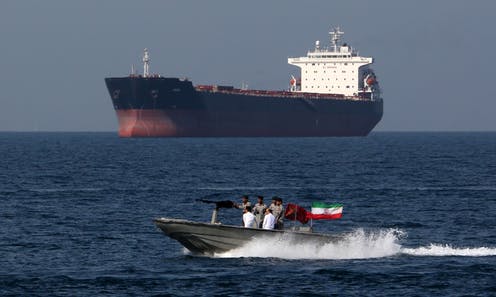
The United States and Iran exchanged fresh military strikes on Tuesday, marking their most serious confrontation since late July as tensions over the Strait of Hormuz continued to escalate.
U.S. Central Command (CENTCOM) said it completed a wave of strikes against targets linked to Iran’s Islamic Revolutionary Guard Corps (IRGC) by Tuesday evening. The operation targeted Iranian air defense facilities, radar systems and naval assets.
CENTCOM said the military action came in response to recent IRGC attacks targeting commercial shipping in the Strait of Hormuz as well as American service members stationed across the region.
Iran subsequently retaliated against several U.S.-linked targets, according to Iranian media reports. The reported attacks involved locations in Iraq, Jordan and Bahrain, while Iranian forces were also accused of threatening commercial vessels operating around the strategically important waterway.
The latest U.S.-Iran strikes represent the sharpest escalation between the two countries since late July. Washington and Tehran remain locked in a dispute over control and commercial access to the Strait of Hormuz, a crucial route for global oil shipments.
The U.S. has maintained that the Strait of Hormuz remains open, while Iran has claimed the passage is closed to all commercial shipping.
President Donald Trump signaled that further U.S. military action could follow. During an interview Tuesday, Trump threatened to “hit them hard” and separately raised the possibility of striking Kharg Island, one of Iran’s most important oil export hubs.
Trump later said the U.S. was in a stronger position, claiming Washington had “almost total control” of the Strait of Hormuz and arguing that Iran’s economy was deteriorating.
Iran, meanwhile, warned U.S. allies in the Gulf to remove American forces from their territories or risk facing additional Iranian attacks.
The renewed fighting has also shaken global energy markets. Brent crude climbed more than 4% to around $95 per barrel as investors assessed the risk of prolonged supply disruptions.
Shipping through the Strait of Hormuz remains heavily constrained, with vessel traffic reportedly running at a fraction of prewar levels. Continued U.S.-Iran tensions and limited progress toward a peace agreement could keep oil prices and Middle East geopolitical risks elevated.







