


 US Backs Musk in Fight Against EU’s €120 Million X Fine
  Saudi Arabia, Turkey and Pakistan Plan Urgent Defence Talks Over Houthi Attacks
  Trump, Xi Focus on Trade and AI at White House Summit
  Pezeshkian Says US Must Choose When Iran War Ends
  Trump Asks Supreme Court to Restore Third-Country Deportations
  US Senate Rejects Iran War Powers Resolution in 50-49 Vote
  What ‘Taiwan Independence’ Means as Xi Presses Trump on US Policy
  Judge Orders Trump to Restore White House Access for CNN, MS NOW and Politico
  Trump, Xi Visit US National Archives After White House Summit
  Najib Razak Seeks Stay of 15-Year 1MDB Prison Sentence
  Taiwan Thanks US for Support Ahead of Trump-Xi Summit
  Abbas Reaffirms November 28 Palestinian Elections
  Yemen Violence Displaces 130,000 as Civilian Toll Rises
  Netanyahu Defends Israel at UN as Delegates Stage Walkout
  North Korea Rejects Nuclear Test Warning, Calls Nuclear Status Irreversible
  France Defends Netanyahu Airspace Clearance Despite ICC Warrant
  NATO Boosts Intelligence Sharing Amid Russia Hybrid Threats


 Add as a preferred source on Google
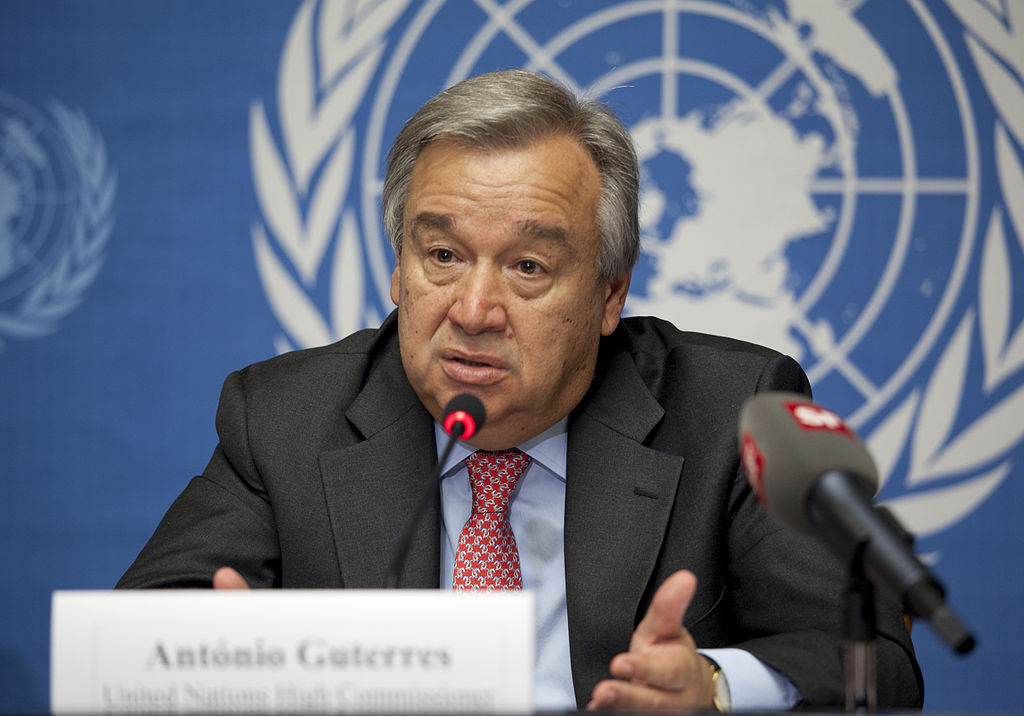
United Nations Secretary-General Antonio Guterres has issued a stark warning following the expiration of the New START Treaty, calling it a grave moment for international peace and global security. The landmark nuclear arms control agreement between the United States and Russia officially ended at midnight on Wednesday, leaving the world without any legally binding limits on the strategic nuclear arsenals of the two largest nuclear powers for the first time in over 50 years.
The New START Treaty had played a critical role in capping the number of deployed strategic nuclear warheads, as well as limiting land-based and submarine-launched missiles and nuclear-capable bombers. Its expiration marks the collapse of one of the last remaining pillars of nuclear arms control, raising serious concerns about unchecked nuclear proliferation and increased global instability.
In a statement, Guterres emphasized that the dissolution of decades-long arms control achievements could not come at a worse time. He warned that the risk of nuclear weapons being used is now at its highest level in decades, driven by rising geopolitical tensions, armed conflicts, and eroding trust between major powers. According to the UN chief, the absence of verifiable limits on nuclear arsenals significantly heightens the danger of miscalculation and escalation.
Despite the alarming situation, Guterres noted that the moment also presents an opportunity. He urged Russia and the United States to seize the chance to reset relations and negotiate a new nuclear arms control framework that reflects today’s rapidly evolving security environment. He welcomed recent acknowledgments from leaders in both countries regarding the need to prevent a return to a world of unchecked nuclear arms races.
“The world now looks to the Russian Federation and the United States to translate words into action,” Guterres said, calling on both nations to return to the negotiating table without delay. He stressed the importance of agreeing on a successor agreement that restores verifiable limits, reduces nuclear risks, and strengthens collective global security.
As global attention focuses on nuclear disarmament and arms control, the UN’s message is clear: renewed diplomacy between Washington and Moscow is essential to prevent a dangerous new era of nuclear instability.







