


 Taiwan Thanks US for Support Ahead of Trump-Xi Summit
  Pezeshkian Says US Must Choose When Iran War Ends
  Trump Asks Supreme Court to Restore Third-Country Deportations
  Ukrainian Drone Attacks Hit Russian Regions, Injuring at Least 12
  US Backs Musk in Fight Against EU’s €120 Million X Fine
  Trump, Xi Visit US National Archives After White House Summit
  Russian Missile and Drone Attack on Kyiv Kills Two, Damages Maternity Hospital
  US Senate Rejects Iran War Powers Resolution in 50-49 Vote
  Ghana Says Western Support Growing for Slave Trade Reparations
  North Korea Rejects Nuclear Test Warning, Calls Nuclear Status Irreversible
  Judge Orders Trump to Restore White House Access for CNN, MS NOW and Politico
  Netanyahu Takes Aim at Mamdani as Israel Election Nears
  Abbas Reaffirms November 28 Palestinian Elections
  Yemen Violence Displaces 130,000 as Civilian Toll Rises
  North Korea Warns South Korea Over US-Led Defense Role
  NATO Boosts Intelligence Sharing Amid Russia Hybrid Threats
  Xi Calls for Deeper U.S.-China AI Cooperation in Trump Talks


 Add as a preferred source on Google
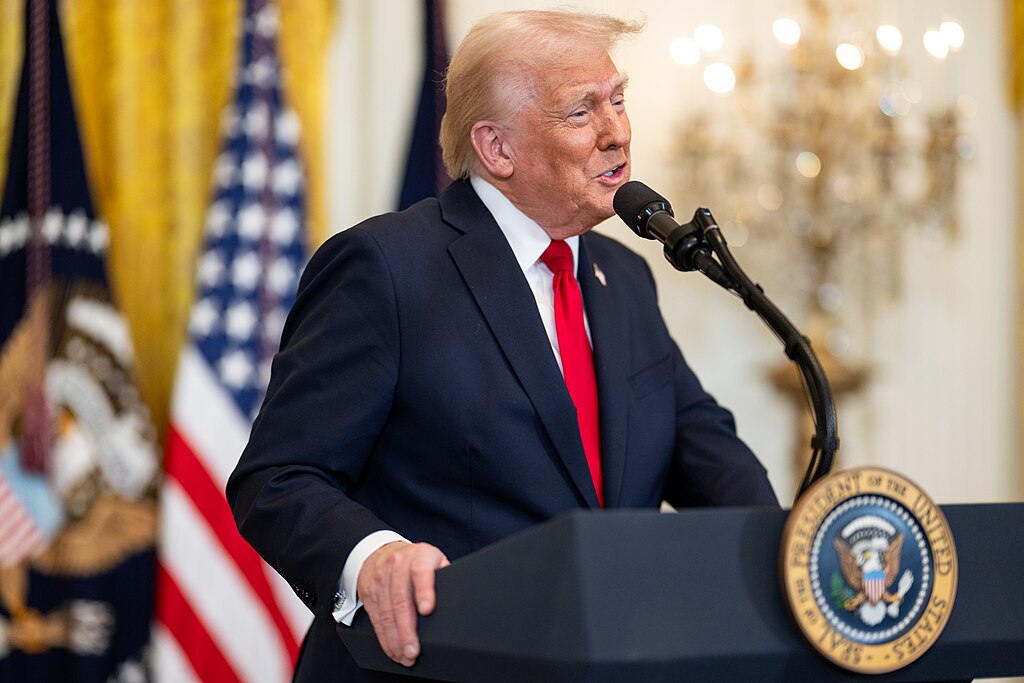
U.S. President Donald Trump said he will be “indirectly” involved in high-stakes nuclear talks between the United States and Iran scheduled for Tuesday in Geneva, expressing cautious optimism that Tehran is ready to negotiate. Speaking to reporters aboard Air Force One, Trump emphasized the importance of the discussions, which come amid escalating tensions in the Middle East.
The renewed diplomatic push follows a period of military escalation. The United States recently deployed a second aircraft carrier to the region, while officials confirmed preparations for a potential prolonged military campaign if negotiations collapse. Trump referenced last summer’s U.S. airstrikes on Iranian nuclear facilities, carried out by B-2 stealth bombers, as a turning point. According to Trump, Iran now understands the “consequences” of failing to reach a deal and may be more willing to compromise.
At the center of the dispute is Iran’s uranium enrichment program. Before the June strikes, U.S.-Iran nuclear negotiations stalled over Washington’s demand that Tehran halt uranium enrichment on its soil, viewing it as a pathway to developing nuclear weapons. Iran has consistently rejected a zero-enrichment policy and insists its nuclear program is peaceful. Tehran is seeking sanctions relief in exchange for limits on its nuclear activities but refuses to discuss its missile program.
Iranian Foreign Minister Abbas Araqchi met with the head of the International Atomic Energy Agency in Geneva, stating that Iran aims to secure a “fair and equitable deal.” However, he made clear that Iran will not submit to pressure. The IAEA has also requested clarification regarding Iran’s 440 kg stockpile of highly enriched uranium following Israeli-U.S. strikes on facilities in Natanz, Fordow, and Isfahan.
Meanwhile, Iran conducted military drills in the Strait of Hormuz, a critical global oil route, reiterating threats to close the waterway if attacked. U.S. Secretary of State Marco Rubio acknowledged that while a diplomatic agreement is possible, reaching a comprehensive Iran nuclear deal will be challenging.







