


 Fairshake Backs 32 Pro-Crypto House Candidates
  Cuba Says US Contacts Continue but Formal Talks Remain Stalled
  Flavio Bolsonaro, Lula Head to Brazil Election Runoff
  US Army Tests Counter-Drone Technology Along Mexico Border
  Ethiopia-Tigray Fighting Intensifies as Airstrikes Kill 17
  Takaichi Pledges to Control Japan Bond Issuance
  Flavio Bolsonaro Surges as Family Scores Brazil Election Comeback
  Becton Dickinson to Invest $3 Billion in U.S. Medical Manufacturing
  Trump Envoy Meets Sudan Army Chief in Egypt
  Trump Offers US Help to Russia After Plague Lab Worker Dies
  Yemen Launches Major Offensive to Retake Houthi-Held Areas
  Ukraine Faces $56 Billion Budget Gap as War Costs Soar
  US DOT Ends Airline Privacy Review Without Enforcement
  Mexico Seeks US Evidence After Border Gunfire Claim
  ISIS Attack Near Kirkuk Kills Iraqi Policeman After US Withdrawal
  Trump Orders Firing Squad Execution for Fort Hood Gunman
  France Student Protests Intensify Nationwide


 Add as a preferred source on Google
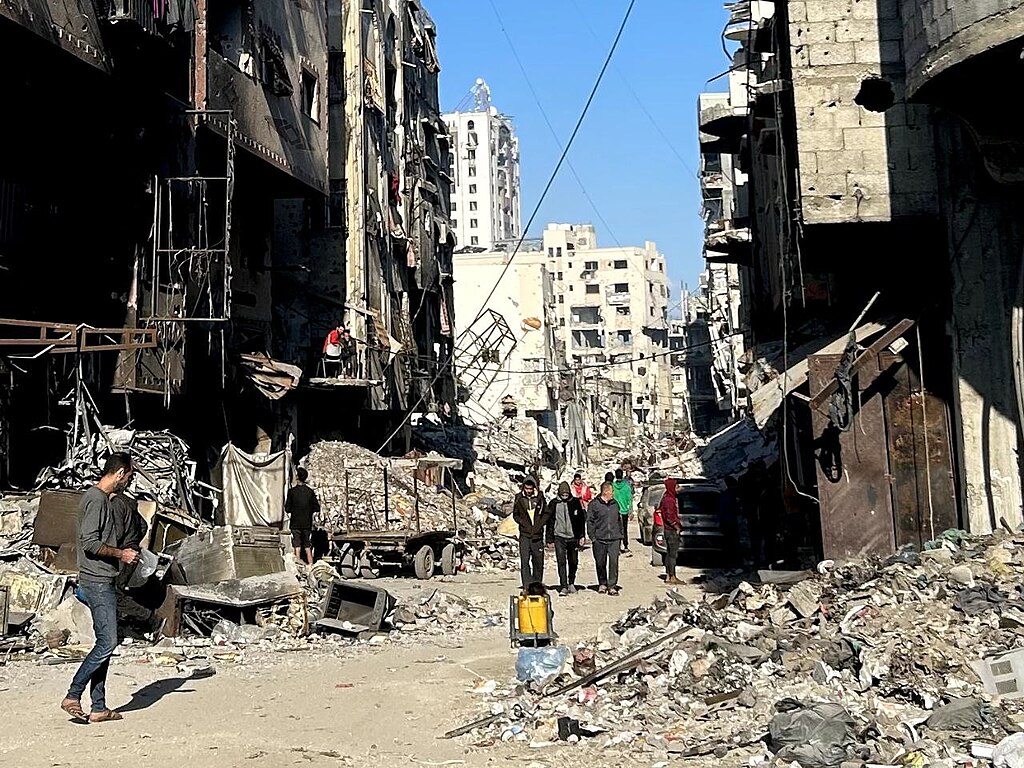
US President Donald Trump’s Gaza peace plan remains stalled a year after its launch, with Israel retaining control over roughly two-thirds of the enclave and continuing near-daily strikes despite an October 2025 ceasefire.
The first phase of Trump’s 20-point Gaza plan produced a ceasefire on October 10, 2025, the release of the remaining hostages captured during Hamas’ October 2023 attack and freedom for hundreds of Palestinian prisoners and detainees. However, key objectives—including Hamas’ disarmament, an Israeli withdrawal and Gaza’s reconstruction—remain unresolved.
Under the original framework, Israel was expected to withdraw to a “yellow line,” leaving its forces controlling about 53% of Gaza. Israeli military control has since expanded to approximately two-thirds, forcing more Palestinians into a shrinking coastal area.
Although full-scale warfare has not resumed, Gaza’s health ministry says Israeli attacks have killed at least 1,400 Palestinians since the ceasefire. Israel says it targets Hamas militants attempting to attack its forces or rebuild military capabilities, allegations Hamas denies. Five Israeli soldiers have also been killed since the truce.
Humanitarian assistance has increased, but severe shortages persist. The IPC estimates more than 1.2 million Gazans face acute hunger. Data cited by the organization showed an average of 227 humanitarian and commercial trucks entered Gaza daily between the ceasefire and late May, well below the 600 envisioned under Trump’s plan. Israel says around 600 trucks now enter each day.
Efforts to disarm Hamas have also stalled. Hamas agreed to place its weapons under the control of a US-backed Palestinian technocratic administration but rejected describing the process as “disarmament.” Israel insists it will not withdraw until Hamas is fully disarmed.
Meanwhile, the proposed International Stabilization Force has yet to deploy, despite several countries committing personnel. Reconstruction also remains limited, with a $2.45 billion initial rebuilding proposal falling far short of the estimated $71.4 billion needed over a decade.
Gaza’s future is expected to remain a major political issue as Israel approaches its October 27 general election, with pro- and anti-Netanyahu blocs locked in a tight contest.







