


 Gold Prices Slide as Treasury Yields Surge, Fed Minutes in Focus
  China Set to Hold Benchmark Lending Rates Steady for 15th Month
  Unitree Robotics Shares Soar Over 600% in Shanghai Market Debut
  Dollar Slides as Soft U.S. Data Cuts Fed Rate Hike Bets
  OpenAI Revenue Rises 18% in Q2 as Losses Widen and Anthropic Surges Ahead
  Google to Move All Pixel Production Out of China by 2027
  Ferrari Luce EV Sells for Record $40 Million at Charity Auction
  Shein Targets $26B-$27B Valuation for Hong Kong IPO
  UK Wage Growth Holds at 3.5% as Unemployment Rises
  Anthropic Revenue Run Rate Hits $65 Billion as IPO Plans Accelerate
  OpenAI Tightens AI Safety Monitoring After Security Incidents
  Oil Prices Rise as US-Iran Tensions Renew Strait of Hormuz Supply Fears
  Google to Buy Spirit Airlines Business Data for $10 Million to Train AI
  Lockheed Martin Secures $153.5 Million in U.S. Defense Contracts
  European Stocks Slide as Iran War Escalation Sends Oil Higher
  Australian Consumer Sentiment Jumps 6% in August as Rate Outlook Improves
  Moody’s Affirms NVIDIA Aa1 Rating as AI Data Center Guarantees Reach $105 Billion


 Add as a preferred source on Google
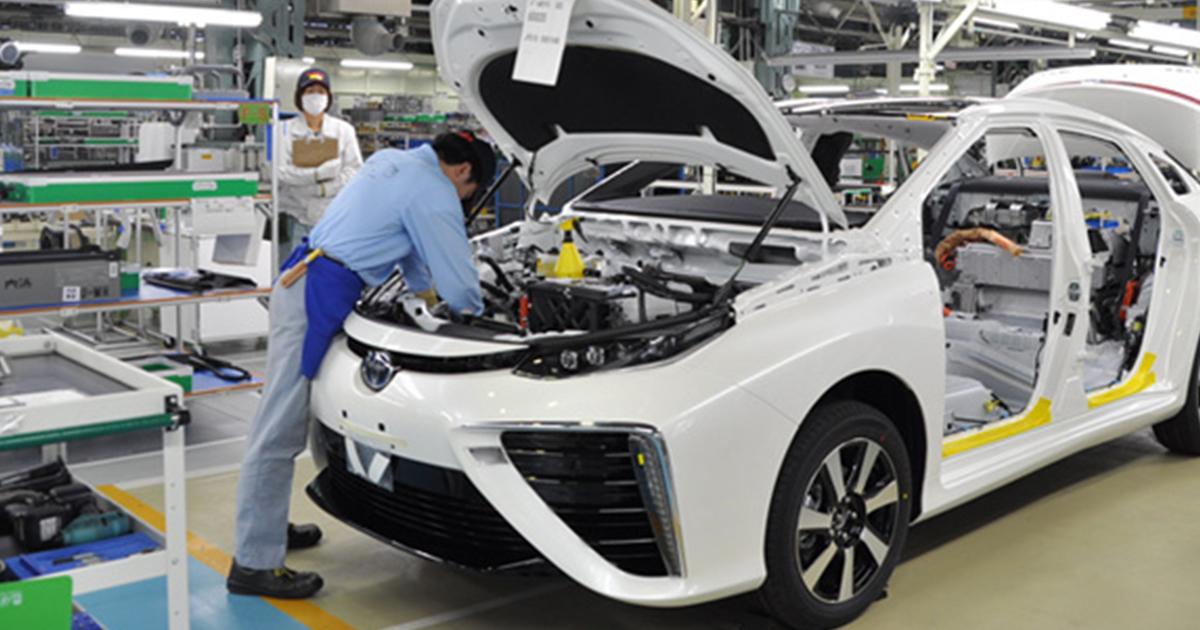
Toyota Motor Corp's domestic output dropped 28.5 percent to 144,204 vehicles in May from a year earlier, declining for the third straight month due to a global chip shortage and a parts supply crunch caused by Shanghai's COVID-19 lockdown.
According to a major Japanese automaker, the pace of decline was the highest since January, when domestic production plunged 32.2 percent from the prior year.
Toyota had to halt production at a few of its Japanese factories because parts were hard to get by during the lockdown.
After floods in South Africa impacted its manufacturing, Toyota reported that its overall output in May decreased 5.3 percent from a year earlier to 634,940 units, falling short of its production goal of approximately 700,000 automobiles.
Although the lockdown in Shanghai was lifted on June 1, the difficulty in obtaining parts from the Chinese metropolis is still having an impact on Toyota's manufacturing.
Rivals Nissan Motor Co. and Honda Motor Co. increased operations at their plants, which resulted in a large increase in domestic production in May compared to a year earlier.
Nissan's domestic production increased by 77.9 percent to 26,799 units as sales of its new Note compact car model increased. Honda's production increased by 57.7% to 37,285 vehicles, demonstrating a significant recovery from a year earlier when domestic manufacturing sharply declined.
Conversely, Honda's global production decreased 14.5 percent to 244,368 units as a result of the chip scarcity and Shanghai's lockdown.
Nissan's global output increased by 1.7 percent to 231,732 cars, the first increase in 11 months, despite the chip shortage, thanks to strong domestic manufacturing.
According to industry data, the total domestic production of eight major Japanese automakers—including Toyota, Nissan, and Honda—fell by 16.0 percent in May to 396,433 vehicles as a result of the worldwide components shortage.
Their global output of 1.62 million units decreased by 0.2 percent.







