


 Gold Price Surges Above $4,120 as Weak US Jobs Data Lowers Fed Rate Hike Expectations
  Asian Stocks Rebound as Tech Shares Rally on Fed Rate Cut Hopes and Easing Iran Tensions
  Brazil to Phase Out Gasoline Subsidy First as Diesel Support Stays Longer
  Japan Signals Readiness to Act on Yen as Intervention Speculation Grows
  Vietnam’s population hit the 100 million milestone. Where’s it headed?
  Oil Prices Slip as OPEC+ Boosts August Output, Oversupply Concerns Weigh on Crude Market
  Oil Prices Steady as U.S.-Iran Peace Talks Ease Strait of Hormuz Supply Fears
  Wall Street Ends Mixed as Weak Jobs Data Lowers Fed Rate Hike Bets, Chip Stocks Tumble
  Gold Price Rises as Softer Dollar and Fed Rate Expectations Boost Bullion Demand
  Goldman Sachs Flags 3 Key Risks Ahead of Europe’s Earnings Season
  Goldman Sachs Raises USD/JPY Forecast, Sees Yen Weakness Persist Through 2027


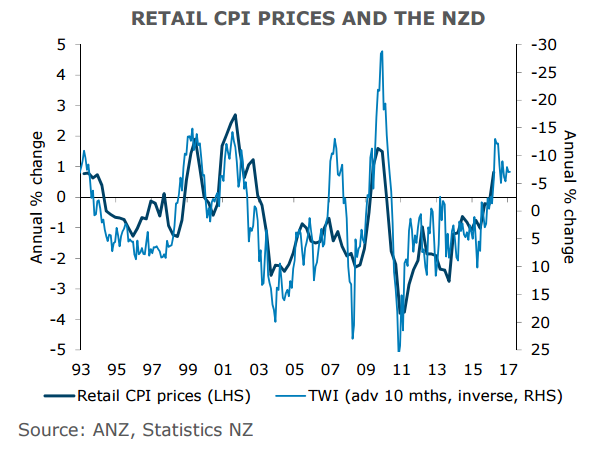
The Reserve Bank of New Zealand is scheduled to review its OCR on 28th April. Falling commodity prices and a recently stronger NZD have meant continued or increasing downward risks for New Zealand inflation. In the final quarter of 2015 inflation disappointed notably. At 0.1% y/y it was well below the RBNZ’s target area of 1-3%. Against this background, in March the RBNZ lowered key rates by 25bp to 2.25% and kept the option open for further monetary policy easing should the return to the inflation target be at risk.
Statistics New Zealand data released on Monday showed that NZ consumer price index had risen 0.2 percent in the first quarter, higher than the 0.1 percent expected by analysts. Year on year came in line with expectations at +0.4% and 0.1% previous. Inflation matched the Reserve Bank's estimates, stoking speculation the bank will wait until the June 9 release of its monetary policy statement to cut the official cash rate.
"This data detracts from the case for an April OCR cut. The details of the data will constitute a small upside surprise from the RBNZ's perspective. Non-tradables inflation, which is generally considered more important for monetary policy, was stronger than the RBNZ expected," Westpac senior economist Michael Gordon said.
Traders changed their bets on timing after the CPI figures were released, with 43 percent expecting a cut this month and 57 percent seeing the OCR unchanged at 2.25 percent. Before the data more expected a cut this month.
That said, the Kiwi is trading well above the levels the RBNZ considers justified in view of weak export prices. Trade weighted NZD index was in March traded more than 4% above the level the RBNZ had assumed in its forecast in December. Today, the New Zealand dollar initially tumbled but recovered ground after the CPI was released, keeping the central bank on track to cut interest rates in the next two months.
"While the data certainly doesn’t rule out the RBNZ cutting the OCR again next week, we don’t see it as the smoking gun that the market was hoping it would be. We continue to see the OCR going lower, but we are wary of the trade-offs this will bring," said ANZ in a report.
New Zealand Dollar edged higher against its major counterparts. NZD/USD was trading at 0.6942 and AUD/NZD was at 1.1105 at 1130 GMT. The two-year swap rate was unchanged at 2.24 percent and 10-year swaps fell 4 basis points to 2.91 percent.







