


 Asian Currencies Slip as Stronger US Dollar, Iran Tensions Pressure Regional FX
  Gold Price Today: Gold Slips as Dollar Rebounds Ahead of Fed Minutes
  Oil and LNG Tankers Turn Back as Strait of Hormuz Security Risks Escalate
  China 618 Smartphone Sales Drop 13% as Higher Prices Hurt Demand, Huawei Gains Market Share
  Asian Markets Slip as AI Earnings Season Looms, Oil Prices Fall Ahead of Key Fed Signals
  US Stock Futures Slip as Fed Minutes, Earnings Season Take Center Stage
  Gold Prices Fall Amid Rate Jitters; Copper Steady as China Stimulus Eyed
  Iran Begins Oil Sale Talks With Japan Under U.S. Sanctions Waiver Amid Shipping Risks


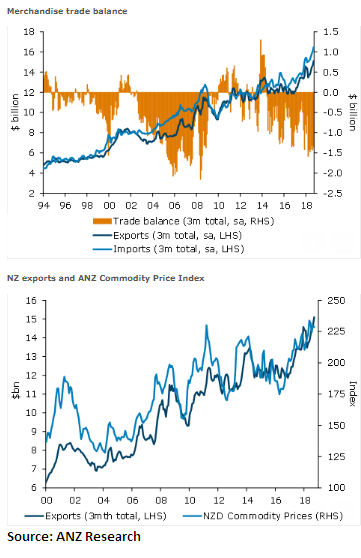
New Zealand’s unadjusted monthly trade deficit widened by USDD90 million in September to USD1,560 million, worse than market expectations. Both exports and imports surprised on the upside, with large items (aircraft) adding USD275 million to the import side and accounting for much of the surprise.
On a seasonally adjusted basis, exports rose 9.2 percent m/m, with dairy up 9.7 percent m/m on higher volumes and prices (the weaker NZD is clearly doing its job here, but there are downside risk in the global market). The real winner was fruit, with values and volumes up 47.6 percent and 34.1 percent m/m respectively.
Seasonally adjusted imports lifted a solid 11.6 percent m/m. However, the 6.4 percent fall in mechanical machinery and equipment is a tentative sign that investors are cautious at present. But these data are volatile. A rebound in petrol also boosted. Overall, imports ex-large items came in largely as expected: more or less in a holding pattern. While large items should boost business investment, the underlying picture is hardly one to get excited about.
On a quarterly basis, the seasonally adjusted goods deficit narrowed USD300 million to USD1.1 billion – not enough to prevent a widening annual goods deficit in the upcoming Q3 Balance of Payments. However, quarterly export volumes are holding up, which should at least keep pace with imports growth in Q3.
Despite recent slippage in world prices for some of our key exports, the annual deficit is expected to narrow over the year ahead, reflecting solid dairy volumes and NZD weakness. As always, however, much depends on the global situation, particularly China. And it’s fair to say things are looking a little more wobbly on that front.







