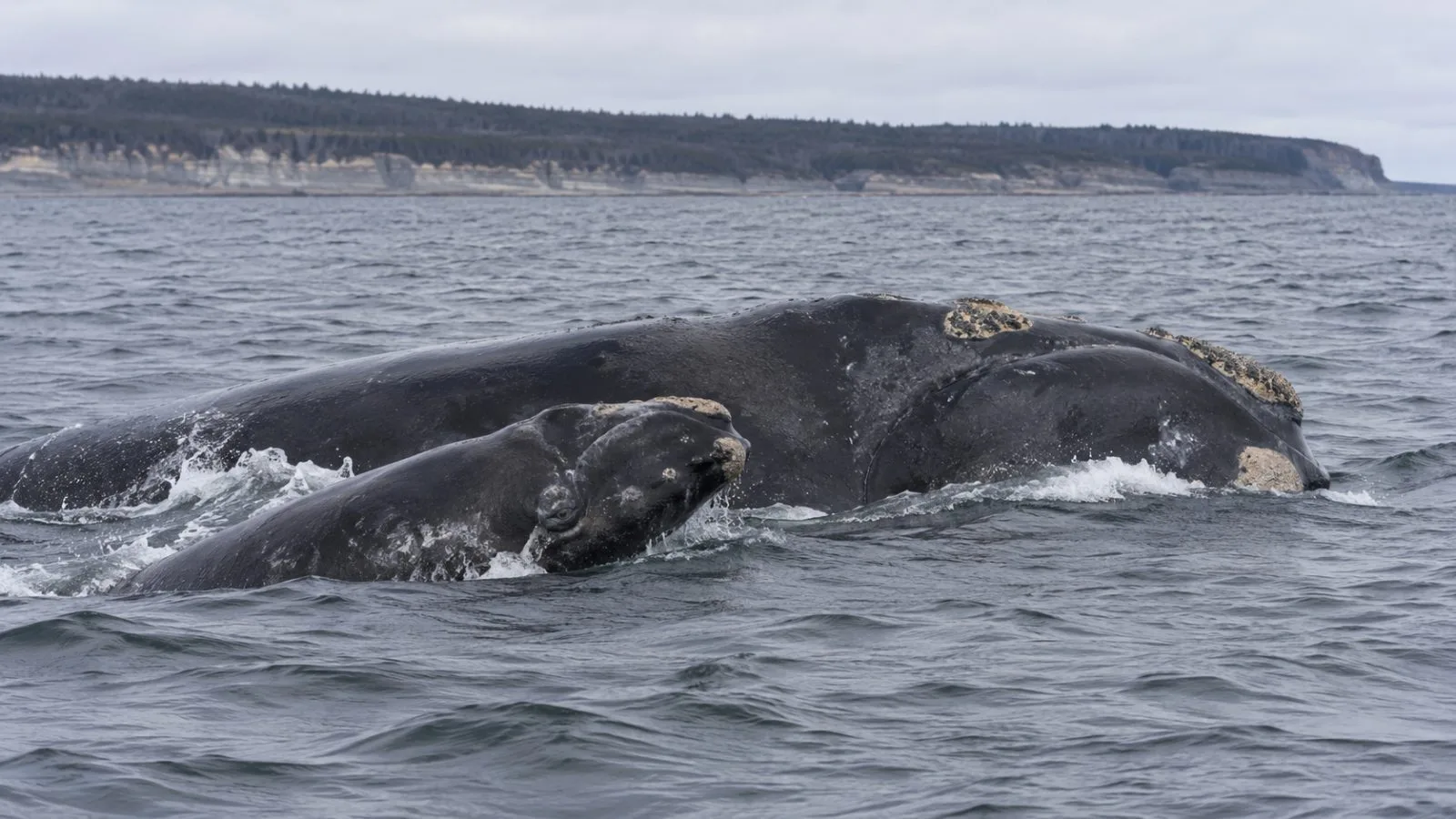
A newly documented North Atlantic right whale calf brings the latest breeding season’s count to 24, a rare high for a population of about 380, The Independent reported.
The total makes this the species' strongest calving season since 2009 and its fourth-highest on record, according to the report. The outlet said the annual tally has cleared 20 calves in only a few seasons since 2010.
The global population is estimated at roughly 380 animals, and only about 70 females are of reproductive age, The Independent reported. It said the population fell about 25% from 2010 to 2020, with no births counted in 2018 and a modest recovery since 2020. Conservationists monitor births closely because the small population needs productive calving years, the outlet said.
Ship strikes and fishing gear entanglement threaten the whales, while ocean warming can move them beyond protected waters, The Independent reported.
Researchers photographed an unidentified calf near Anticosti Island, Quebec, in September. The New England Aquarium in Boston examined the images and related information; its review indicated the calf was likely born several months earlier and had not been detected during winter surveys, The Independent reported.
The calf's weight was estimated at 15,000 pounds (6,804 kilograms), the newspaper reported. The Independent said Quebec's Côte-Nord nonprofit Mingan Island Cetacean Study made the eventual sighting; boat and aircraft surveys along the U.S. East Coast had not found the animal during spring or summer. The outlet said extensive photo records make unrecorded right whale births unusual.
The accompanying adult was a 38-year-old female known to researchers as Silt, The Independent reported. The species typically has calves off the southeastern U.S. in winter, then travels to feeding areas near New England and Canada, according to the outlet. Amy Warren, a scientist at the aquarium's Anderson Cabot Center, said Silt was seen briefly in the southeastern U.S. calving area in February 2026; Warren said the whale may have left before researchers documented her with the calf.
Richard Sears, founder and director of Mingan Island Cetacean Study, said the sighting showed “how big the ocean is” and how easily a whale can escape notice.